Paris › Gustave Courbet
Gustave Courbet at Paris
1819 – 1877
Gustave Courbet, born on June 10, 1819, in Ornans, France, was a pioneering painter who championed the Realism movement in 19th-century art. Rejecting the conventions of academic painting and the idealism of Romanticism, he focused on depicting the world as he observed it, often portraying unidealized peasants and workers in monumental compositions. His early works gained recognition, notably "After Dinner at Ornans," which won him a gold medal at the Salon of 1849, allowing him to exhibit without jury approval.
Courbet's commitment to realism was revolutionary; he believed that art should stem from personal experience rather than historical or mythological themes. His bold approach often sparked controversy, challenging societal norms and addressing social issues, which resonated with later movements like Impressionism and Cubism. Despite facing criticism and imprisonment for his political involvement during the Paris Commune, Courbet continued to create until his death on December 31, 1877, in Switzerland.
His legacy endures as a transformative figure in art history, whose unflinching depictions of everyday life laid the groundwork for modern artistic expression. Today, Courbet is celebrated for his vigorous and uncompromising work, which continues to engage audiences with its raw honesty and depth.
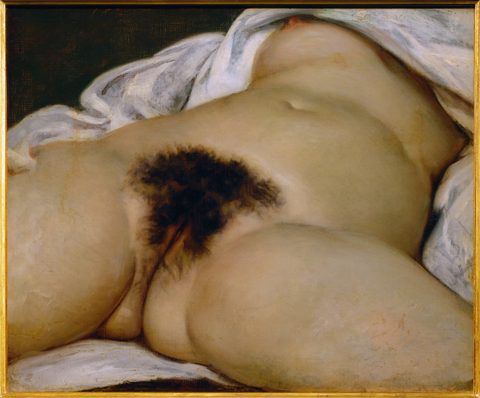 L'Origine du monde
Gustave Courbet
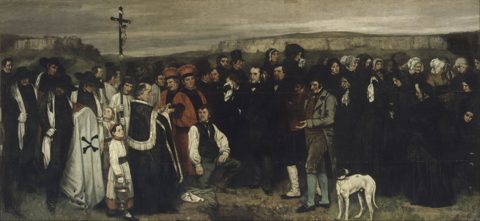 A Burial at Ornans
Gustave Courbet
 The Sleepers
Gustave Courbet
🎧 Listen
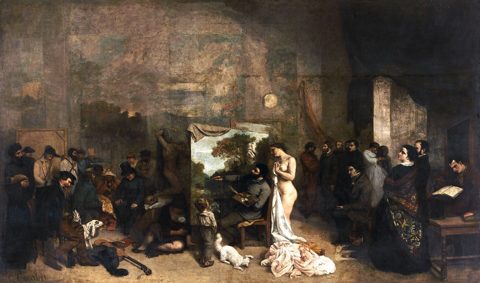 The Painter's Studio
Gustave Courbet
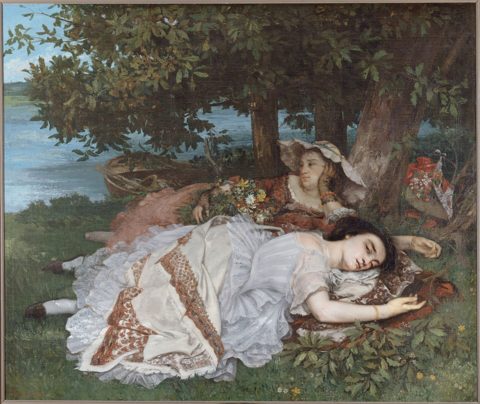 Young Ladies Beside the Seine
Gustave Courbet
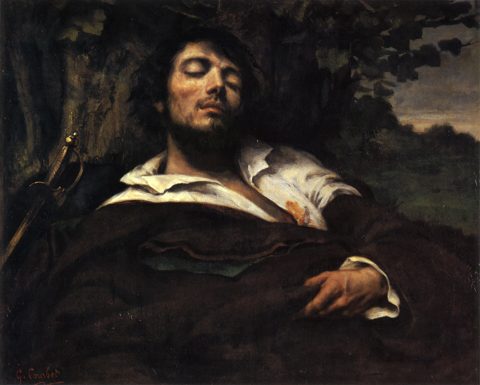 The Wounded Man
Gustave Courbet
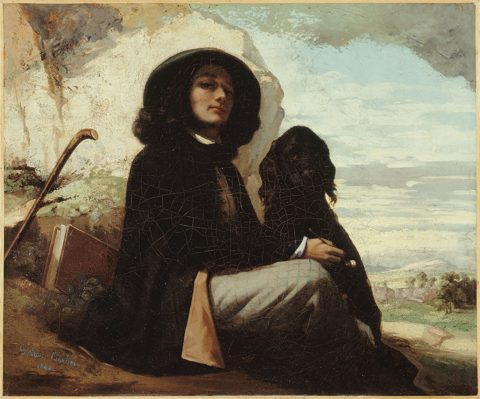 Self-Portrait with a Black Dog
Gustave Courbet
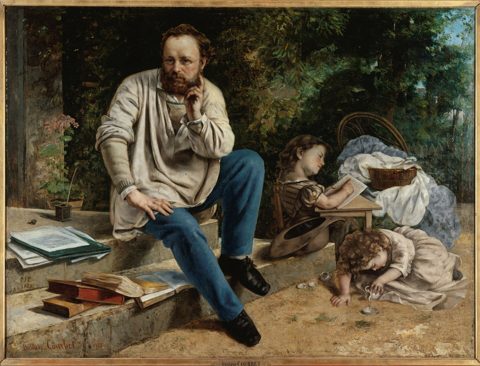 Proudhon and His Children
Gustave Courbet
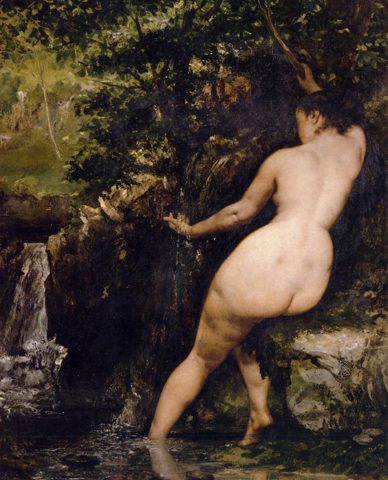 Source
Gustave Courbet
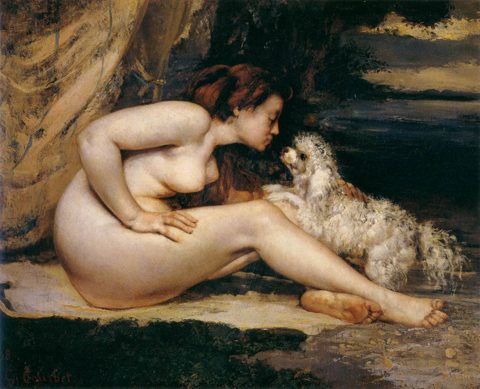 Femme nue au chien
Gustave Courbet
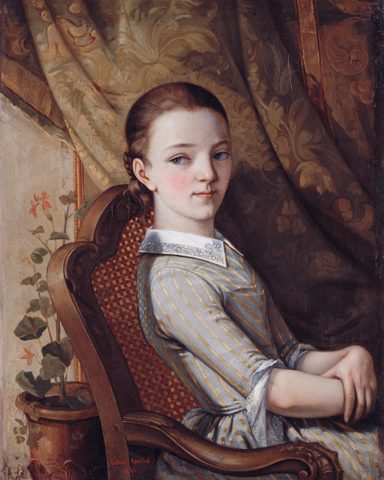 Portrait of Juliette Courbet
Gustave Courbet
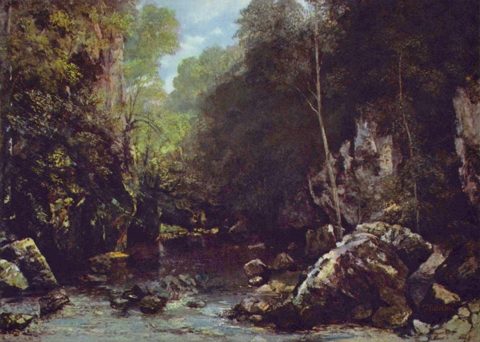 Le ruisseau noir
Gustave Courbet
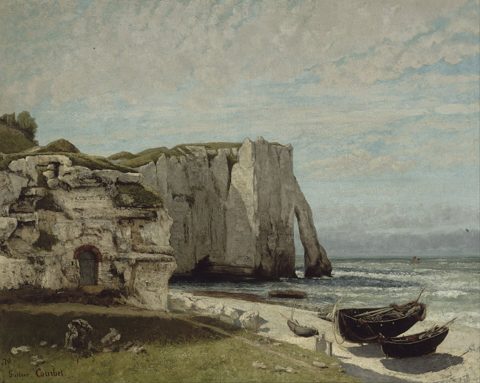 The Cliff at Étretat after a Storm
Gustave Courbet
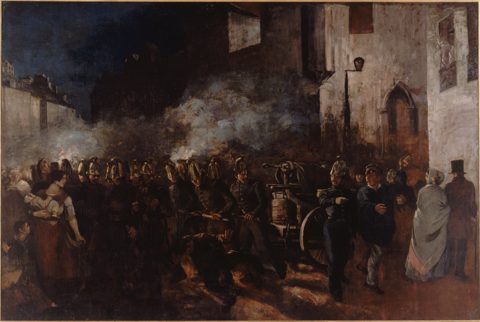 Firefighters Running to a Fire
Gustave Courbet
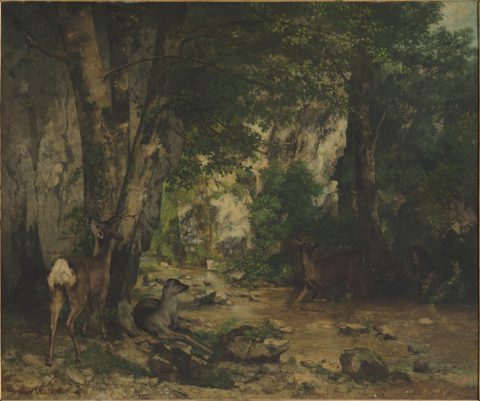 Running deer in Plaisir-Fontaine creek
Gustave Courbet
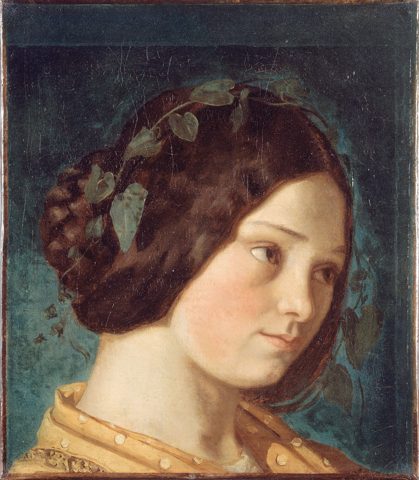 Portrait of Zélie Courbet
Gustave Courbet
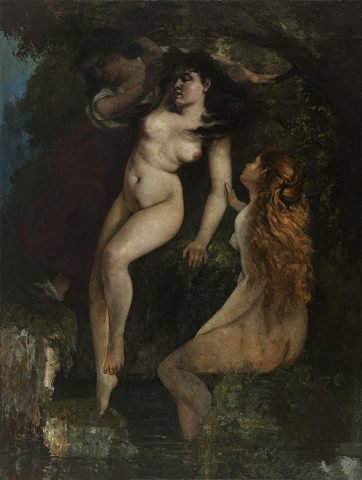 Three Bathers
Gustave Courbet
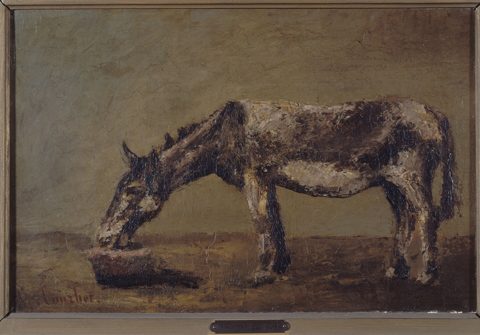 The Donkey
Gustave Courbet
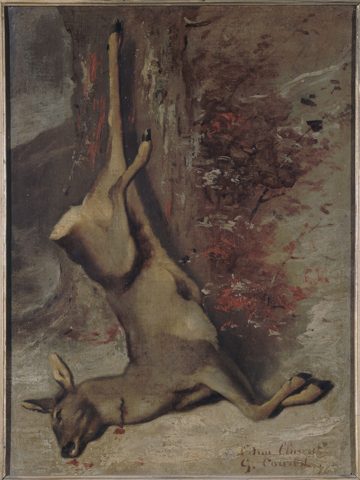 The Roe Deer
Gustave Courbet
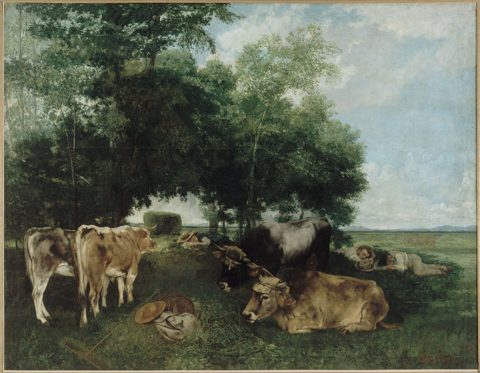 The Siesta During Haymaking Season
Gustave Courbet
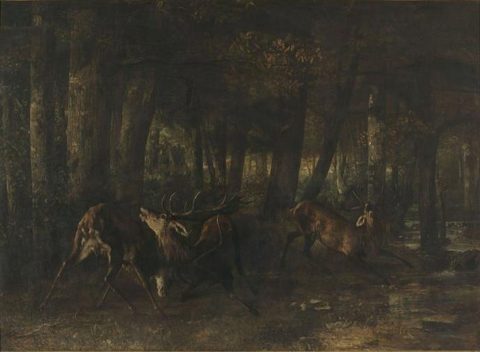 The Rut of Spring. Battle of Stags
Gustave Courbet
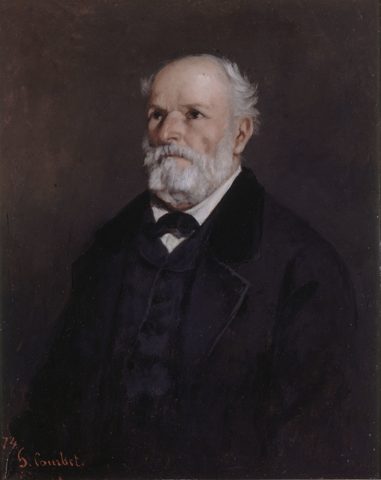 Portrait of Régis Courbet, Father of the Artist
Gustave Courbet
