Le ruisseau noir
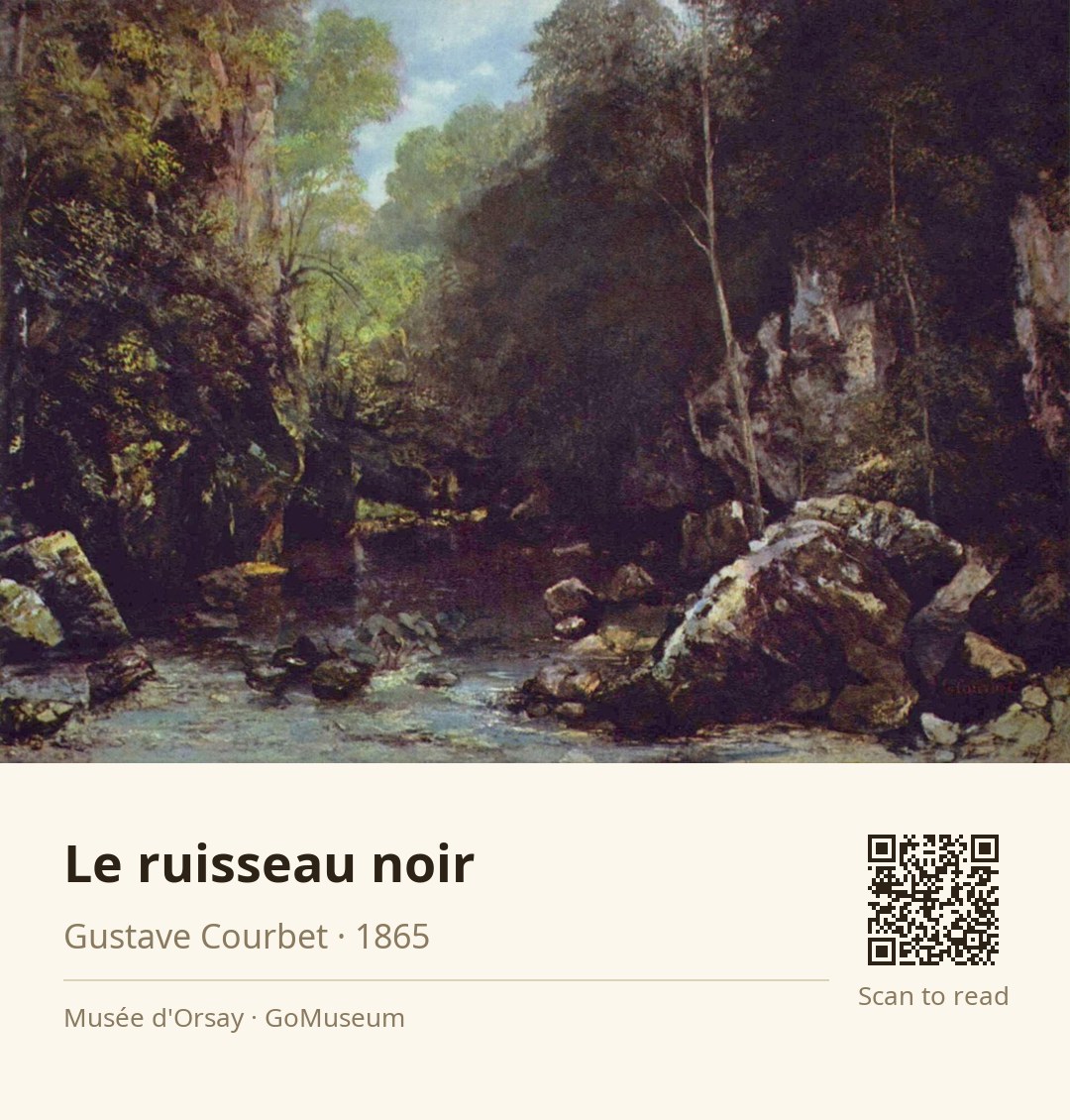
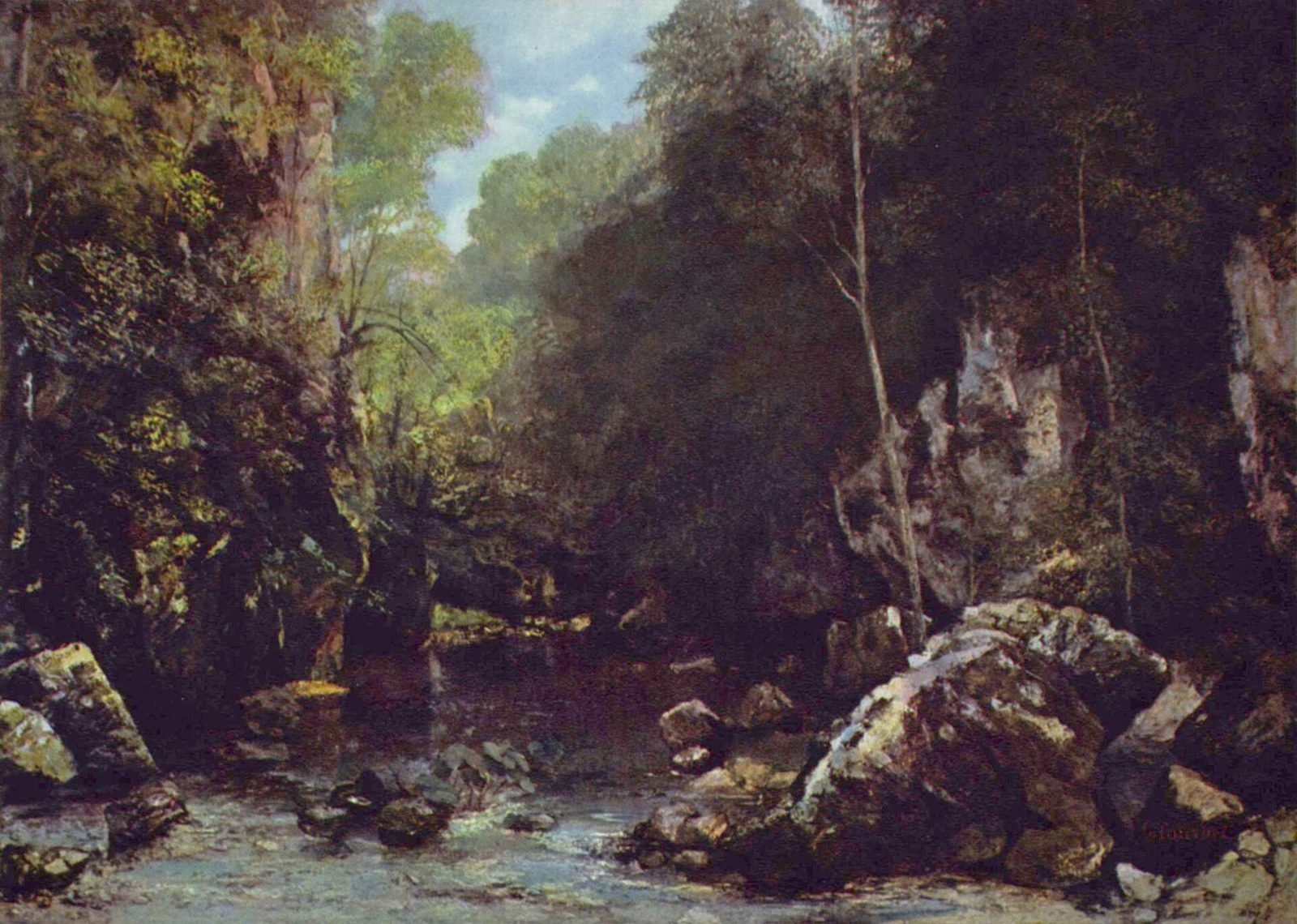
🎧 This work has audio narration — listen in the appTake a moment to really absorb the scene before you in Gustave Courbet's "Le ruisseau noir." Notice how the dark, winding stream snakes its way through the rugged gorge, flanked by towering moss-covered rocks. The lush greens of the foliage seem to burst with life, almost inviting you into this secluded world.
These details matter because they reveal Courbet's deep connection to nature and his commitment to realism. He painted this landscape in 1865, capturing the Loue River near his hometown of Ornans, a place he returned to time and again. The way he uses the palette knife instead of a brush creates a texture that feels almost tangible, allowing the viewer to sense the dampness of the air and the weight of the stones. This technique gives the painting a depth that draws you in, making you feel as if you could step right into the scene.
Courbet was a pioneer of the Realism movement, rejecting the romanticized landscapes of his predecessors. Instead, he focused on the raw beauty of nature, showcasing it as it truly is. This piece was even displayed at the 1867 Exposition Universelle, where it caught the eye of Napoleon III, who purchased it for his private collection.
As you stand here, think about what this painting evokes for you. Does it remind you of a place you love? Or perhaps it stirs a sense of adventure, beckoning you to explore the hidden corners of nature?
Gustave Courbet, born on June 10, 1819, in Ornans, France, was a pioneering painter who championed the Realism movement in 19th-century art. Rejecting the conventions of academic painting and the idealism of Romanticism, he focused on depicting the world as he observed it, often portraying unidealized peasants and workers in monumental compositions. His early works gained recognition, notably "After Dinner at Ornans," which won him a gold medal at the Salon of 1849, allowing him to exhibit without jury approval.
Courbet's commitment to realism was revolutionary; he believed that art should stem from personal experience rather than historical or mythological themes. His bold approach often sparked controversy, challenging societal norms and addressing social issues, which resonated with later movements like Impressionism and Cubism. Despite facing criticism and imprisonment for his political involvement during the Paris Commune, Courbet continued to create until his death on December 31, 1877, in Switzerland.
His legacy endures as a transformative figure in art history, whose unflinching depictions of everyday life laid the groundwork for modern artistic expression. Today, Courbet is celebrated for his vigorous and uncompromising work, which continues to engage audiences with its raw honesty and depth.
Gustave Courbet's "Le ruisseau noir" was painted in 1865 and quickly became a significant piece in his career. Commissioned by the Comte de Nieuwerkerke for Napoleon III, it was purchased for 2000 French francs, a considerable sum at the time. The painting was first exhibited at the 1867 Exposition Universelle in Paris, where it was displayed in the Emperor's pavilion, a testament to its importance. Following the fall of Napoleon III, the painting was seized and eventually assigned to the Louvre in 1879. By 1881, it was shown at the Luxembourg Museum under a different title, reflecting the evolving narrative around Courbet's work. Today, it resides at the Musée d'Orsay, continuing to captivate audiences with its raw representation of nature.
When you look closely at "Le ruisseau noir," you'll notice Courbet's innovative use of the palette knife, which creates a unique texture that feels almost alive. The dark foundation of the painting is built up with layers of paint, allowing the viewer's eye to be drawn into the depths of the gorge. The way he applies the paint diagonally adds a dynamic quality, almost as if the landscape is in motion. The rich greens and earthy tones evoke the lushness of the scene, while the absence of a bright sky challenges traditional landscape conventions. Instead of light dominating the composition, the darkness of the rocks and foliage takes center stage, inviting you to explore the hidden corners of this wild, untamed world.
This work, painted in 1865, reflects Courbet's innovative techniques that influenced future generations of artists, including the Impressionists and even the Cubists. By emphasizing the raw beauty of nature and using a palette knife to create texture and depth, Courbet broke away from the idealized landscapes of his predecessors. His approach to depicting the Loue river, a personal and familiar subject, invites viewers to connect with the authenticity of the scene, marking a significant shift in how landscapes were perceived and painted in art history.
Interestingly, Courbet once claimed that "Le ruisseau noir" was perhaps the best painting he ever created. This reflects not only his pride in this particular work but also his deep connection to the landscape of his native Ornans, which he returned to repeatedly for inspiration. The painting captures a moment in time that Courbet felt was uniquely significant, showcasing his love for the natural world.
Courbet frequently returned to the Loue River near his hometown of Ornans for inspiration, making this area a significant part of his artistic identity and personal history.
Unlike many of his contemporaries who primarily used brushes, Courbet employed a palette knife to create texture and depth, allowing for a more dynamic and tactile representation of the landscape.