The Wounded Man
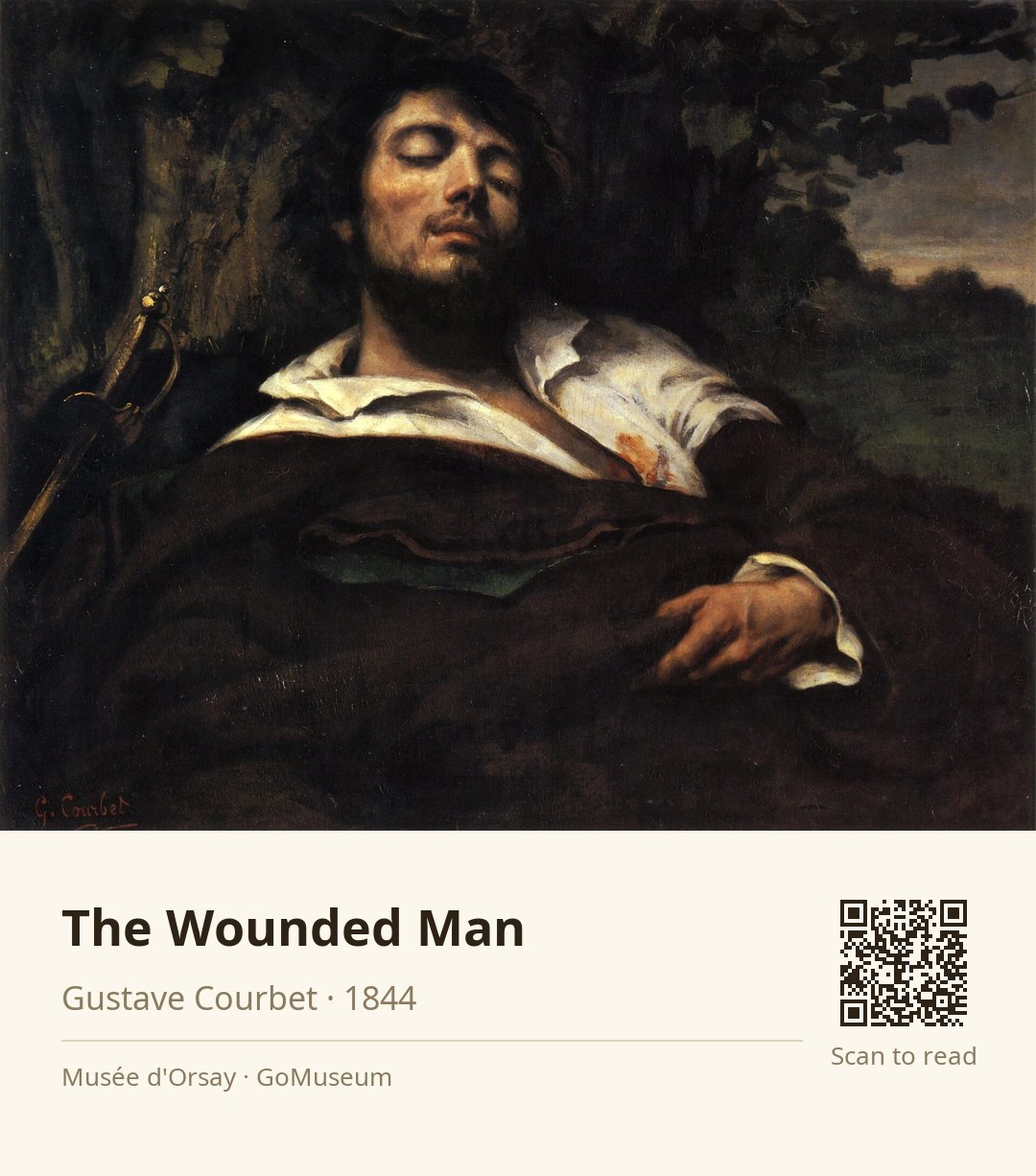
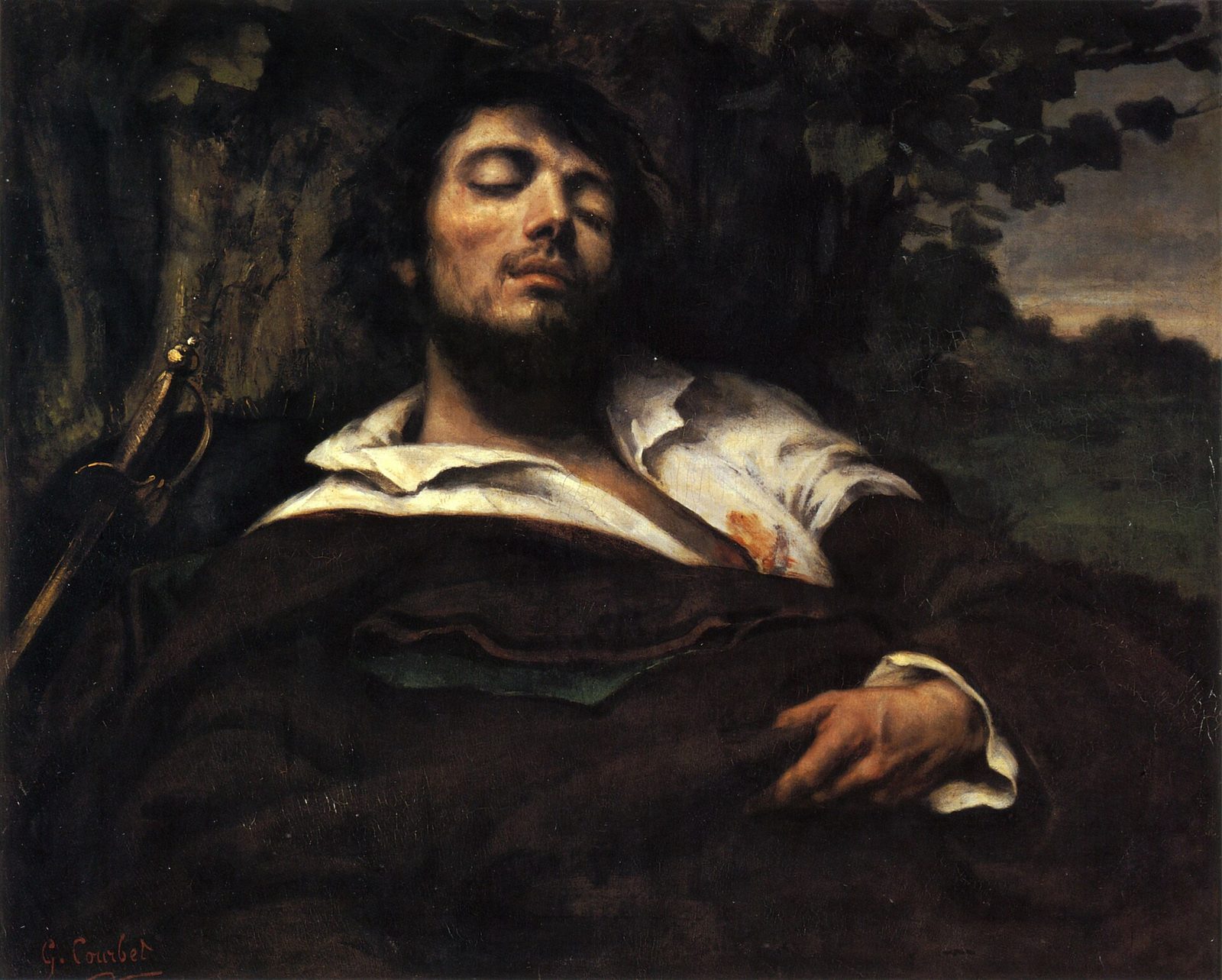
🎧 This work has audio narration — listen in the appTake a moment to really look at "The Wounded Man" by Gustave Courbet. Notice how the figure, leaning against a tree, has his eyes closed, seemingly lost in a moment of vulnerability. The bloodstain on his shirt and the sword beside him tell a story of conflict and pain. These details are crucial because they transform this piece from a simple self-portrait into a profound statement about suffering and heroism. Courbet painted this in 1844, during a tumultuous time in his life, reflecting not just his personal struggles but also a broader commentary on the human condition. Originally, he depicted a woman beside him, likely a representation of his lost love, but later replaced her with the sword, emphasizing his solitude and battle. As you stand here, consider: what does this wounded figure evoke in you? How does it resonate with your own experiences of struggle?
Gustave Courbet, born on June 10, 1819, in Ornans, France, was a pioneering painter who championed the Realism movement in 19th-century art. Rejecting the conventions of academic painting and the idealism of Romanticism, he focused on depicting the world as he observed it, often portraying unidealized peasants and workers in monumental compositions. His early works gained recognition, notably "After Dinner at Ornans," which won him a gold medal at the Salon of 1849, allowing him to exhibit without jury approval.
Courbet's commitment to realism was revolutionary; he believed that art should stem from personal experience rather than historical or mythological themes. His bold approach often sparked controversy, challenging societal norms and addressing social issues, which resonated with later movements like Impressionism and Cubism. Despite facing criticism and imprisonment for his political involvement during the Paris Commune, Courbet continued to create until his death on December 31, 1877, in Switzerland.
His legacy endures as a transformative figure in art history, whose unflinching depictions of everyday life laid the groundwork for modern artistic expression. Today, Courbet is celebrated for his vigorous and uncompromising work, which continues to engage audiences with its raw honesty and depth.
Gustave Courbet's 'The Wounded Man' was painted between 1844 and 1854, during a period marked by personal upheaval. Originally commissioned as a romantic self-portrait, it featured a woman, likely his beloved Virginie Binet, resting on his shoulder. However, after their relationship dissolved around 1851, Courbet reworked the piece, replacing her with a sword and adding a bloodstain to his shirt, transforming the narrative into one of solitude and suffering. This poignant shift reflects not only his heartbreak but also a broader commentary on the human condition. The painting was first exhibited at the Paris Salon in 1855, where it garnered attention, and later in 1867. After Courbet's death in 1877, the painting remained in his family's collection until it was sold to the state in 1881. It has since been housed at the Musée d'Orsay, where it continues to resonate with viewers today.
As you gaze at 'The Wounded Man,' notice the raw intensity of Courbet's brushwork. The thick, expressive strokes convey a sense of urgency and emotional turmoil, almost as if the paint itself is alive with the artist's feelings. The use of color is striking; the deep reds of the bloodstain contrast sharply with the earthy tones of the background, drawing your eye to the heart of the figure's pain. The composition is carefully structured, with the man leaning against the tree, creating a diagonal line that guides your gaze across the canvas. This positioning not only emphasizes his vulnerability but also evokes a sense of isolation. The scale of the painting, larger than life, invites you to step into his world of suffering, making the experience feel intimate yet monumental. Courbet's choice to depict himself in such a state of distress challenges traditional notions of heroism, pushing the boundaries of self-portraiture into a realm of profound introspection.
By depicting himself as a wounded figure, Courbet challenged the romanticized ideals of heroism and beauty, instead embracing raw emotion and vulnerability. This painting influenced later movements, particularly Realism, by emphasizing the importance of personal experience and the human condition. Courbet's approach inspired artists like the Impressionists, who would further explore the interplay of light and emotion in everyday life. Remember, this piece is a testament to the power of authenticity in art, a legacy that resonates even today.
Art historians have discovered that beneath the surface, remnants of earlier compositions exist, including a head of a woman from the original version. This layering of history within the painting adds a fascinating depth to its narrative, revealing Courbet's evolving emotional landscape and artistic process.
Art historians have discovered that beneath the surface of 'The Wounded Man,' there are remnants of earlier compositions, including a head of a woman from the original version and a second painting that depicted two lovers, one of whom is a younger Courbet.