The Cliff at Étretat after a Storm
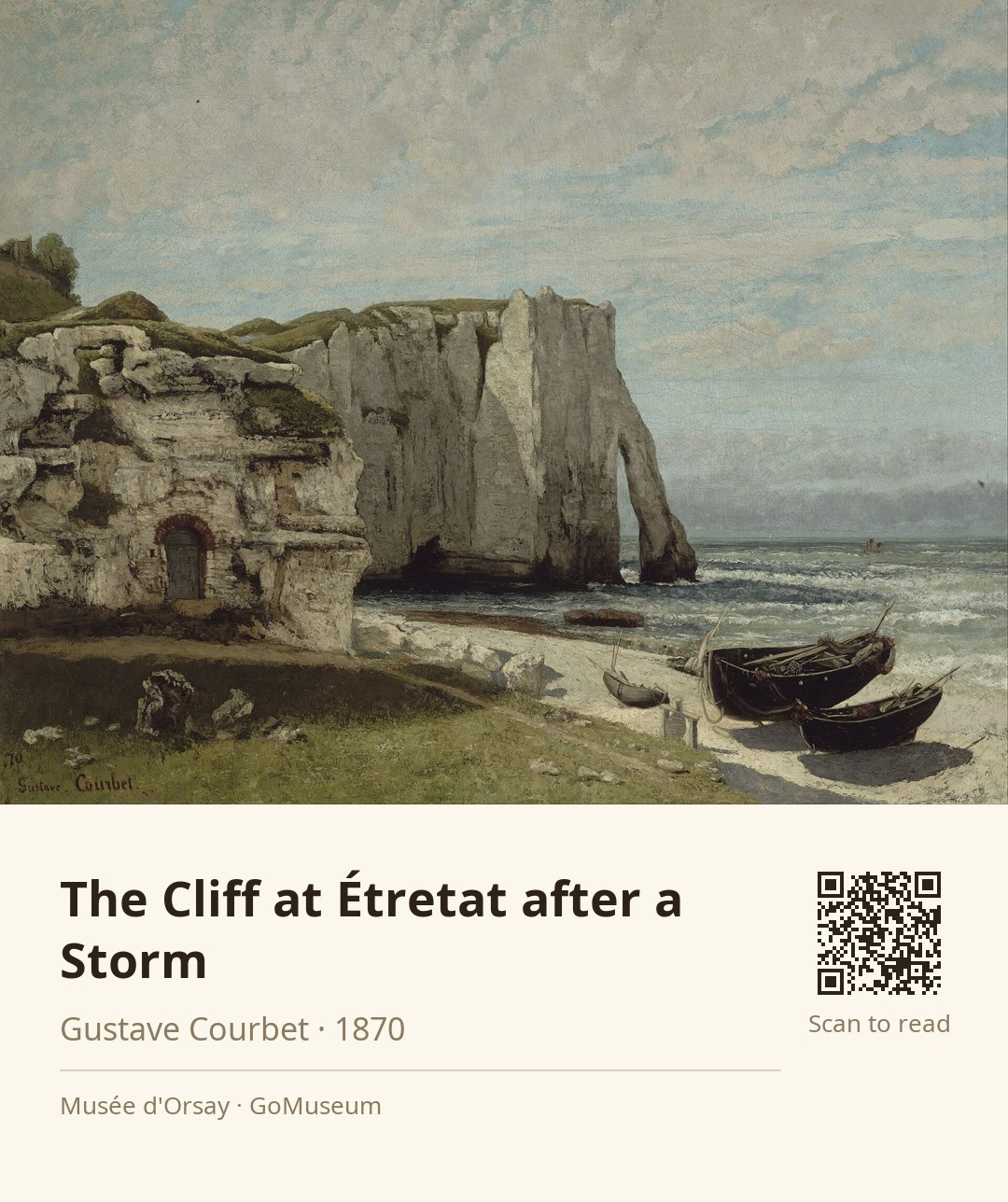
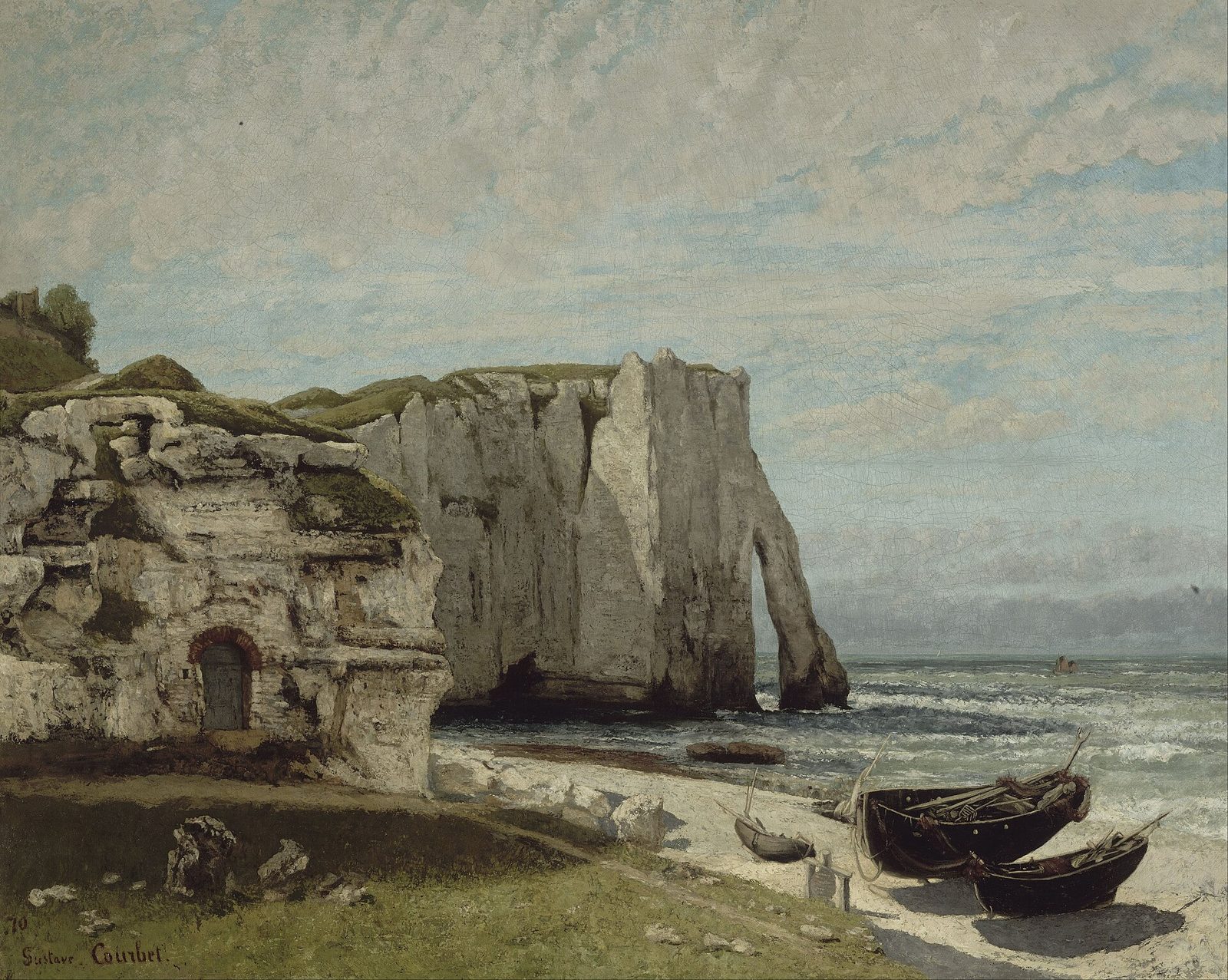
🎧 This work has audio narration — listen in the appTake a moment to really soak in the drama of this scene. Gustave Courbet captures the raw power of nature in “The Cliff at Étretat after a Storm.” Look closely at the tumultuous waves crashing against the rugged cliffs. Notice how the frothy white caps contrast with the deep blues and greens of the sea. It’s almost as if the ocean is alive, fighting against the stone.
These details matter because they reflect Courbet’s fascination with realism and the sublime. He doesn’t just paint a pretty picture; he invites you to feel the tension between man and nature, the chaos after the storm. The boats on the beach, seemingly small and vulnerable, remind us of our place in the vastness of the world.
Created in 1870, this painting was part of a period when Courbet was exploring the relationship between landscape and emotion. It was exhibited at the Salon that same year, capturing the attention of art lovers and critics alike.
As you stand here, think about the storm that just passed. What emotions does this scene evoke for you? Can you feel the power of nature in your own life?
Gustave Courbet, born on June 10, 1819, in Ornans, France, was a pioneering painter who championed the Realism movement in 19th-century art. Rejecting the conventions of academic painting and the idealism of Romanticism, he focused on depicting the world as he observed it, often portraying unidealized peasants and workers in monumental compositions. His early works gained recognition, notably "After Dinner at Ornans," which won him a gold medal at the Salon of 1849, allowing him to exhibit without jury approval.
Courbet's commitment to realism was revolutionary; he believed that art should stem from personal experience rather than historical or mythological themes. His bold approach often sparked controversy, challenging societal norms and addressing social issues, which resonated with later movements like Impressionism and Cubism. Despite facing criticism and imprisonment for his political involvement during the Paris Commune, Courbet continued to create until his death on December 31, 1877, in Switzerland.
His legacy endures as a transformative figure in art history, whose unflinching depictions of everyday life laid the groundwork for modern artistic expression. Today, Courbet is celebrated for his vigorous and uncompromising work, which continues to engage audiences with its raw honesty and depth.
This painting captures a moment in time at the picturesque site of Étretat, located in Seine-Maritime, France. However, its journey took a dark turn during World War II when the painting was confiscated by the Nazi regime. After the war, it found its way back to France and has been housed at the Musée d'Orsay since 1986.
In 'The Cliff at Étretat after a Storm', Courbet employs a dynamic brushwork that conveys the raw energy of the crashing waves. Notice how the thick application of paint creates texture, making the water appear almost three-dimensional. The contrasting colors—deep blues and greens against the frothy whites—enhance the sense of movement and chaos. Courbet's composition draws your eye towards the cliffs, which stand resolute against the tumultuous sea, emphasizing the struggle between nature and man. The scale of the cliffs, towering over the small boats on the beach, reinforces the insignificance of humanity in the face of nature's might. This masterful handling of light and shadow adds depth, creating a dramatic interplay that heightens the emotional impact of the scene.
The painting was confiscated by the Nazi regime during World War II, which not only interrupted its display but also added a layer of historical significance to its narrative, as it was later returned to France after the war.
Courbet employed a thick application of paint, known as impasto, which gives the waves a three-dimensional quality and enhances the overall dynamism of the scene.