L'Origine du monde
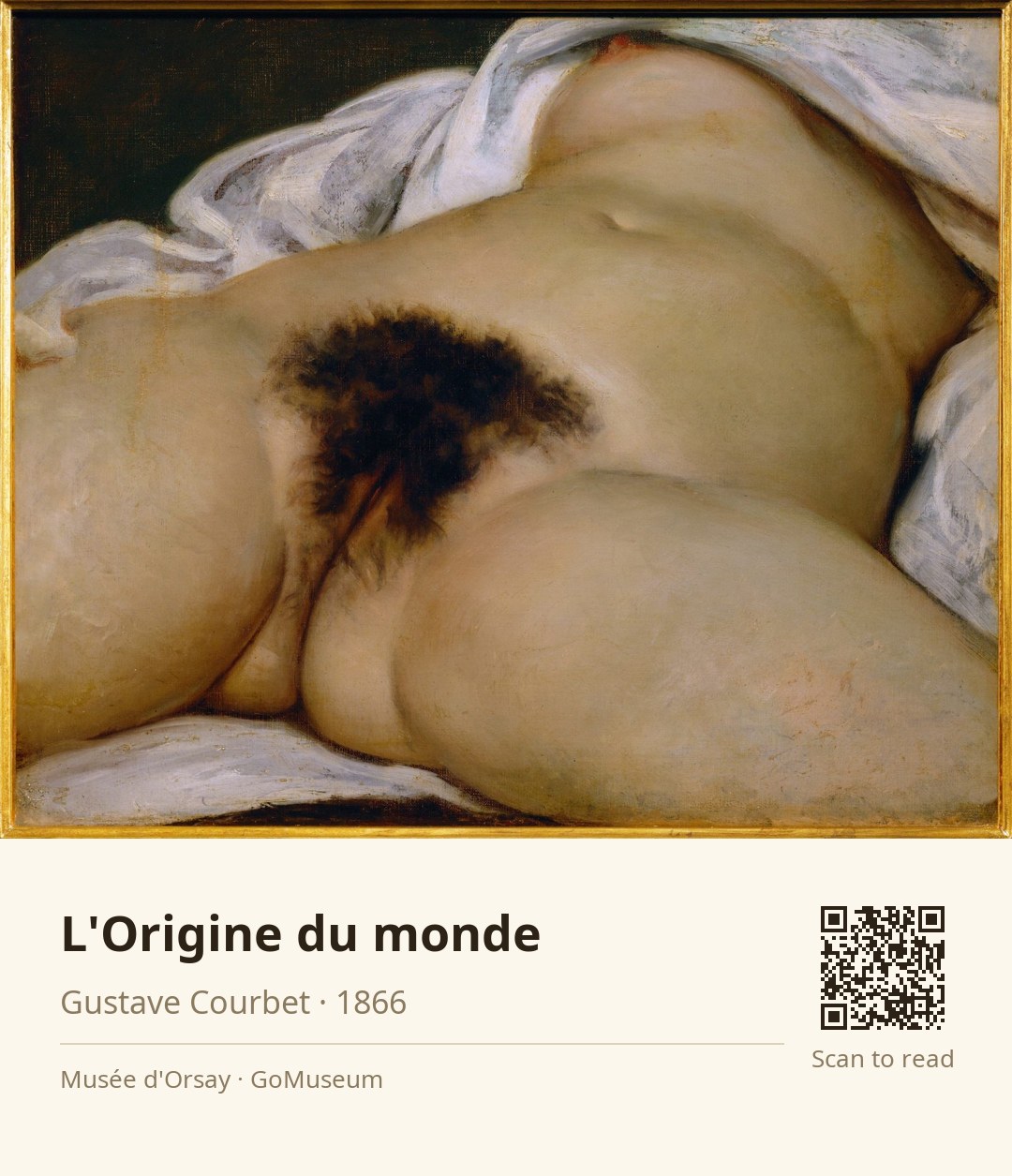
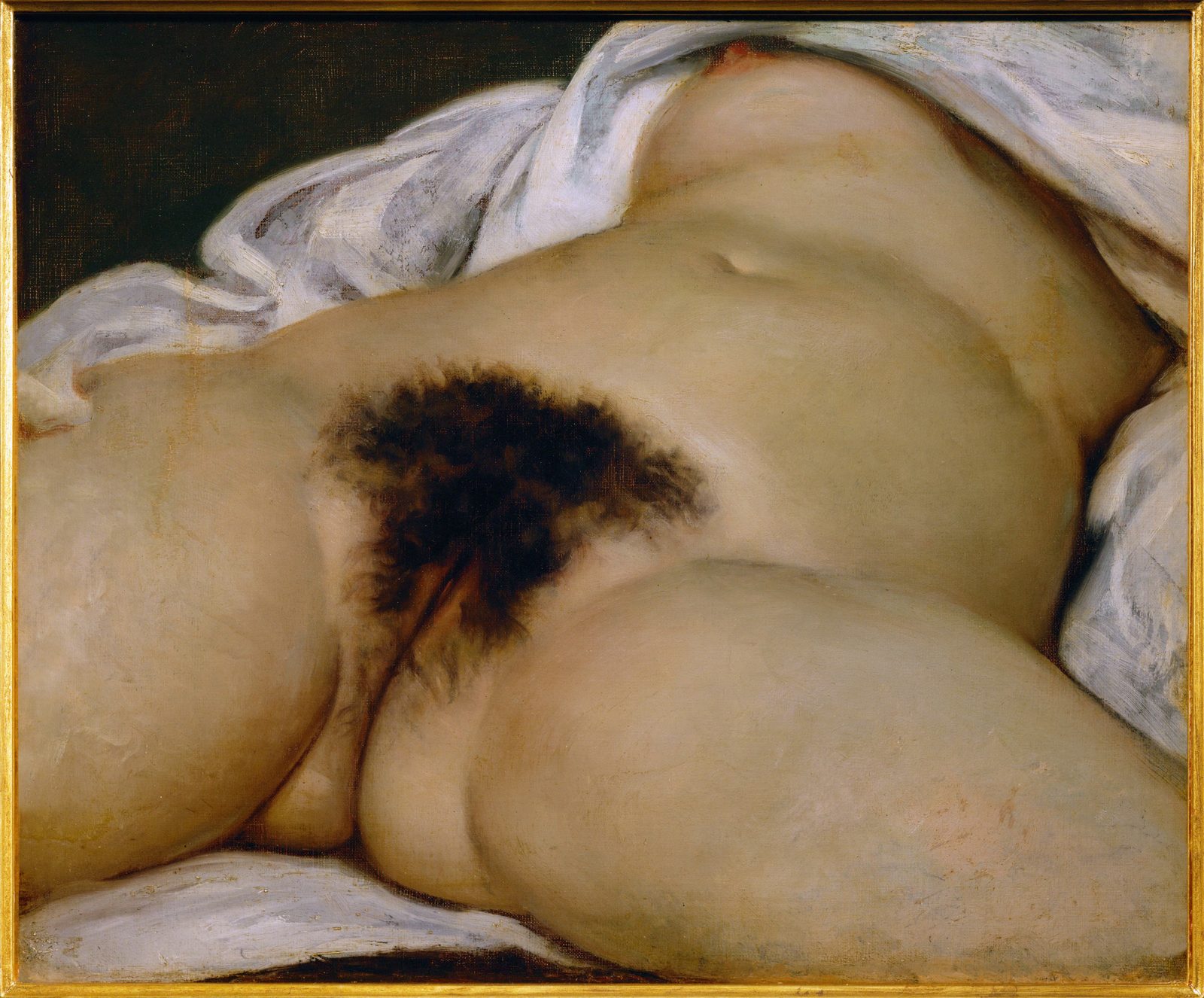
🎧 This work has audio narration — listen in the appTake a moment to really look at "L'Origine du monde" by Gustave Courbet. What strikes you first? It’s that bold, intimate portrayal of a woman's body, isn’t it? The way her legs are spread, the soft white sheets contrasting against her skin, draws you in, almost daring you to confront the rawness of the human form. Now, notice the details—the way the light caresses her abdomen and the subtle texture of her pubic hair. This isn’t just a painting; it’s a statement. Courbet isn’t shying away from the female body; he’s celebrating it, presenting it with a realism that was shocking for its time. In 1866, this was revolutionary, pushing against the boundaries of what art could depict and how society viewed nudity. Courbet was a pioneer of the Realism movement, rejecting the idealized forms of earlier art. He painted what he saw, and in this case, he chose to show a part of life that many would rather ignore. The painting was commissioned by an Ottoman diplomat, Khalil Bey, who wanted something provocative for his collection. This context adds layers to the work, suggesting a complex interplay of desire, power, and identity. As you stand here, think about the impact this piece has had over the years. It was hidden away for much of its early life, only coming into the public eye in the late 20th century. What does that say about our evolving relationship with art and the human body? How do you feel about confronting such a bold representation of femininity?
Gustave Courbet, born on June 10, 1819, in Ornans, France, was a pioneering painter who championed the Realism movement in 19th-century art. Rejecting the conventions of academic painting and the idealism of Romanticism, he focused on depicting the world as he observed it, often portraying unidealized peasants and workers in monumental compositions. His early works gained recognition, notably "After Dinner at Ornans," which won him a gold medal at the Salon of 1849, allowing him to exhibit without jury approval.
Courbet's commitment to realism was revolutionary; he believed that art should stem from personal experience rather than historical or mythological themes. His bold approach often sparked controversy, challenging societal norms and addressing social issues, which resonated with later movements like Impressionism and Cubism. Despite facing criticism and imprisonment for his political involvement during the Paris Commune, Courbet continued to create until his death on December 31, 1877, in Switzerland.
His legacy endures as a transformative figure in art history, whose unflinching depictions of everyday life laid the groundwork for modern artistic expression. Today, Courbet is celebrated for his vigorous and uncompromising work, which continues to engage audiences with its raw honesty and depth.
In 1866, Gustave Courbet painted 'L'Origine du monde' under the commission of Khalil Bey, an Ottoman diplomat who sought something provocative for his collection. This painting, a bold and intimate portrayal of a woman's body, was not publicly exhibited until the late 20th century, despite being known among art critics and collectors from its inception. The work's journey through various private collections is quite dramatic; after Khalil Bey's financial downfall, it changed hands multiple times, including a notable purchase by the antique dealer Antoine de La Narde in 1868. It was later rediscovered by Edmond de Goncourt in an antique shop in 1889, hidden behind a wooden panel. The painting eventually ended up with Baron François de Hatvany, who took it to Budapest. During World War II, it was looted by Soviet troops but ransomed back by Hatvany. In 1955, it was sold at auction to the psychoanalyst Jacques Lacan, who had it displayed in his home. Finally, in 1995, it was accepted by the French state and became part of the Musée d'Orsay's collection, where it remains today.
Courbet's technique in 'L'Origine du monde' is strikingly direct and visceral. The painting is an oil on canvas measuring just 46 by 55 centimeters, yet it commands attention with its intimate scale. Notice how the brushwork feels both deliberate and spontaneous, capturing the softness of skin against the stark white sheets. The light plays a crucial role here, illuminating the woman's abdomen and creating a sense of depth and realism. The composition is tightly cropped, focusing on the vulva and torso, which heightens the viewer's sense of intimacy and immediacy. The brown triangle in the upper left corner serves to frame the subject, drawing your eye directly to the pubic area, which is rendered with a rough yet sensitive handling of paint. This choice of perspective, along with the absence of limbs and facial features, invites a raw confrontation with the subject, challenging the viewer to engage with the female form in a way that was unprecedented for its time.
Painted in 1866, this audacious work offers a close-up view of a woman's body, focusing on the vulva and abdomen, which was unprecedented for its time. It challenged the conventions of academic painting and the romanticized portrayals of women, pushing the boundaries of realism into the realm of the provocative. This painting not only influenced the Realism movement but also paved the way for future artists to explore themes of sexuality and identity more openly. Courbet's fearless approach inspired generations of artists, from the Impressionists to contemporary creators, who have continued to grapple with the representation of the human body and the complexities of desire. Remember, this isn't just a painting; it's a bold statement that redefined the narrative of women's representation in art history.
One surprising anecdote about 'L'Origine du monde' is that it was once hidden behind a wooden panel in an antique shop, only to be discovered by Edmond de Goncourt in 1889. He was astonished to find such a provocative work obscured from view, which speaks volumes about the painting's controversial nature and the lengths to which it was kept out of the public eye. This hidden history adds an intriguing layer to its legacy, illustrating how art can be both celebrated and concealed.