Portrait of Régis Courbet, Father of the Artist
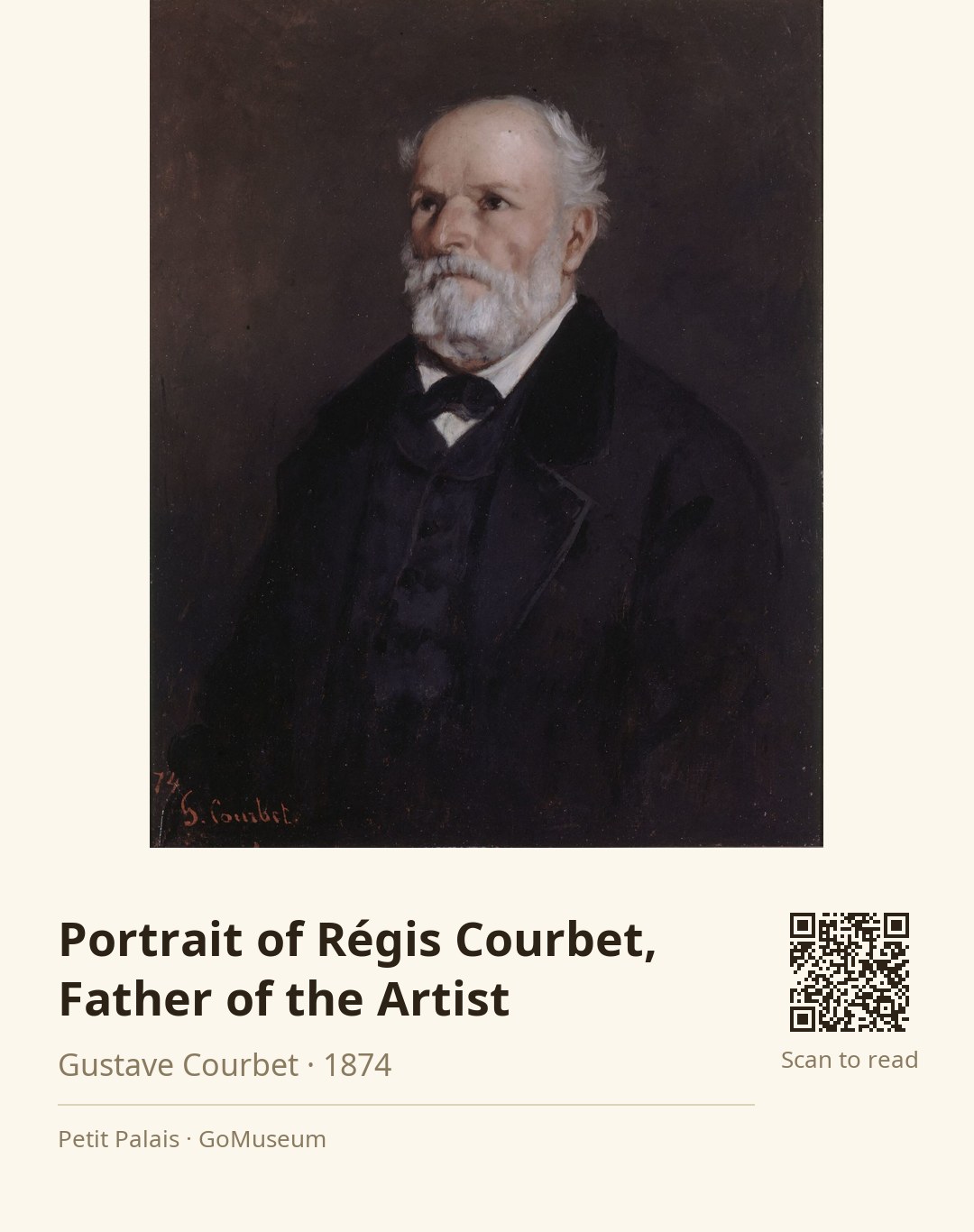
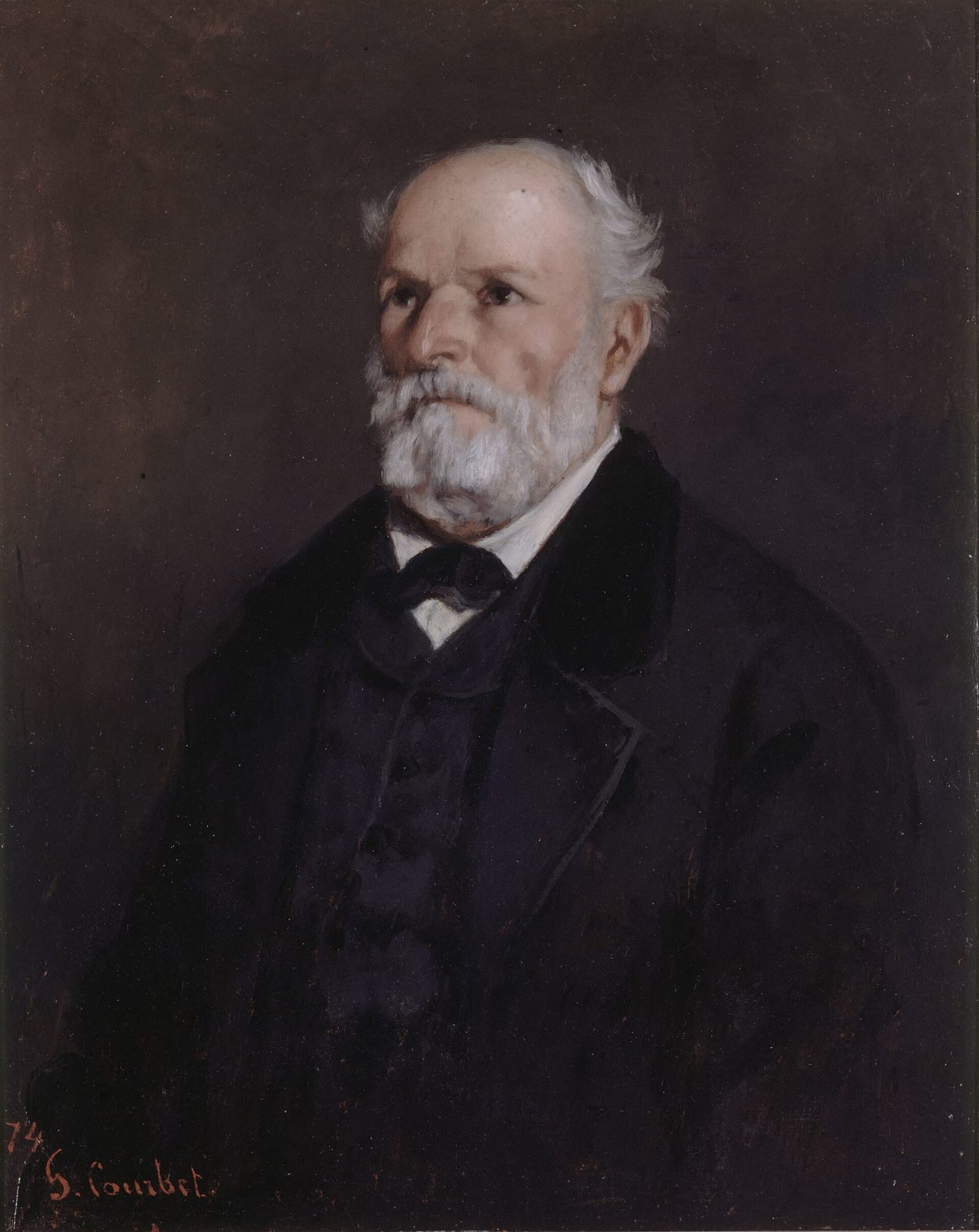
🎧 This work has audio narration — listen in the appRégis Courbet, with his distinguished white beard and serious expression, stands in a three-quarter view, dressed in a dark suit and bow tie. The muted brown background enhances the light tones of his skin, drawing your attention to the subtle brushwork that captures the textures of his clothing and the depth of his character.
This portrayal is significant not just as a family likeness but as a testament to Gustave Courbet’s commitment to realism. By choosing his father as a subject, Courbet emphasizes the personal connection between artist and model, grounding his work in the authenticity of lived experience. The somber palette reflects the weight of familial legacy and the contemplative nature of the man depicted, suggesting a depth of character that resonates with the viewer.
Courbet, a pioneer of the Realism movement, sought to represent the world as he saw it, rejecting the idealized forms of previous artistic traditions. His work often challenged societal norms and conventions, focusing on the lives of ordinary people rather than grand historical narratives. In 1871, he was imprisoned for his political beliefs during the Paris Commune, and by 1874, he created this intimate portrait of his father, capturing not just a likeness but a moment in their shared history.
Gustave Courbet, born on June 10, 1819, in Ornans, France, was a pioneering painter who championed the Realism movement in 19th-century art. Rejecting the conventions of academic painting and the idealism of Romanticism, he focused on depicting the world as he observed it, often portraying unidealized peasants and workers in monumental compositions. His early works gained recognition, notably "After Dinner at Ornans," which won him a gold medal at the Salon of 1849, allowing him to exhibit without jury approval.
Courbet's commitment to realism was revolutionary; he believed that art should stem from personal experience rather than historical or mythological themes. His bold approach often sparked controversy, challenging societal norms and addressing social issues, which resonated with later movements like Impressionism and Cubism. Despite facing criticism and imprisonment for his political involvement during the Paris Commune, Courbet continued to create until his death on December 31, 1877, in Switzerland.
His legacy endures as a transformative figure in art history, whose unflinching depictions of everyday life laid the groundwork for modern artistic expression. Today, Courbet is celebrated for his vigorous and uncompromising work, which continues to engage audiences with its raw honesty and depth.
In this portrait, Courbet's technique reveals his mastery of oil painting. The brushwork is smooth yet expressive, allowing for subtle gradations that bring out the textures of Régis's clothing and the contours of his face. The dark, muted brown background serves a dual purpose: it not only enhances the lighter tones of Régis's skin but also creates a somber mood that reflects the weight of the subject's character. Courbet's choice of a three-quarter view adds depth, inviting viewers to engage with the subject's contemplative expression. The scale of the painting, relatively large for a portrait, commands attention and emphasizes the importance of the figure depicted. This careful handling of paint and composition showcases Courbet's commitment to realism, capturing not just a likeness but the very essence of his father's spirit.
Courbet was imprisoned for six months in 1871 due to his political beliefs during the Paris Commune.
Initially, Courbet was inspired by literary figures like Victor Hugo and George Sand, but he later shifted to focus on painting from observed reality.
Courbet gained his first recognition as an artist during the late 1840s and early 1850s.