Paris › Musée d'Orsay › Paul Gauguin
Paul Gauguin at Musée d'Orsay
1848 – 1903
Eugène Henri Paul Gauguin was a French artist born on June 7, 1848, in Paris. His early life in Peru, where he experienced a privileged childhood, deeply influenced his artistic vision. Initially a stockbroker, Gauguin turned to painting full-time after a financial crisis in 1882. He was largely self-taught, drawing inspiration from his connections with artists like Camille Pissarro, who introduced him to Impressionism.
Gauguin's work evolved into a distinct style characterized by bold colors and symbolic themes, diverging from traditional Impressionism. His time in Brittany and later in Tahiti marked significant phases in his career, where he sought to capture the essence of native life and spirituality. Despite struggling with health and financial issues in his later years, his art gained recognition posthumously, largely due to the efforts of art dealer Ambroise Vollard.
Today, Gauguin is celebrated as a key figure in Post-Impressionism and a precursor to modern art, influencing artists like Picasso and Matisse. His exploration of color and form continues to resonate, securing his place in art history as a visionary who sought to transcend the confines of Western civilization.
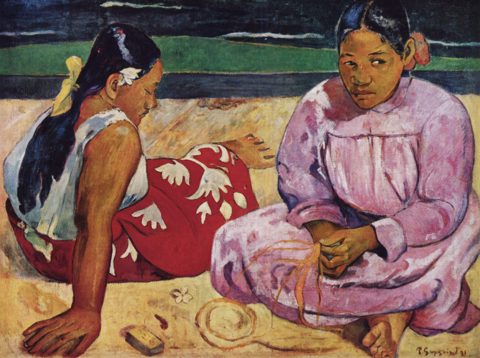 Tahitian Women on the Beach
Paul Gauguin
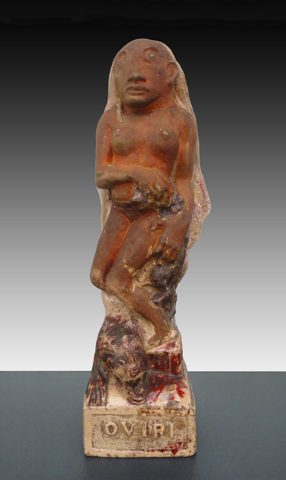 Oviri
Paul Gauguin
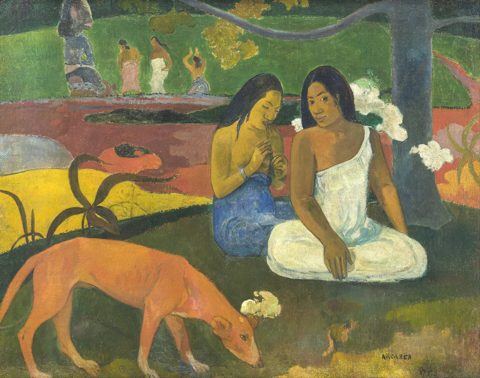 Arearea
Paul Gauguin
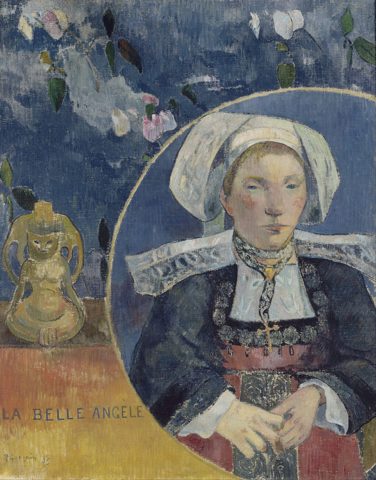 La belle Angèle
Paul Gauguin
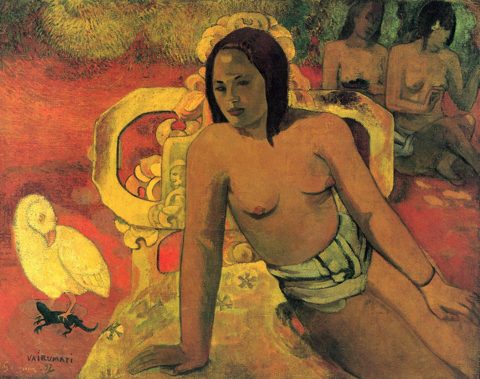 Vairumati
Paul Gauguin
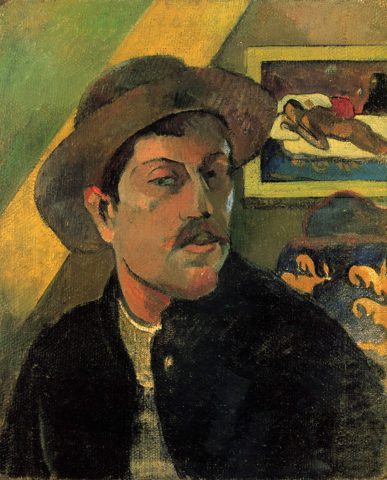 Self-portrait with hat
Paul Gauguin
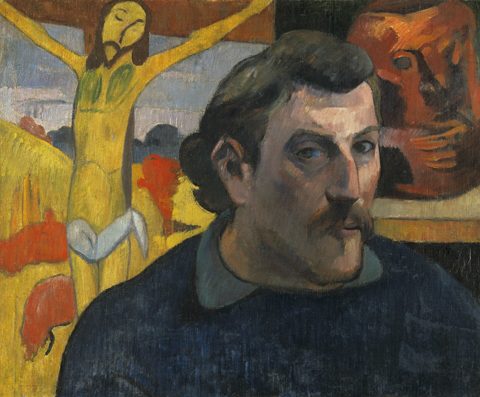 Portrait of the Artist with the Yellow Christ
Paul Gauguin
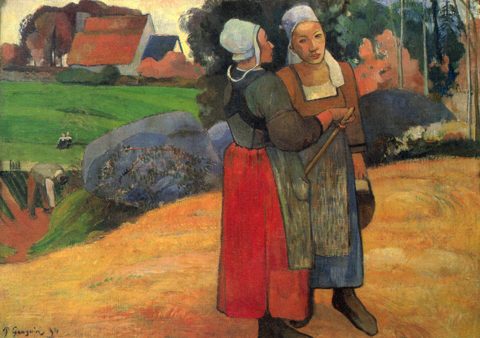 Paysannes bretonnes
Paul Gauguin
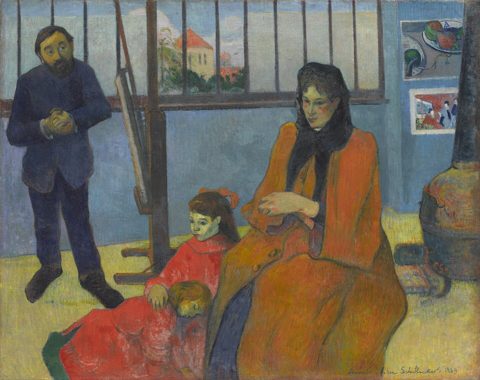 Schuffenecker's Studio
Paul Gauguin
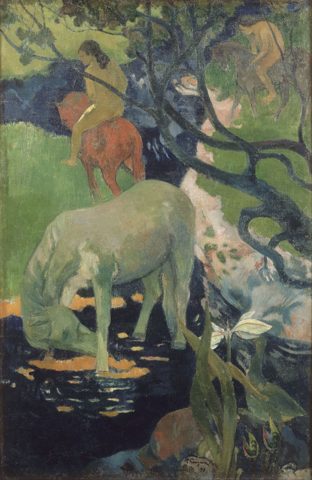 The White Horse
Paul Gauguin
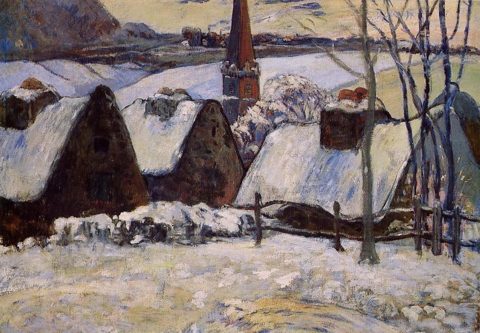 Village breton sous la neige
Paul Gauguin
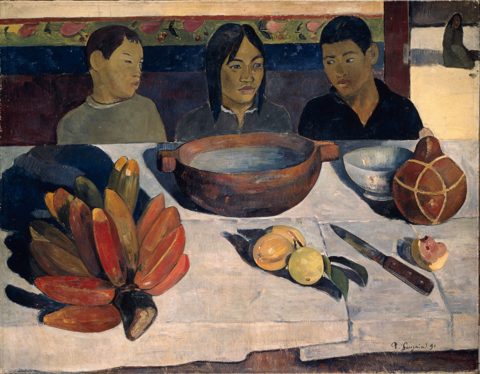 The Meal (The Bananas)
Paul Gauguin
