Tahitian Women on the Beach
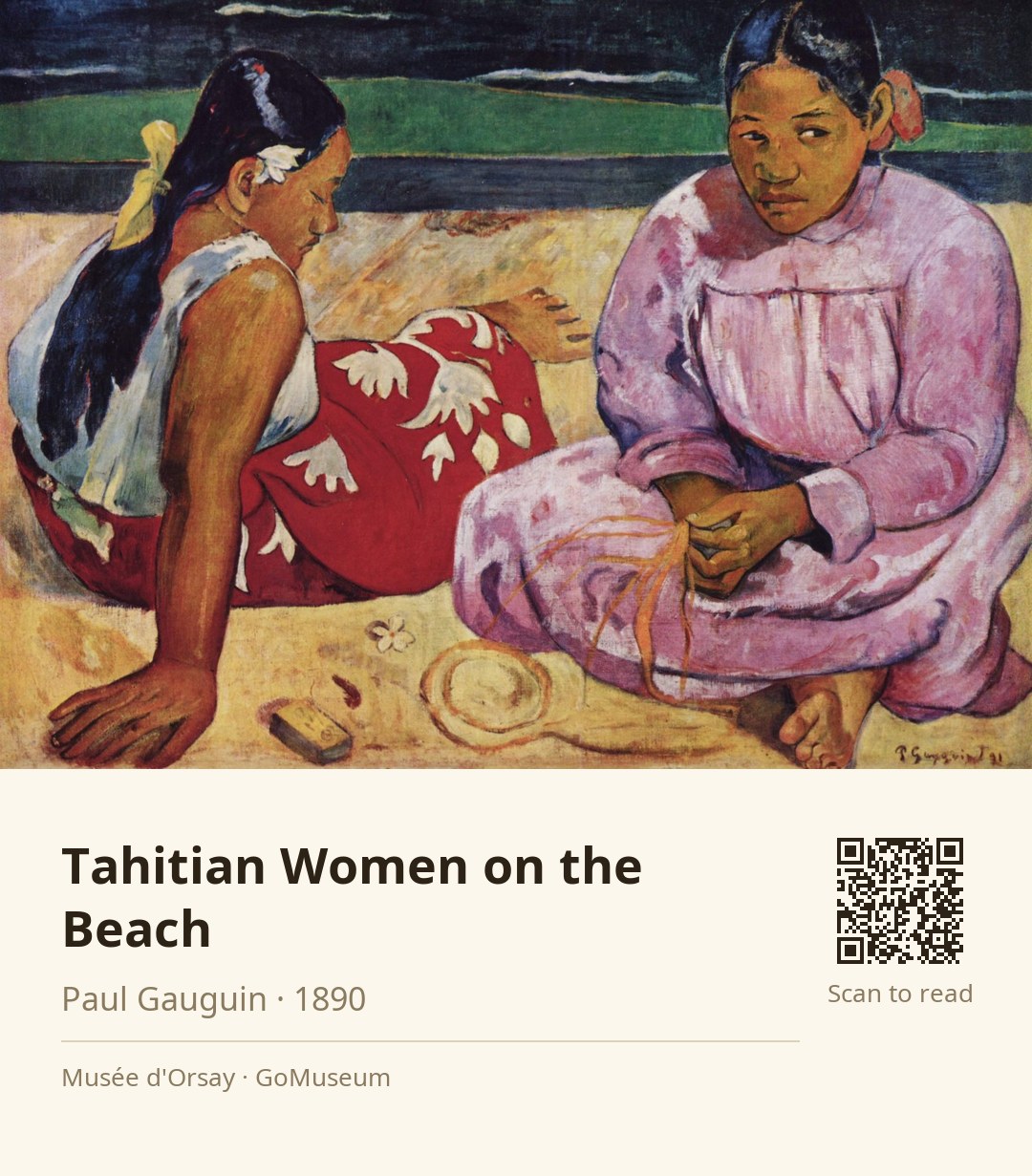
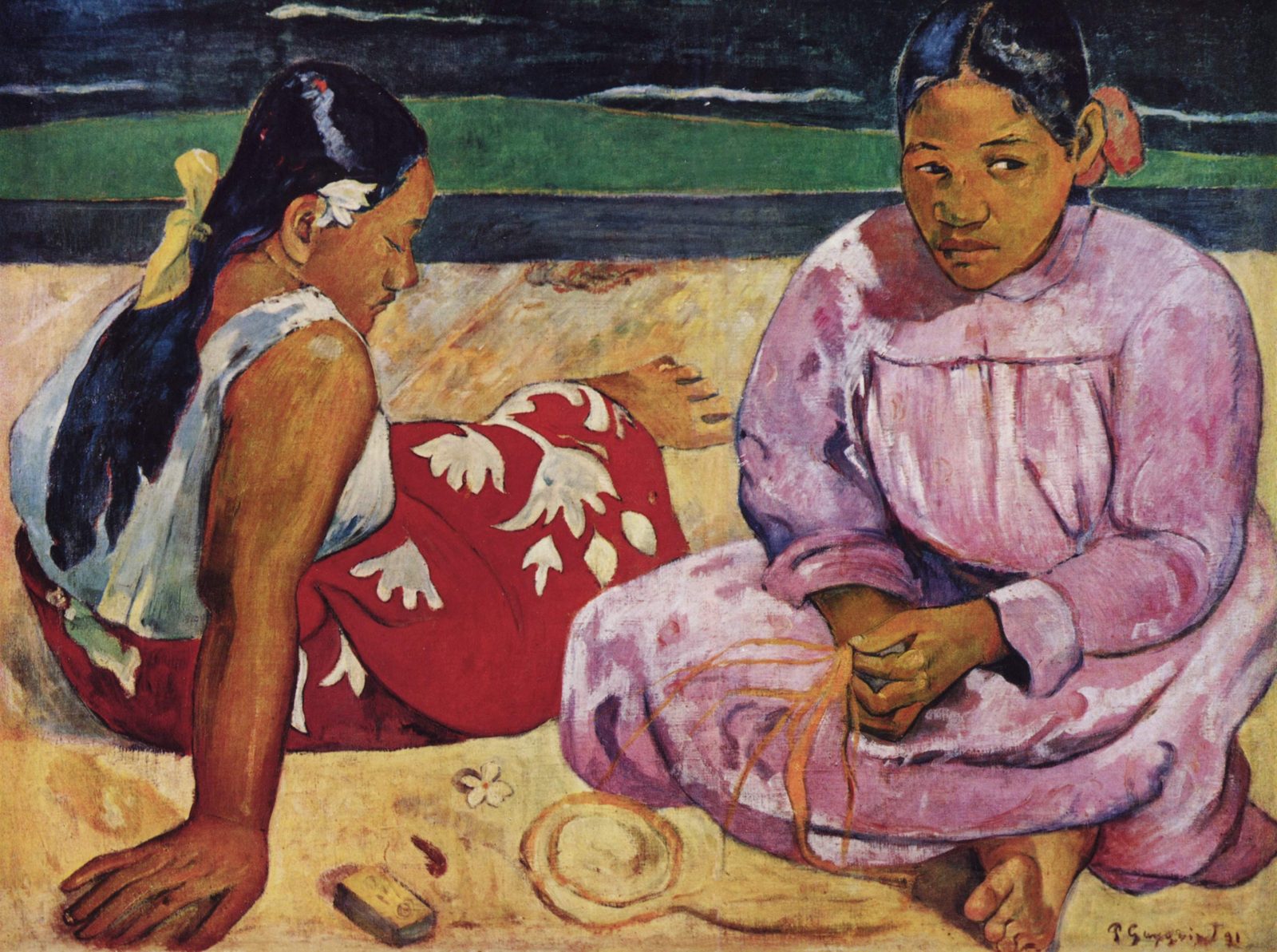
🎧 This work has audio narration — listen in the appTake a moment to really absorb the scene in front of you. Paul Gauguin’s "Tahitian Women on the Beach" isn’t just a painting; it’s a window into a world that captivated the artist. Look closely at the two women—notice their stillness and the way they seem almost lost in thought. The woman on the left wears a traditional pareu, while the one on the right is draped in a missionary dress, hinting at the complex cultural interplay of the time.
These details matter because they reveal Gauguin’s fascination with the tension between the untouched beauty of Tahiti and the encroaching influence of colonialism. The women, with their powerful physiques and serene expressions, challenge European ideals of beauty, embodying a raw, unfiltered essence that Gauguin sought to capture.
Created in 1890 during his first stay in Tahiti, this painting is part of a series where Gauguin attempted to escape the materialism of Europe, searching instead for a deeper artistic truth.
As you stand here, consider what paradise means to you. Does it look like this tranquil scene, or does it hold a different shape in your imagination?
Eugène Henri Paul Gauguin was a French artist born on June 7, 1848, in Paris. His early life in Peru, where he experienced a privileged childhood, deeply influenced his artistic vision. Initially a stockbroker, Gauguin turned to painting full-time after a financial crisis in 1882. He was largely self-taught, drawing inspiration from his connections with artists like Camille Pissarro, who introduced him to Impressionism.
Gauguin's work evolved into a distinct style characterized by bold colors and symbolic themes, diverging from traditional Impressionism. His time in Brittany and later in Tahiti marked significant phases in his career, where he sought to capture the essence of native life and spirituality. Despite struggling with health and financial issues in his later years, his art gained recognition posthumously, largely due to the efforts of art dealer Ambroise Vollard.
Today, Gauguin is celebrated as a key figure in Post-Impressionism and a precursor to modern art, influencing artists like Picasso and Matisse. His exploration of color and form continues to resonate, securing his place in art history as a visionary who sought to transcend the confines of Western civilization.
This painting was part of a series that Gauguin produced while grappling with the complexities of colonial influence on the islands. Initially gifted to Captain Arnaud in Tahiti, the painting changed hands over the years, eventually finding its way to the Musée d'Orsay in Paris, where it resides today. It has been exhibited in various prestigious venues, including the Orangerie des Tuileries and the Grand Palais in Paris. The reception of the work was mixed; while some recognized its bold departure from traditional European aesthetics, others were puzzled by its ambiguity and the stark portrayal of its subjects. Gauguin's friend Edgar Degas played a crucial role in promoting the painting, suggesting it be exhibited in Paris, thus introducing it to a wider audience.
In "Tahitian Women on the Beach," Gauguin employs a striking use of color and composition that draws you into the scene. Notice how he crowds the two women into the canvas, yet they exist in their own worlds, creating a tension that feels almost palpable. The brushwork is bold and expressive, with ocher and yellow hues creating a warm, inviting atmosphere, while the contrasting deep reds and turquoises add depth and complexity. Gauguin's use of synthetism is evident; he reduces the figures and background to simplified shapes, allowing the colors to speak for themselves. This technique, which he coined, emphasizes the inner symbolism rather than mere representation. The women's powerful physiques and deep amber skin challenge conventional beauty standards of the time, while their stillness evokes a sense of mystery, inviting you to ponder the silence that Gauguin found so captivating. The ambiguity of their setting—whether on a beach or amidst architecture—adds to the painting's allure, blurring the lines between reality and Gauguin's idealized vision of paradise.
Created during his transformative time in Tahiti, this work reflects Gauguin's quest for a deeper, more spiritual connection to the world, moving away from the materialism of Europe. His unique style, characterized by vibrant colors and symbolic forms, influenced a generation of artists, including the likes of Picasso and Matisse. This painting, with its enigmatic figures and rich colors, challenges viewers to reconsider their ideas of paradise and beauty, marking a significant shift towards modern art's exploration of the inner self and cultural identity. Remember, Gauguin wasn't just painting; he was forging a new path for future artists to explore the mystical and the personal in their work.
One intriguing aspect of "Tahitian Women on the Beach" is that Gauguin initially titled it "Femmes de Tahiti, ou Sur la plage," which translates to "Women of Tahiti, or On the Beach." This title has led to debates among art historians about the true setting of the painting, as the background may not depict a beach at all, but rather architectural elements, adding layers of complexity to the viewer's interpretation.
Gauguin initially titled the painting 'Femmes de Tahiti, ou Sur la plage,' which translates to 'Women of Tahiti, or On the Beach.' This title has sparked debates among art historians regarding the true setting depicted, as the background might not actually represent a beach.
The women in the painting are depicted with powerful physiques and deep amber skin, presenting them as almost androgynous figures that defy the conventional European ideals of beauty at the time. Their muscularity and the mask-like quality of their faces further shift the focus from traditional portraiture to a more symbolic representation.