Schuffenecker's Studio
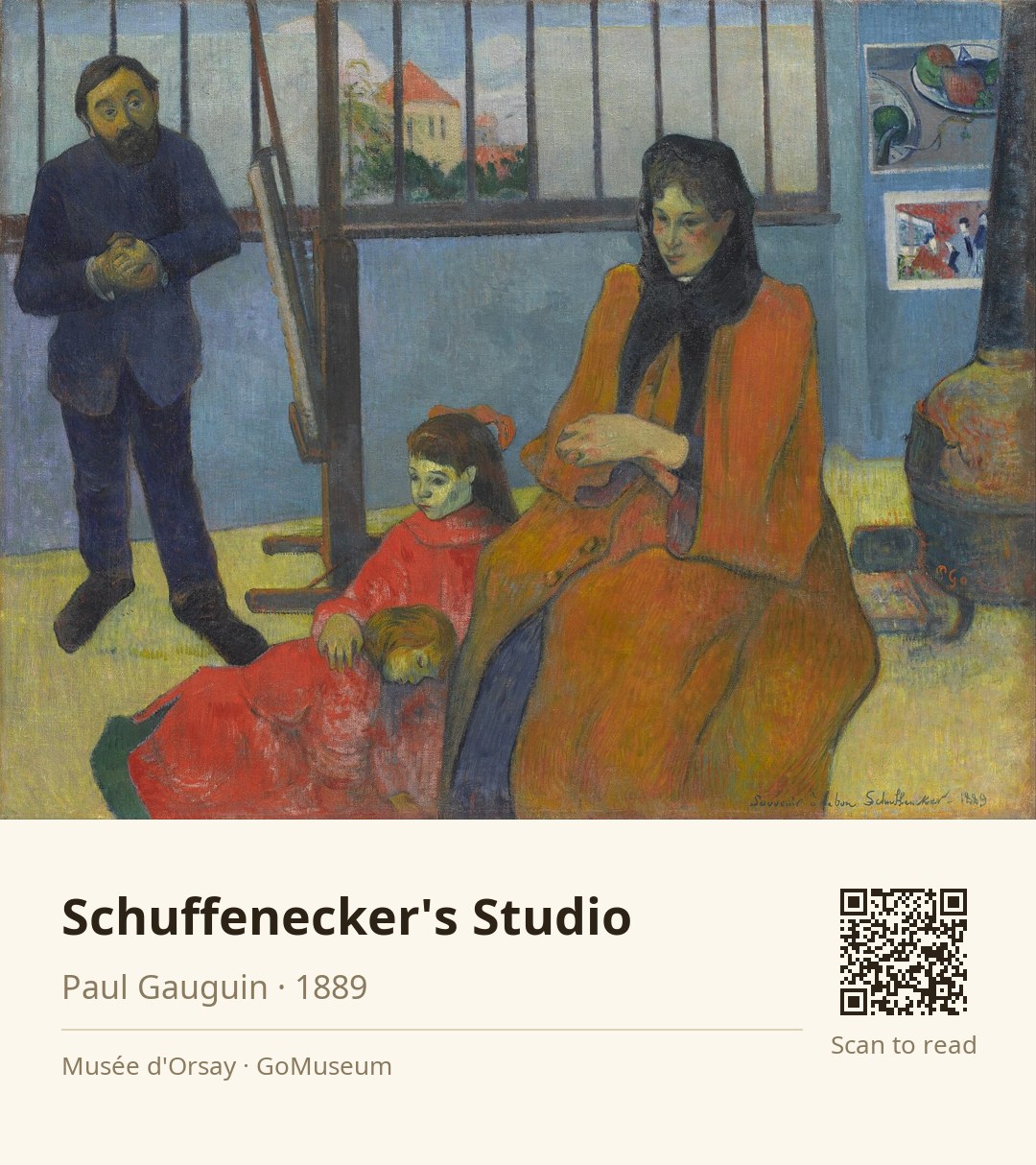
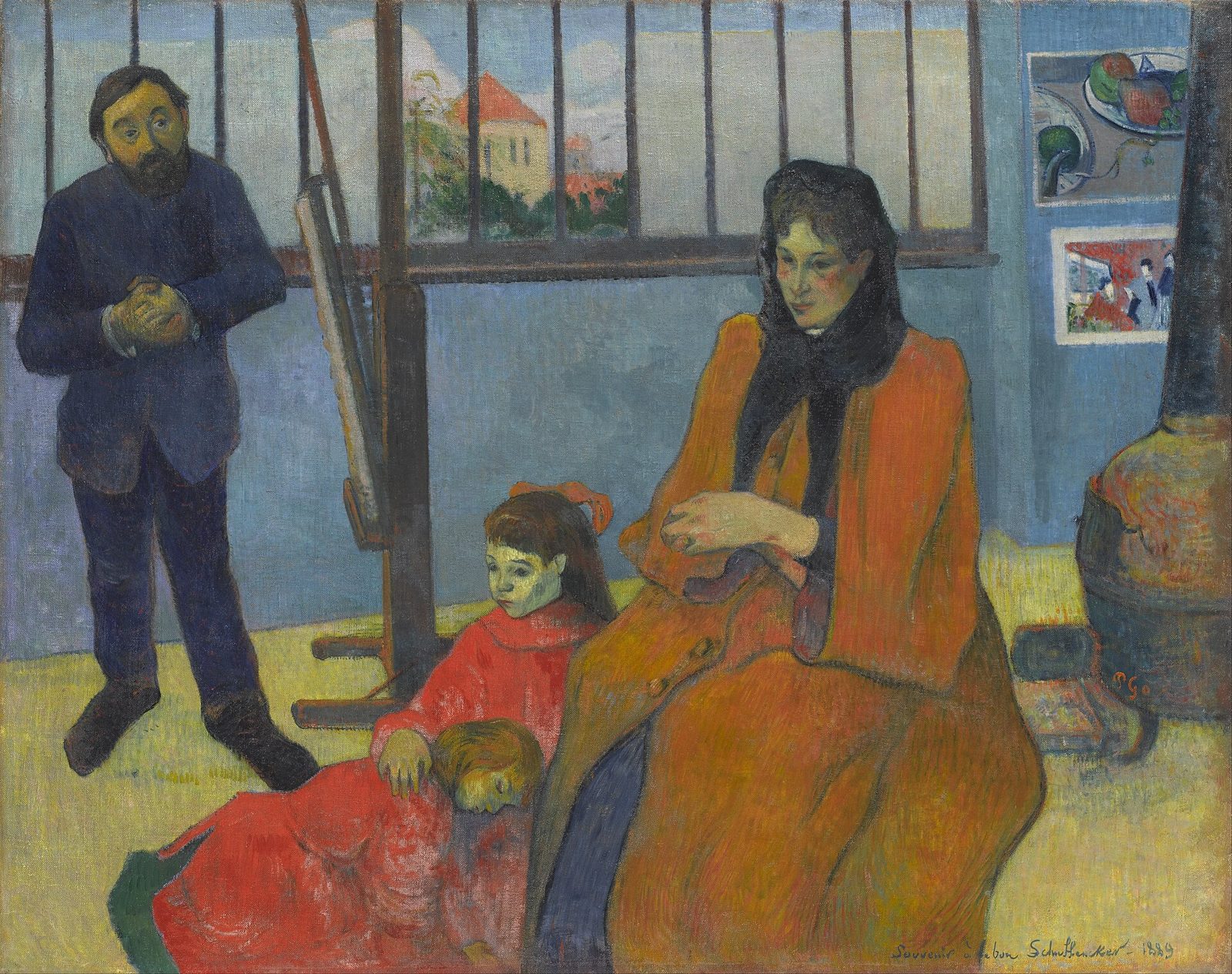
🎧 This work has audio narration — listen in the appTake a moment to really look at "Schuffenecker's Studio" by Paul Gauguin. Notice how the vibrant colors leap off the canvas, especially the deep reds and greens that bring life to the scene. On the wall, there's a still-life of fruits and a Japanese print—elements that speak to the popular fascination with Japonism during Gauguin's time.
These details matter because they reveal Gauguin's world and the influences that shaped his art. The still-life not only adds a touch of domesticity but also reflects the artist's interest in integrating different cultures into his work. It’s a glimpse into a moment where East meets West, a theme that resonates throughout his career.
Painted in 1889, this piece captures a pivotal time for Gauguin, just after his return from the Marquesas Islands. He was welcomed into the home of his friend Émile Schuffenecker, where this intimate family portrait unfolds. It’s more than just a painting; it’s a snapshot of friendship and artistic community.
As you stand here, think about the relationships that shape your own life. What stories do your surroundings tell?
Eugène Henri Paul Gauguin was a French artist born on June 7, 1848, in Paris. His early life in Peru, where he experienced a privileged childhood, deeply influenced his artistic vision. Initially a stockbroker, Gauguin turned to painting full-time after a financial crisis in 1882. He was largely self-taught, drawing inspiration from his connections with artists like Camille Pissarro, who introduced him to Impressionism.
Gauguin's work evolved into a distinct style characterized by bold colors and symbolic themes, diverging from traditional Impressionism. His time in Brittany and later in Tahiti marked significant phases in his career, where he sought to capture the essence of native life and spirituality. Despite struggling with health and financial issues in his later years, his art gained recognition posthumously, largely due to the efforts of art dealer Ambroise Vollard.
Today, Gauguin is celebrated as a key figure in Post-Impressionism and a precursor to modern art, influencing artists like Picasso and Matisse. His exploration of color and form continues to resonate, securing his place in art history as a visionary who sought to transcend the confines of Western civilization.
In 1889, Paul Gauguin painted 'Schuffenecker's Studio,' a vibrant oil on canvas that captures a moment in the life of his friend Émile Schuffenecker and his family. This piece was created shortly after Gauguin returned from the Marquesas Islands, a time when he was deeply influenced by his experiences abroad. The painting showcases Schuffenecker, his wife Louise, and their two children, Jeanne and Paul, nestled in their home environment. It reflects the intimacy of family life, framed by the artistic elements of a still-life and a Japanese print on the wall, hinting at the Japonism trend of the era. The painting has traveled through various exhibitions, including notable shows in Strasbourg and Paris, and has been part of significant collections, such as those of the Musée d'Orsay. Its journey through art history has seen it appreciated in contexts that celebrate the origins of contemporary art and the connections between artists like Gauguin and his contemporaries.
As you gaze at 'Schuffenecker's Studio,' take a moment to appreciate Gauguin's masterful brushwork. The way he applies paint is almost sculptural, creating a texture that draws you into the scene. Notice how the colors are not just applied but layered, with bold reds and greens that pulse with life. The composition is carefully structured; Gauguin places Émile to the left, his wife and children in the foreground, and the still-life on the wall to the right, creating a dynamic balance. The light filters in through the window, casting soft shadows that add depth and warmth, inviting you to step into this intimate moment. The scale of the painting, larger than life, makes you feel as if you are part of the family gathering, a silent observer in their world.
Painted in 1889, it captures not just a family portrait but also a moment in time that reflects the burgeoning interest in Japonism and the intimate connections between artists. This work, with its bold colors and unique composition, paved the way for future movements like Synthetism and Symbolism. Gauguin's innovative approach to color and form would later inspire giants like Picasso and Matisse, marking him as a key figure in the evolution of 20th-century art. Remember, this painting is not just about the people depicted; it's a bridge to the future of artistic expression.
It’s a fascinating moment in his life, as he was welcomed back by his friend Émile Schuffenecker and his family. This piece not only captures the warmth of friendship but also reflects the artistic exchange happening between them. The still-life on the wall hints at Gauguin's interest in Japonism, a trend that was sweeping through Paris at the time, showcasing how art movements influence each other across cultures.
The inclusion of a Japanese print in 'Schuffenecker's Studio' reflects the broader trend of Japonism in 19th-century art, showcasing how Western artists like Gauguin were inspired by Japanese aesthetics, which influenced their compositions and color palettes.