Village breton sous la neige
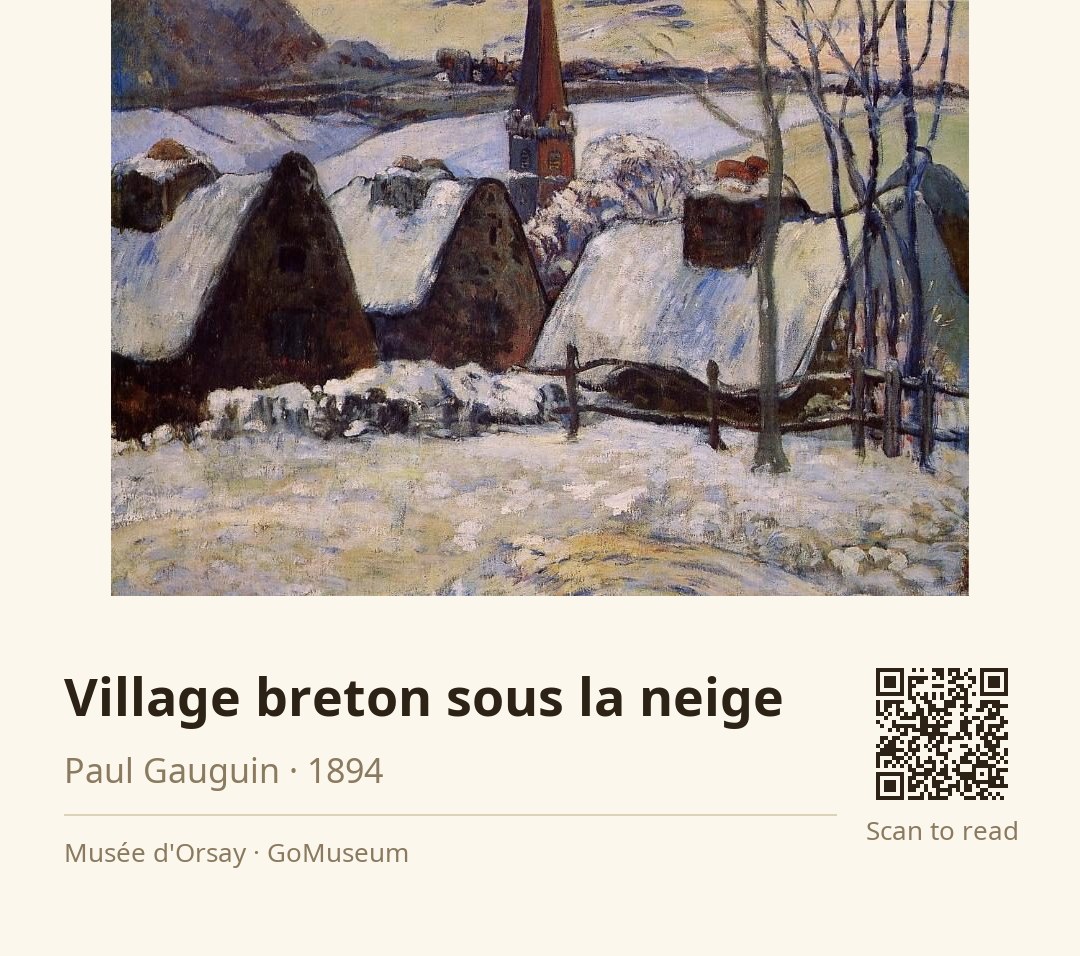
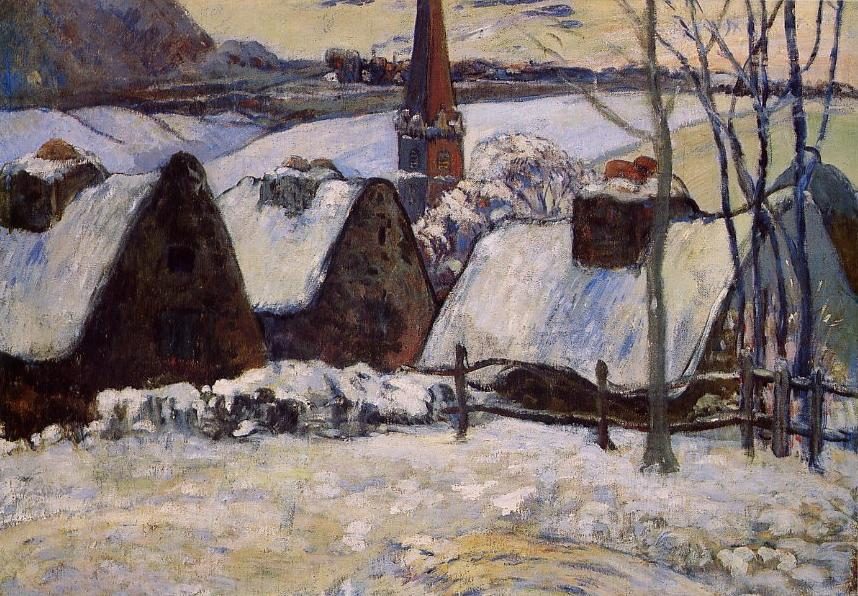
🎧 This work has audio narration — listen in the appTake a moment to really absorb the scene before you in Paul Gauguin’s "Village breton sous la neige." Notice how the snow blankets the quaint thatched cottages, transforming them into cozy little islands amidst the white expanse. Look closely at the church spire rising in the center, piercing the sky like a beacon of warmth in this chilly landscape.
These details matter because they encapsulate the essence of rural life in Brittany, a place Gauguin was deeply connected to. The contrast between the stark white snow and the warm tones of the cottages evokes a sense of both isolation and comfort, reflecting the artist's own feelings of longing and nostalgia. It’s as if he’s inviting you to step into a moment frozen in time, where the simplicity of village life stands resilient against the harshness of winter.
Created in 1894, this painting marks a significant period in Gauguin's career, where he began to explore the emotional depth of color and form, stepping away from the Impressionist style he initially embraced. His time in Brittany was pivotal, influencing his later works in Tahiti, where he sought an escape from Western civilization.
As you stand here, think about the stories this village could tell. What do you imagine life was like for the people living in this snowy landscape?
Eugène Henri Paul Gauguin was a French artist born on June 7, 1848, in Paris. His early life in Peru, where he experienced a privileged childhood, deeply influenced his artistic vision. Initially a stockbroker, Gauguin turned to painting full-time after a financial crisis in 1882. He was largely self-taught, drawing inspiration from his connections with artists like Camille Pissarro, who introduced him to Impressionism.
Gauguin's work evolved into a distinct style characterized by bold colors and symbolic themes, diverging from traditional Impressionism. His time in Brittany and later in Tahiti marked significant phases in his career, where he sought to capture the essence of native life and spirituality. Despite struggling with health and financial issues in his later years, his art gained recognition posthumously, largely due to the efforts of art dealer Ambroise Vollard.
Today, Gauguin is celebrated as a key figure in Post-Impressionism and a precursor to modern art, influencing artists like Picasso and Matisse. His exploration of color and form continues to resonate, securing his place in art history as a visionary who sought to transcend the confines of Western civilization.
Paul Gauguin's "Village breton sous la neige" was painted in 1894, during a transformative period in his artistic journey. This piece was created in Pont-Aven, a town that became a hub for artists seeking inspiration from the Breton landscape. It was first exhibited in 1926 at the Gauguin exhibition in Paris, and later showcased in various prestigious venues, including the Venice Biennale in 1928 and the Musée d'Orsay in 1986. The painting's journey took a curious turn after Gauguin's death; it was sold at auction in Papeete, where it was mistakenly identified as a view of Niagara Falls. Victor Segalen acquired it, and it eventually entered public collections in 1952. Today, it resides at the Musée de Pont-Aven, where it continues to captivate viewers with its nostalgic portrayal of rural life.
As you gaze at "Village breton sous la neige," take note of Gauguin's bold brushwork. The thick application of paint creates a textured surface that brings the snowy landscape to life, almost inviting you to touch it. The way he contrasts the bright white snow with the warm, earthy tones of the cottages creates a visual tension that evokes both comfort and isolation. Notice how the church spire draws your eye upward, breaking the horizontal flow of the composition. This vertical element not only adds depth but also symbolizes hope amidst the winter chill. Gauguin's choice of a horizontal format enhances the expansive feeling of the landscape, making the viewer feel as if they are part of this serene yet stark environment. The overall composition feels balanced yet dynamic, reflecting the artist's emotional connection to the scene.
Painted in 1894, it showcases Gauguin's shift towards a bolder use of color and a departure from traditional Impressionism. This work influenced the Symbolist movement and inspired future artists like Picasso and Matisse, who admired Gauguin's ability to convey emotion and spirituality through vibrant hues and simplified forms. Its legacy lies in how it challenged the norms of representation, paving the way for the expressive styles of the 20th century. Remember, this painting isn't just about snow-covered cottages; it's a bridge to the avant-garde.
One fascinating tidbit about "Village breton sous la neige" is that after Gauguin's death, it was sold at auction in Papeete, where it was mistakenly thought to depict the famous Niagara Falls. This mix-up highlights how Gauguin's work was sometimes misunderstood during his lifetime and even after, reflecting the complex relationship between an artist and their audience.
After Gauguin's death, 'Village breton sous la neige' was sold at auction in Papeete, where it was mistakenly thought to depict Niagara Falls, showcasing how the artist's work was often misunderstood.
Victor Segalen acquired 'Village breton sous la neige' during the auction in Papeete and was instrumental in bringing it into public collections, marking a significant moment in the painting's afterlife.