 Image: Alex Mittelmann, aka, Coldcreation · Frachet · Christopher Brown
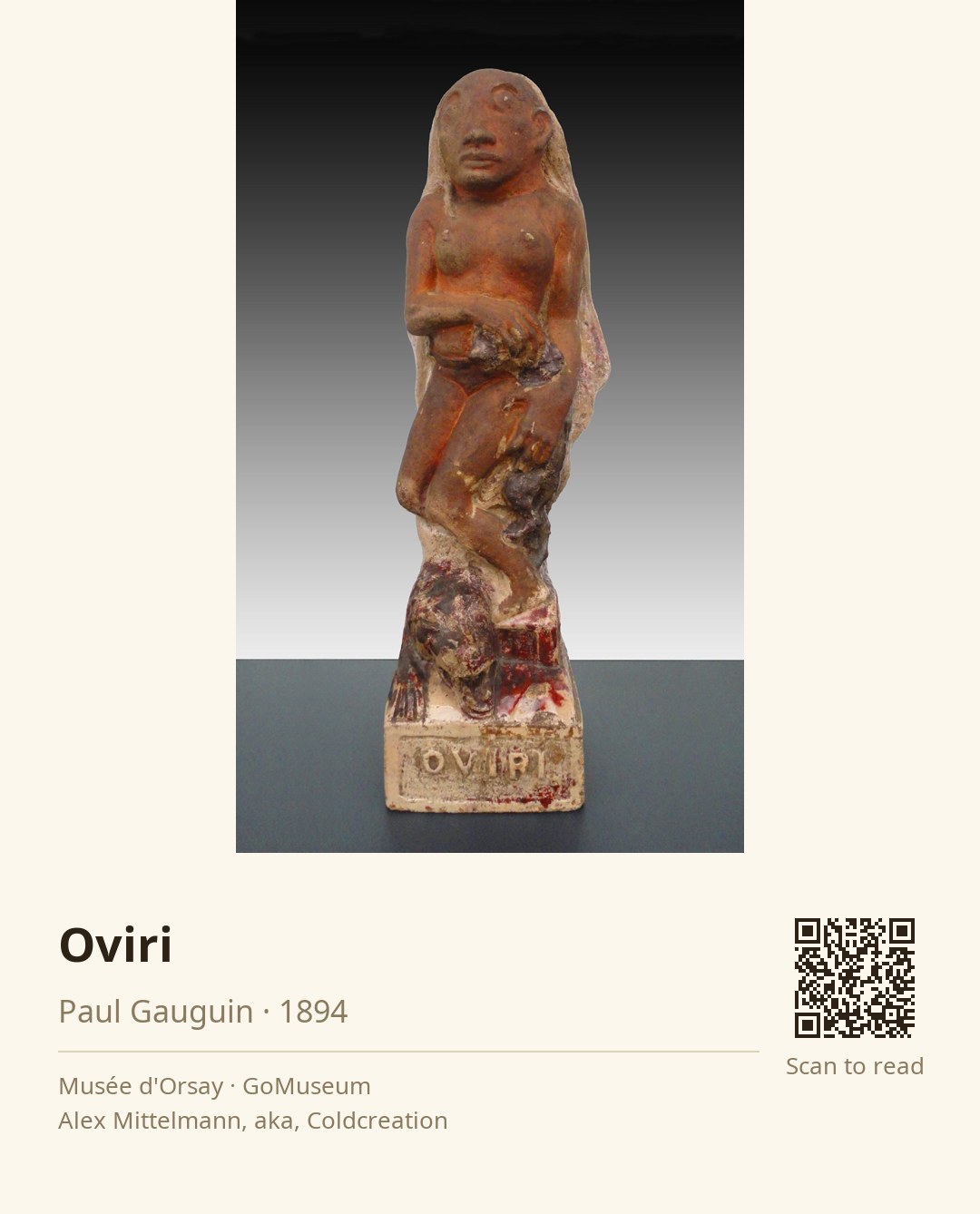
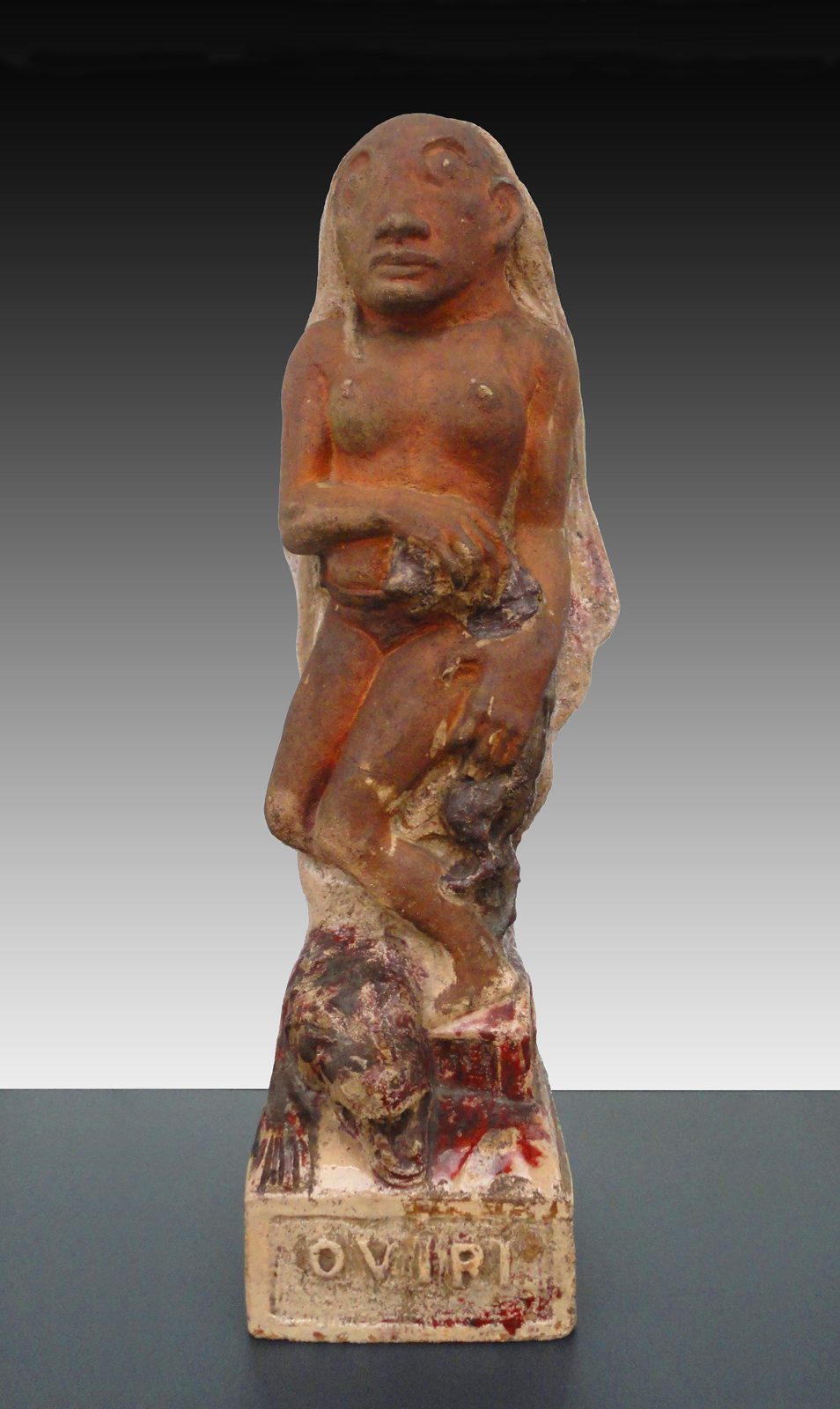
Take a moment to really gaze at "Oviri." This striking sculpture by Paul Gauguin is more than just a figure; it’s a visceral exploration of wildness and maternal power. Notice the way her long hair cascades down, almost like a wild mane, framing her fierce, oversized eyes. And look at her feet—are they smothering that wolf at her feet, or is she embracing it? These details matter because they embody the duality of creation and destruction, a theme that runs deep in Tahitian mythology. Oviri, the goddess of mourning, is a complex character, representing both the nurturing and the ferocity of motherhood. Gauguin's choice to depict her with a wolf cub hints at the darker aspects of maternal instincts—sacrifice, even violence. As you stand here, think about what Oviri represents for you. Is she a symbol of fierce protection, or does she evoke a sense of dread? What does her wildness stir within you?
Eugène Henri Paul Gauguin was a French artist born on June 7, 1848, in Paris. His early life in Peru, where he experienced a privileged childhood, deeply influenced his artistic vision. Initially a stockbroker, Gauguin turned to painting full-time after a financial crisis in 1882. He was largely self-taught, drawing inspiration from his connections with artists like Camille Pissarro, who introduced him to Impressionism.
Gauguin's work evolved into a distinct style characterized by bold colors and symbolic themes, diverging from traditional Impressionism. His time in Brittany and later in Tahiti marked significant phases in his career, where he sought to capture the essence of native life and spirituality. Despite struggling with health and financial issues in his later years, his art gained recognition posthumously, largely due to the efforts of art dealer Ambroise Vollard.
Today, Gauguin is celebrated as a key figure in Post-Impressionism and a precursor to modern art, influencing artists like Picasso and Matisse. His exploration of color and form continues to resonate, securing his place in art history as a visionary who sought to transcend the confines of Western civilization.
Take a closer look at the material of Oviri. This sculpture is crafted from ceramic stoneware, a medium that allows for both durability and intricate detail. Notice the way the surface is partially glazed, giving it a rich texture that catches the light differently across its curves. Gauguin worked closely with the ceramist Ernest Chaplet, who taught him the nuances of this craft. It’s a testament to his dedication to exploring new artistic forms, blending the wildness of his subject with the precision of his technique.
Initially a painter, Gauguin turned to ceramics in the late 1880s, learning from Ernest Chaplet. He submitted Oviri to the Société Nationale des Beaux-Arts salon in 1895, but its reception was tumultuous. Some accounts suggest he was expelled from the exhibition, while others claim it was only included after Chaplet threatened to withdraw his own works in protest. Despite its rocky debut, Oviri was sold in 1905 to collector Gustave Fayet, and today, the original resides in the Musée d'Orsay. The journey of this piece reflects Gauguin's struggle for recognition and his desire to challenge the art world of his time.
Interestingly, Gauguin referred to Oviri as 'La Tueuse' or 'The Murderess' in his correspondence, hinting at the darker themes he infused into the sculpture. He even requested that a cast of Oviri be placed on his grave, underscoring the personal significance this work held for him throughout his life.
Gauguin collaborated closely with ceramist Ernest Chaplet, who taught him the intricacies of ceramics. Their partnership was significant, as Chaplet's influence helped Gauguin refine his technique, ultimately leading to the creation of Oviri.
During the time he created Oviri, Gauguin faced financial difficulties and personal turmoil, which likely fueled the darker themes of sacrifice and ferocity in the sculpture. His tumultuous life experiences are reflected in the complex portrayal of maternal instincts embodied by Oviri.
Oviri had a notable impact on the art world, particularly influencing Pablo Picasso, who drew inspiration from it for one of the figures in his groundbreaking work, Les Demoiselles d'Avignon. This connection highlights Oviri's significance in the evolution of modern art.