Portrait of the Artist with the Yellow Christ
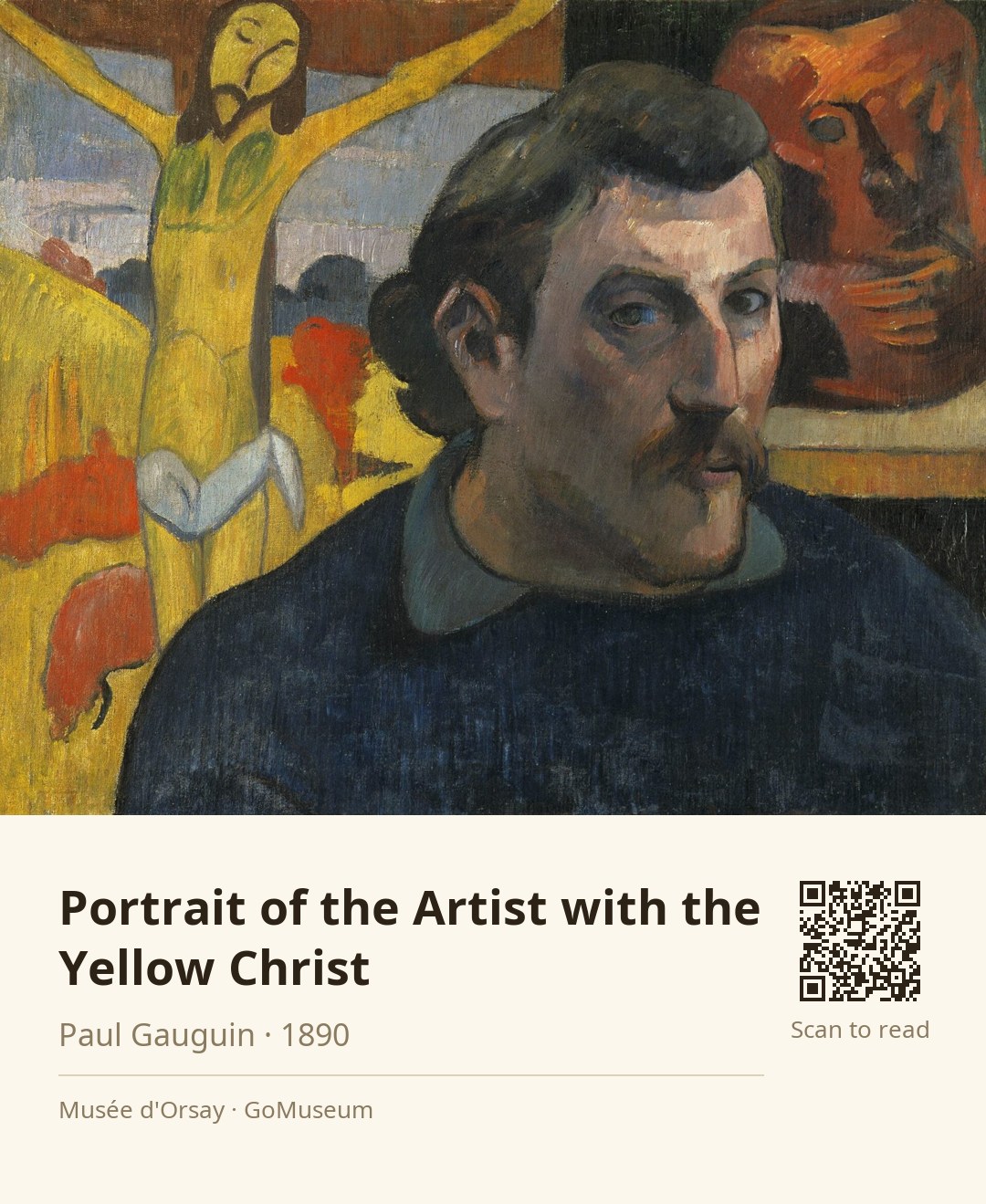
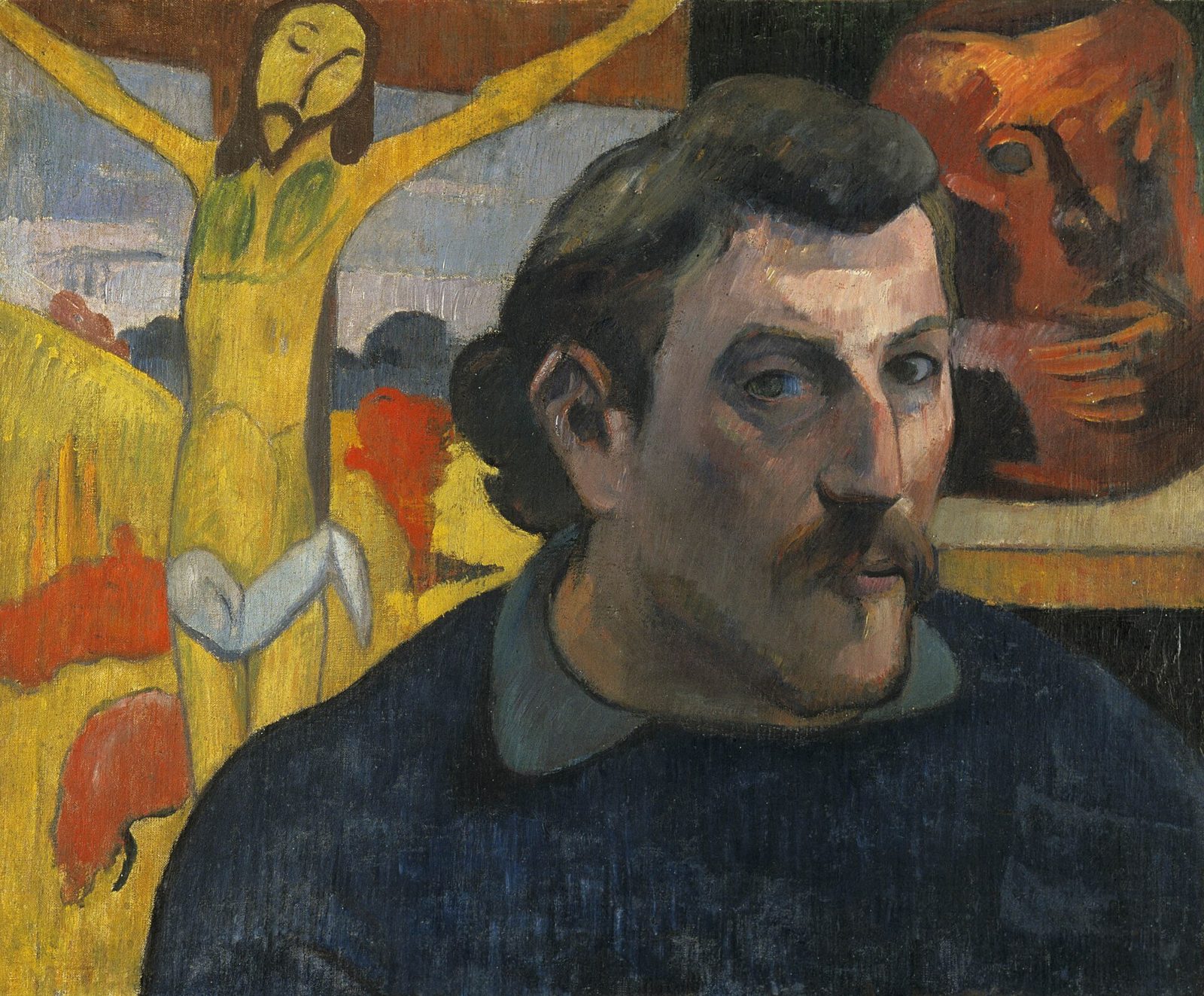
🎧 This work has audio narration — listen in the appTake a moment to really look at Paul Gauguin's "Portrait of the Artist with the Yellow Christ." Notice how the artist places himself at the center, flanked by two of his own creations. On the left, there's the striking figure of the Yellow Christ, whose features eerily mirror Gauguin's own.
Why does this matter? By positioning himself alongside Christ, Gauguin is exploring the idea of suffering and sacrifice, suggesting that his own artistic journey is intertwined with that of the divine. The protective gesture of Christ, with an arm extended over Gauguin, speaks to a longing for guidance and understanding in his tumultuous life.
Created in 1890, just before he left for Tahiti, this painting reflects Gauguin's shift towards a more symbolic and personal style, moving away from traditional Impressionism. It’s a pivotal moment in his career, where he begins to embrace the themes of spirituality and self-exploration that would define his later works.
As you stand here, think about the connection between the artist and his art. What do you see in Gauguin's expression? How does it resonate with your own experiences of struggle and creativity?
Eugène Henri Paul Gauguin was a French artist born on June 7, 1848, in Paris. His early life in Peru, where he experienced a privileged childhood, deeply influenced his artistic vision. Initially a stockbroker, Gauguin turned to painting full-time after a financial crisis in 1882. He was largely self-taught, drawing inspiration from his connections with artists like Camille Pissarro, who introduced him to Impressionism.
Gauguin's work evolved into a distinct style characterized by bold colors and symbolic themes, diverging from traditional Impressionism. His time in Brittany and later in Tahiti marked significant phases in his career, where he sought to capture the essence of native life and spirituality. Despite struggling with health and financial issues in his later years, his art gained recognition posthumously, largely due to the efforts of art dealer Ambroise Vollard.
Today, Gauguin is celebrated as a key figure in Post-Impressionism and a precursor to modern art, influencing artists like Picasso and Matisse. His exploration of color and form continues to resonate, securing his place in art history as a visionary who sought to transcend the confines of Western civilization.
Paul Gauguin's 'Portrait of the Artist with the Yellow Christ' was created in 1890, during a transformative period in his life. After spending two years in Pont-Aven, Brittany, he was on the brink of a significant journey to Tahiti. This painting serves as a bold declaration of his artistic identity, featuring himself positioned between two of his own works: the Yellow Christ and a grotesque ceramic self-portrait. Initially, the painting was owned by Gauguin's friend Daniel de Monfreid before passing through the hands of notable art dealer Ambroise Vollard by 1902. It eventually became part of Maurice Denis's collection in 1903. In 1994, the French state acquired it for the Musée d'Orsay with help from a Japanese patron, ensuring its place in the heart of Parisian art history.
As you gaze at this painting, take note of Gauguin's striking use of color and composition. The vibrant yellow of Christ contrasts sharply with the earthy tones of Gauguin's own figure, creating a visual dialogue that pulls you in. The brushwork feels deliberate yet expressive, capturing the emotional weight of his subject matter. Gauguin's choice to depict himself in three-quarters view, with a penetrating gaze directed at the viewer, invites you to share in his introspection. The protective gesture of Christ, with an arm extended over him, adds a layer of complexity, suggesting both vulnerability and strength. The grotesque ceramic figure on the right, with its exaggerated features, serves as a playful yet poignant reminder of Gauguin's self-perception, blurring the lines between artist and art.
Did you know that in this self-portrait, Gauguin cleverly positions himself between two of his own artworks? On the left, you see 'The Yellow Christ,' which he painted just the year before. It’s almost as if Gauguin is saying he and Christ share a deeper connection, blurring the lines between artist and subject.
The grotesque ceramic figure represents Gauguin's self-perception and his struggle with identity, serving as a playful yet poignant contrast to the more serious depiction of Christ. This element adds a layer of complexity to the work, highlighting Gauguin's introspection and the duality of his artistic persona.