 Image: Zugraga · Jamie Heath · Shonagon · Hamelin de Guettelet
Cippi of Melqart
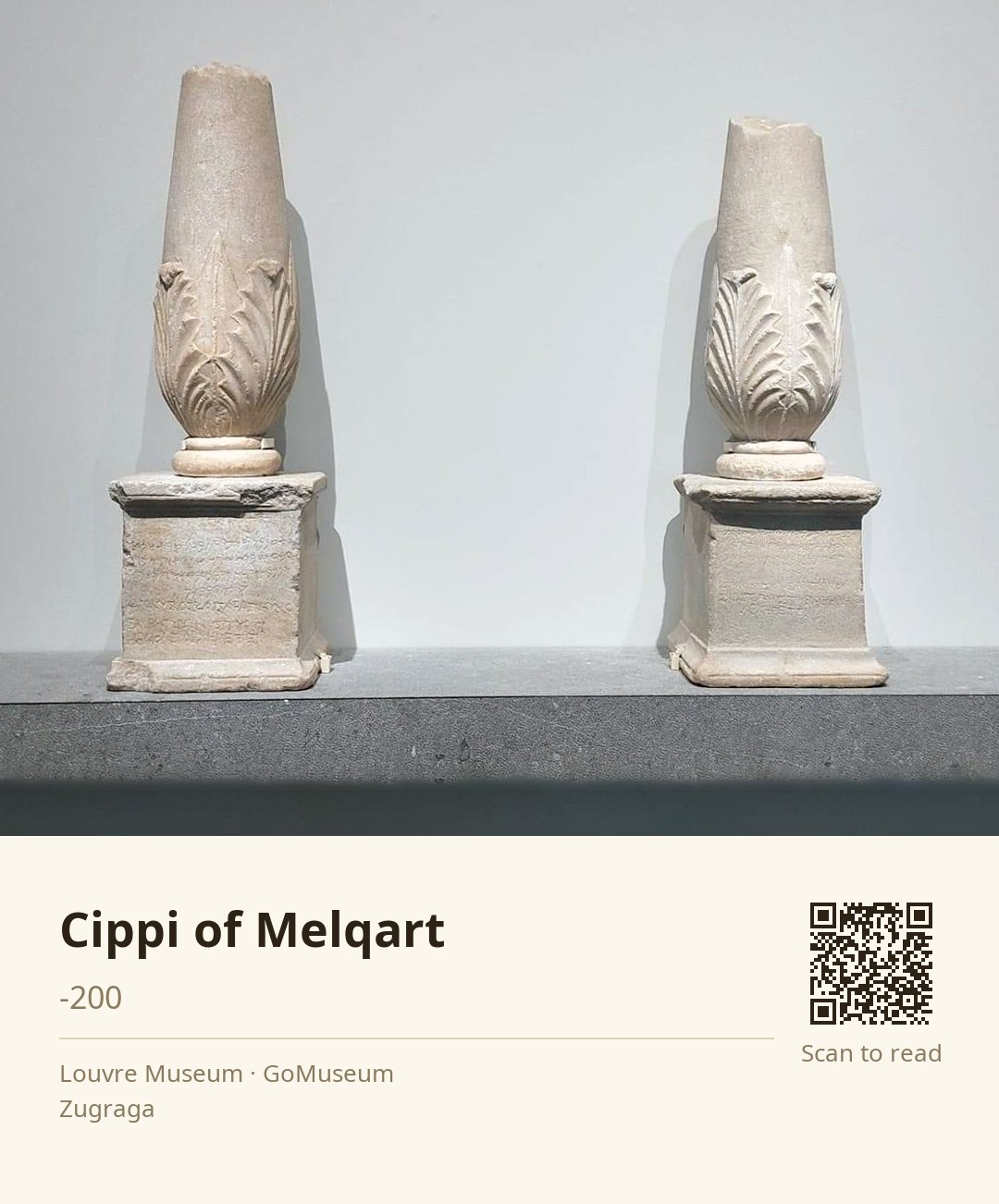
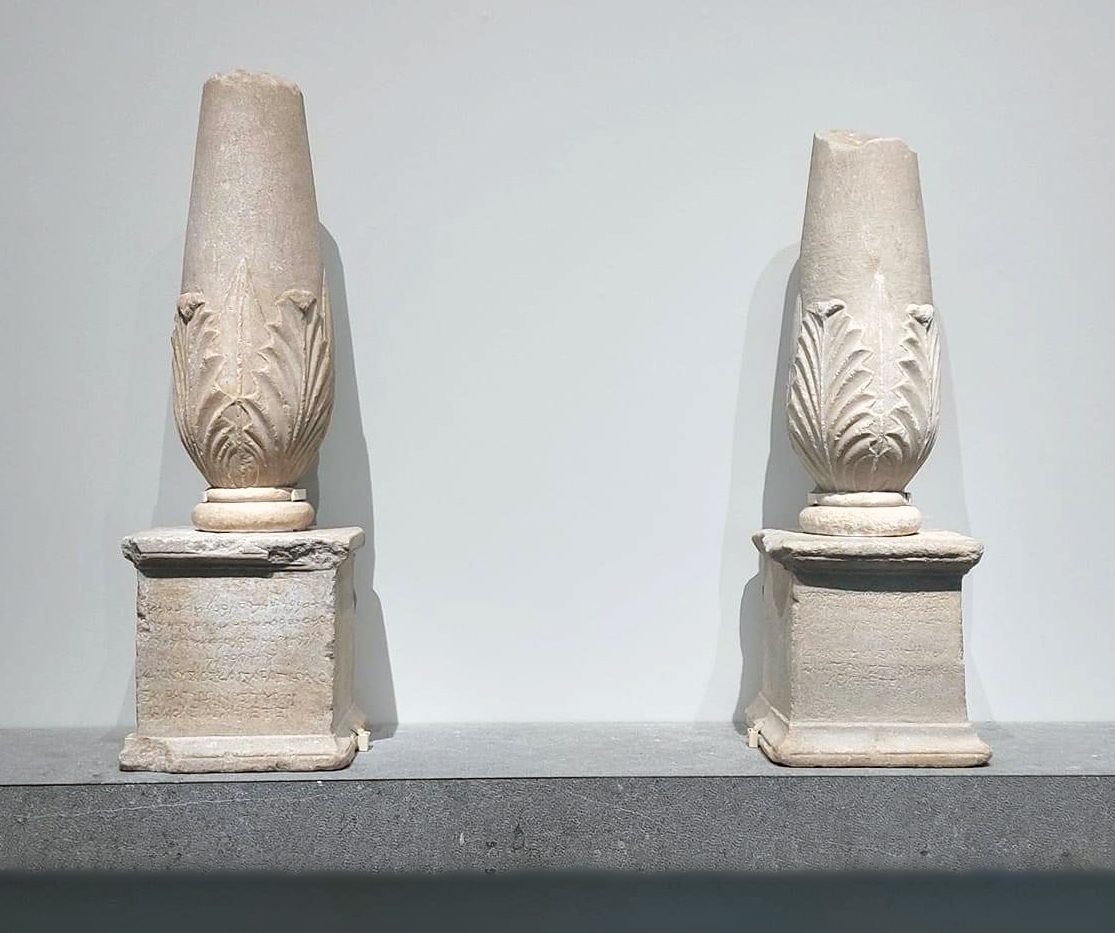
🎧 This work has audio narration — listen in the appTake a moment to really look at the Cippi of Melqart. Notice how these two marble columns stand tall, their elegant forms resembling candelabra, adorned with intricate acanthus leaves. Now, focus on the inscriptions—one in Greek, the other in Phoenician—etched lightly into the stone. These aren’t just decorative; they’re a bridge to the past, revealing a world where two cultures intertwined.
Well, these inscriptions are among the first bilingual examples of Phoenician writing, crucial for deciphering the language and understanding the Phoenician civilization. Imagine the excitement of scholars in the 18th century as they unlocked the secrets of a script that had been silent for centuries. The cippi were dedicated to Melqart, a deity of Tyre, showing the blend of local and Hellenistic influences in Malta during Roman occupation.
Discovered in the late 17th century, these artifacts have traveled through time and space, from their origins in Malta to the grand halls of the Louvre. As you stand here, think about the brothers who commissioned these cippi—what were their hopes and prayers as they dedicated them to their god? What stories do you think these ancient stones could tell if they could speak?
The Cippi of Melqart, a pair of marble columns, were unearthed in Malta in the late 17th century, though the exact circumstances remain shrouded in mystery. They were commissioned by two brothers, Abdosir and Osirxamar, as votive offerings to Melqart, the Phoenician god of Tyre. The inscriptions, one in Greek and the other in Phoenician, were first identified in a letter from 1694, making them the first Phoenician writings recognized in modern times. Their significance was further highlighted when, in 1758, French scholar Jean-Jacques Barthélémy utilized these inscriptions to decipher the Phoenician language, unlocking a treasure trove of ancient knowledge. The cippi were presented to the Académie des Inscriptions et Belles-Lettres in 1782 by Fra Emmanuel de Rohan-Polduc, the Grand Master of the Knights Hospitaller, and eventually made their way to the Louvre, where they remain today. Interestingly, the tradition of their discovery in Marsaxlokk was based on their dedication to Heracles, but this was later discredited, revealing the complex history surrounding these artifacts.
Discovered in the late 17th century, these marble cippi were the first Phoenician inscriptions identified in modern times, unlocking the secrets of the Phoenician language. Imagine scholars in the 18th century, poring over these inscriptions, as Jean-Jacques Barthélémy deciphered 17 of the 22 letters of the Phoenician alphabet from them. The cippi stand as a testament to the enduring legacy of the Phoenicians, bridging cultures and languages, and influencing generations of linguists and historians. Remember, these aren't just stones; they're keys to the past, revealing the rich tapestry of human communication and devotion.
One fascinating detail about the Cippi of Melqart is their unusual construction: they consist of two parts, a rectangular base and a pillar that resembles a candelabrum. This design is not typical for cippi, which usually have a more straightforward form.
Unlike typical cippi, which usually have a straightforward form, the Cippi of Melqart consist of two parts: a rectangular base and a pillar that resembles a candelabrum, showcasing a more elaborate design.
The inscriptions on the cippi were pivotal in the 18th century, as they provided key examples of the Phoenician alphabet that helped scholars, like Jean-Jacques Barthélémy, decipher the language and unlock its historical significance.
After being unearthed in the late 17th century, the cippi traveled through various hands, including being presented to the Académie des Inscriptions et Belles-Lettres in 1782, and eventually made their way to the Louvre, where they remain today.