The Virgin and Child with Saint Anne
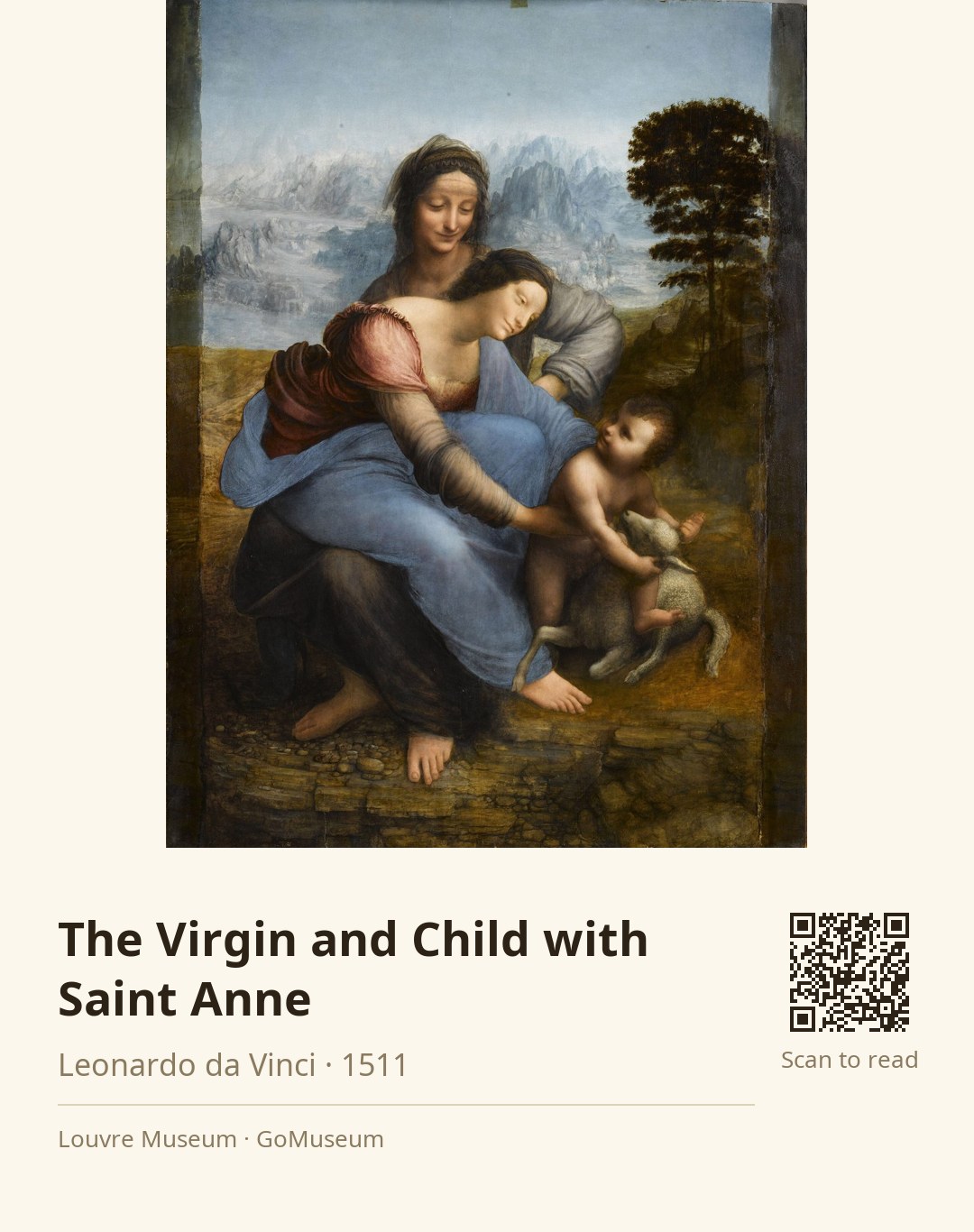
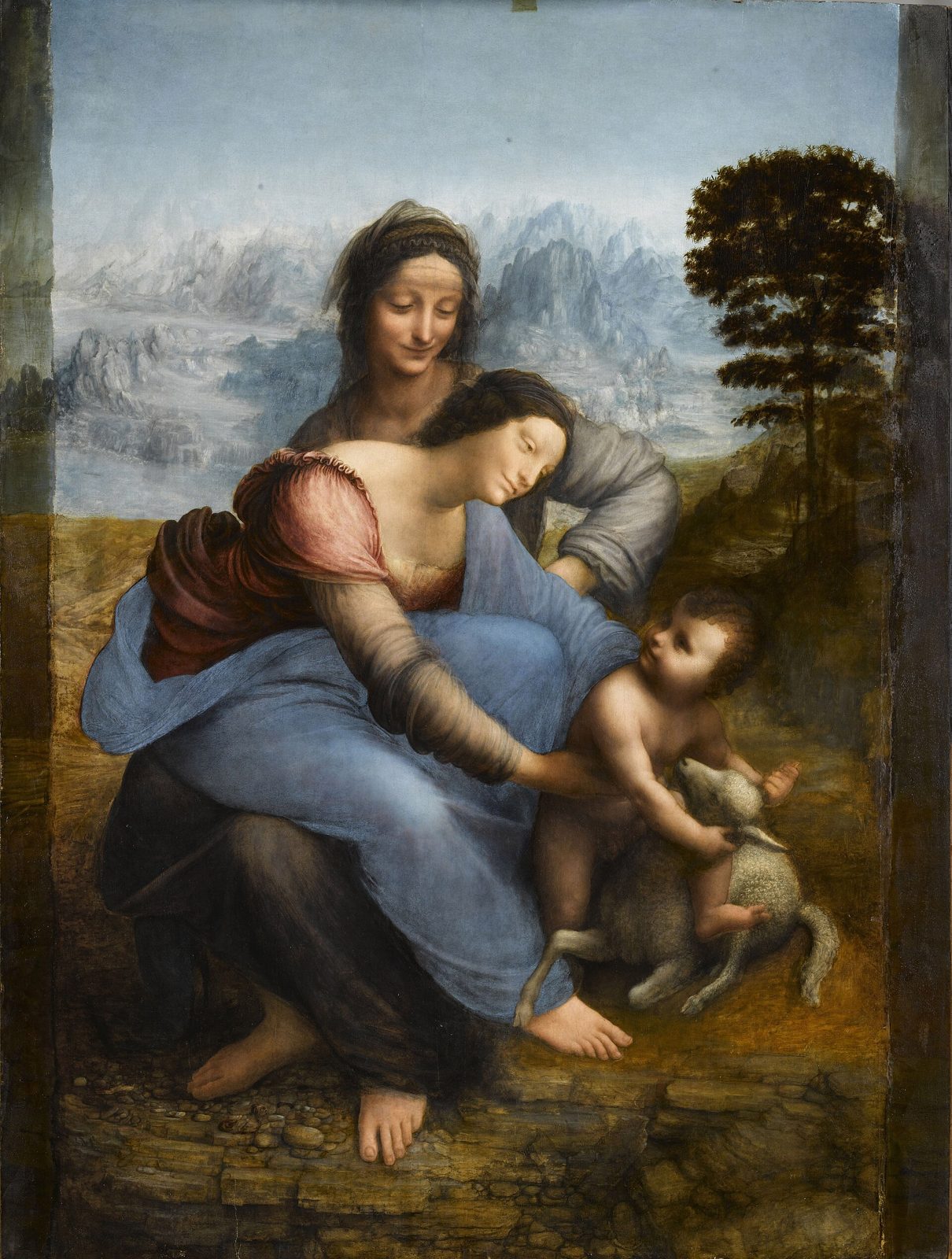
🎧 This work has audio narration — listen in the appTake a moment to really look at "The Virgin and Child with Saint Anne." Notice how the figures are intertwined, almost as if they are embracing one another in a gentle, familial dance. Saint Anne, with her serene expression, cradles the Virgin Mary, who reaches out to her son, Jesus, as he playfully holds a lamb. This isn’t just a painting; it’s a moment frozen in time that captures the warmth of maternal love and the innocence of childhood.
Now, focus on the lamb that Jesus clutches. It’s not just a cute detail; it symbolizes his future sacrifice, a poignant reminder of the path he is destined to take. This duality of joy and foreboding is a hallmark of Leonardo’s work, reflecting the complexity of human experience. The way the lamb connects the holy family to the theme of sacrifice adds layers of meaning, inviting you to ponder the deeper implications of their relationships.
Leonardo began this piece around 1501, and though it remains unfinished, it showcases his innovative approach to composition and emotion. He was known for exploring the connections between figures, and here, you can see how he masterfully intertwines their bodies and gazes, creating a sense of unity and intimacy.
As you stand before this extraordinary work, think about the personal significance it may have held for Leonardo. Raised by two mothers, he may have found a unique connection to the theme of motherhood depicted here. What feelings does this painting stir in you? How do you see the relationships portrayed in this artwork reflecting your own experiences with family and love?
Leonardo da Vinci, born on April 15, 1452, in Vinci, Italy, was a quintessential figure of the High Renaissance, renowned for his multifaceted genius as a painter, scientist, and inventor. Raised by his grandparents after being born out of wedlock, he received artistic training under Andrea del Verrocchio in Florence. His career flourished in Milan under Ludovico Sforza, where he produced iconic works like "The Last Supper" and began his extensive studies in anatomy and engineering.
Leonardo's notebooks reveal a relentless curiosity, encompassing subjects from botany to mechanics, showcasing his innovative spirit. Despite creating fewer than 25 major works, his influence on Western art is profound, with the "Mona Lisa" standing as a cultural icon. His visionary designs for flying machines and other inventions, though largely unfeasible in his time, reflect a forward-thinking approach that laid groundwork for future scientific exploration.
In his later years, he moved to France, where he continued to work until his death in 1519. Leonardo's legacy endures as a symbol of the Renaissance ideal, blending art and science, and inspiring generations with his empirical observations and artistic mastery. His life and work remain a testament to the boundless potential of human creativity.
The Virgin and Child with Saint Anne, an unfinished masterpiece by Leonardo da Vinci, was likely commissioned by King Louis XII of France around 1499, shortly after the birth of his daughter. Intended as the high altarpiece for the Church of Santissima Annunziata in Florence, this painting was a significant undertaking for Leonardo, who had long been fascinated by the theme of motherhood. Despite its ambitious beginnings, the painting remained unfinished at the time of Leonardo's death in 1519. Over the years, it has undergone various transformations, including a notable cleaning controversy in 2011, which revealed hidden sketches on the back, believed to be by Leonardo himself. These sketches, including a drawing of a horse's head and a playful depiction of Jesus with a lamb, provide a glimpse into Leonardo's creative process and his tendency to explore ideas in multiple forms. The painting's journey from its commission to its current home in the Louvre reflects the complexities of art patronage and the artist's evolving vision, making it a fascinating piece of art history.
When you look closely at The Virgin and Child with Saint Anne, notice how Leonardo's brushwork creates a sense of movement and intimacy among the figures. The soft, almost ethereal quality of the oil paint allows for subtle gradations of light and shadow, enhancing the three-dimensionality of the characters. The composition is masterfully structured, with Saint Anne and the Virgin Mary forming a triangular arrangement that draws your eye to the central figure of Jesus. This interplay of figures not only establishes a familial bond but also invites you into their world. The lamb that Jesus holds is painted with delicate strokes, emphasizing its softness and innocence, contrasting with the weighty themes of sacrifice it represents. The background, a sweeping landscape, serves to elevate the scene, creating a grand yet serene atmosphere that complements the emotional depth of the figures. Leonardo's innovative technique of intertwining their bodies and gazes creates a palpable sense of connection, making you feel as if you are witnessing a tender moment of familial love.
The way Leonardo interlocks the figures of Saint Anne, the Virgin Mary, and the Christ Child not only creates a sense of familial intimacy but also symbolizes the lineage of Christ in a way that was innovative for its time. This work exemplifies the blend of realism and spirituality that became a hallmark of Renaissance art, inspiring artists to explore similar themes of human connection and divine narrative. Remember, this painting was not just a visual feast; it was a catalyst for change in how art could convey complex emotional and theological ideas.
One surprising aspect of The Virgin and Child with Saint Anne is the discovery of sketches on the back of the painting, revealed during a 2008 restoration. These sketches, including a drawing of a horse's head and an image of Jesus with a lamb, are believed to have been made by Leonardo himself. This finding is particularly significant as it marks the first time any drawing has been found on the reverse side of one of his works, offering a rare glimpse into the artist's creative process and his tendency to explore ideas in multiple forms.
The sketches, including a drawing of a horse's head and an image of Jesus with a lamb, are believed to have been made by Leonardo himself. This discovery is notable as it marks the first time any drawing has been found on the reverse side of one of his works, offering a rare insight into his creative process.
Leonardo was raised by two mothers, which likely deepened his connection to the theme of motherhood depicted in the painting. This personal experience may have informed his portrayal of the Virgin Mary and Saint Anne, reflecting a unique perspective on maternal relationships.
The painting was commissioned as the high altarpiece for the Church of Santissima Annunziata in Florence, highlighting its significance in the context of religious art and the artist's connection to the church.