Self-Portrait
🎧 Free preview: one of 5 works you can listen to here in full.
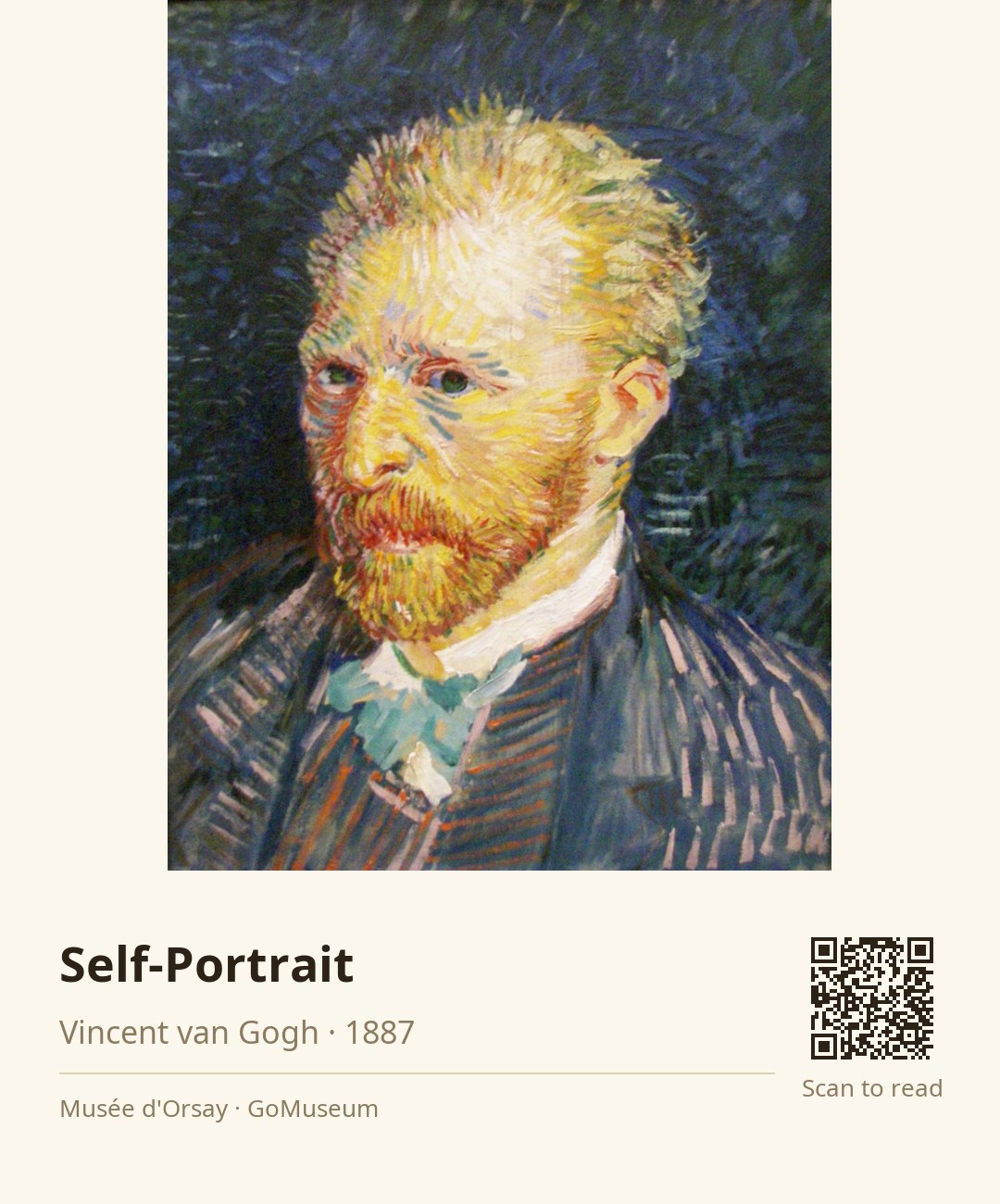
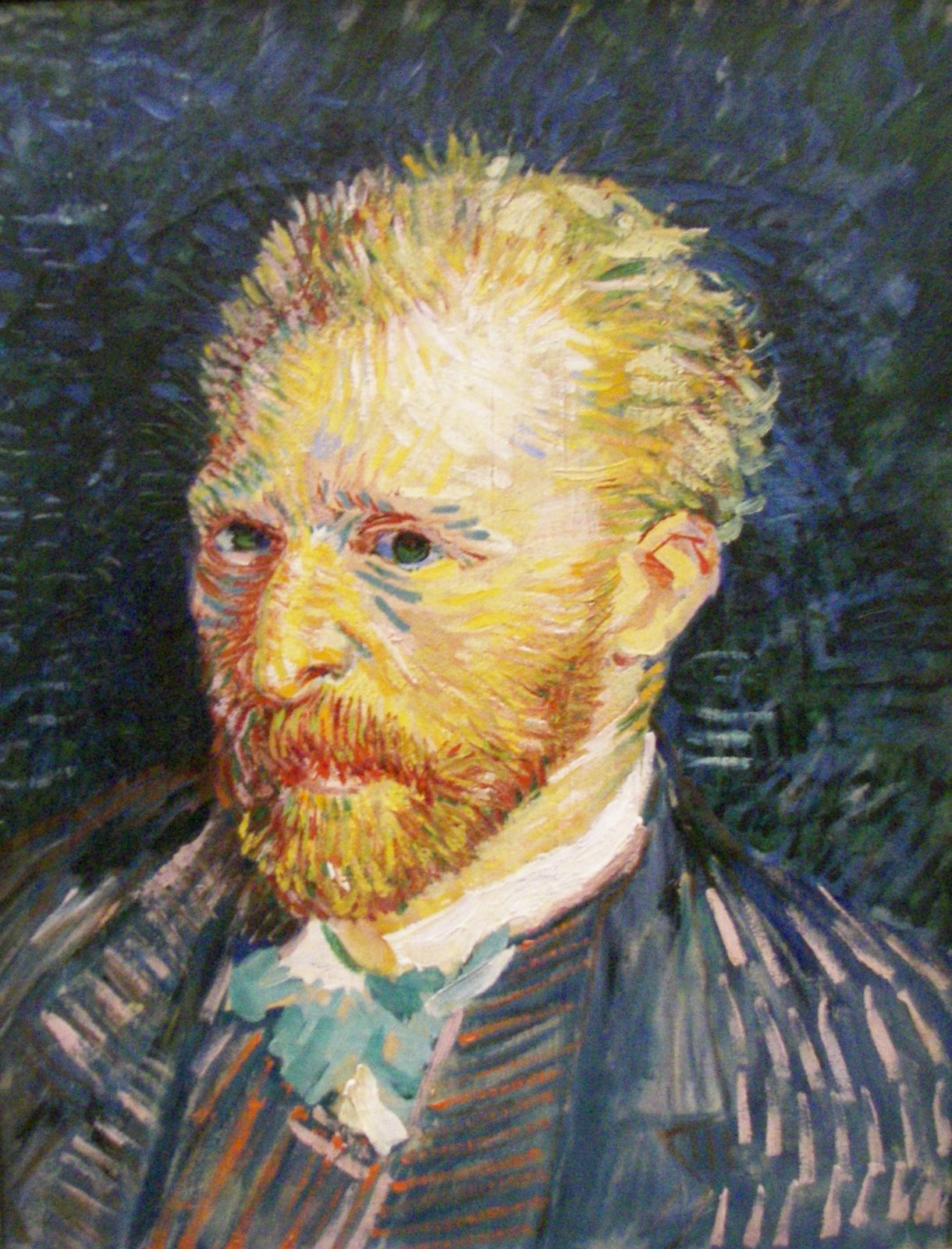
Take a moment to really look at Vincent van Gogh's Self-Portrait. Notice how he captures himself with that intense gaze, almost as if he's inviting you into his world. Look closely at the brushstrokes; they’re thick and expressive, swirling around his face with a vibrant energy that seems to pulse off the canvas. These details matter because they reveal Van Gogh's emotional state and his unique approach to painting. Unlike traditional portraits that aim for realism, Van Gogh's style is raw and immediate, reflecting his inner turmoil and passion for art. You can almost feel the weight of his struggles and triumphs in those strokes. Created in 1887, this painting comes from a time when Van Gogh was deeply immersed in the Parisian art scene, experimenting with color and form. He was still searching for his identity as an artist, and this self-portrait is a bold declaration of that quest. As you stand here, think about the vulnerability it takes to depict oneself so openly. What do you think Van Gogh was trying to convey about his own identity? Let this painting linger in your mind as a testament to the complexity of the human experience.
Vincent van Gogh was a Dutch Post-Impressionist painter born on March 30, 1853, in Zundert. He is renowned for his vibrant use of color and expressive brushwork, which laid the groundwork for modern art. Despite creating around 2,100 artworks in just over a decade, including 860 oil paintings, he struggled with mental illness and poverty throughout his life. His early career as an art dealer was marked by disillusionment, leading him to pursue painting in 1881.
Van Gogh's intense passion for art was evident in his correspondence with his brother Theo, who provided emotional and financial support. His works evolved significantly after moving to Paris in 1886, where he mingled with avant-garde artists. His time in Arles in 1888 marked a peak in his creativity, producing iconic series like sunflowers and wheat fields.
Tragically, van Gogh's life ended in suicide at 37, after years of battling his demons. Initially unrecognized, he gained fame posthumously, becoming a symbol of the tortured artist. His legacy influenced movements like Fauvism and Expressionism, securing his place as one of the most significant figures in art history.
Vincent van Gogh's Self-Portrait was created in 1887, during a transformative period in his life as he navigated the vibrant Parisian art scene. This painting was part of a series of self-portraits that he produced while experimenting with his style and identity. Van Gogh was not commissioned for this work; rather, it was a personal exploration, a reflection of his inner self. The painting was first exhibited in Paris in 1931, and since then, it has traveled to various prestigious exhibitions, including Geneva in 1947 and London in both 1923 and 1924. Its provenance traces back to Jacques Laroche, highlighting its journey through the art world. This self-portrait stands as a testament to his struggle and search for identity, capturing the essence of a man caught between his artistic ambitions and personal turmoil.
As you gaze at Van Gogh's Self-Portrait, pay attention to the thick, expressive brushstrokes that create a dynamic texture across the canvas. The application of paint is almost sculptural, with layers that seem to pulse with energy. Notice how the colors are not just applied but are alive, swirling around his face in a way that conveys his emotional state. The use of contrasting hues, particularly the vibrant blues and yellows, creates a striking visual tension that draws you in. The composition is intimate yet bold, with Van Gogh's gaze piercing through the canvas, inviting you to connect with his inner world. The three-quarter view adds depth, making the viewer feel as if they are sharing a moment with the artist.
Created in 1887, this painting showcases his bold use of color and expressive brushwork, laying the groundwork for modern art movements like Fauvism and Expressionism. Van Gogh's emotional honesty and raw vulnerability in his self-portraits influenced countless artists who followed, encouraging them to explore their own identities and emotions through their work. His legacy is one of breaking boundaries, inviting us to see art not just as a visual experience but as a profound dialogue between the artist and their psyche.
That's an astonishing output, especially considering that many of them were produced during the last two years of his life when he was grappling with severe mental health issues. His relentless drive to paint, despite his struggles, speaks volumes about his passion and dedication to his art.
These letters provide deep insight into Van Gogh's thoughts, artistic theories, and emotional struggles, making them a vital resource for understanding his work and life. They reveal his evolving ideas about color and composition, as well as his personal experiences and relationships.
His experience in the art world exposed him to various styles and techniques, shaping his understanding of art and aesthetics. This background likely contributed to his unique approach to color and form, as he moved away from traditional methods to develop his own expressive style.
His struggles with mental illness often fueled his creativity, leading to intense and emotive works that resonate with viewers. The tumultuous periods of his life are reflected in the raw energy and vivid colors of his paintings, marking a profound connection between his psychological state and his art.