Bal du moulin de la Galette
🎧 Free preview: one of 5 works you can listen to here in full.
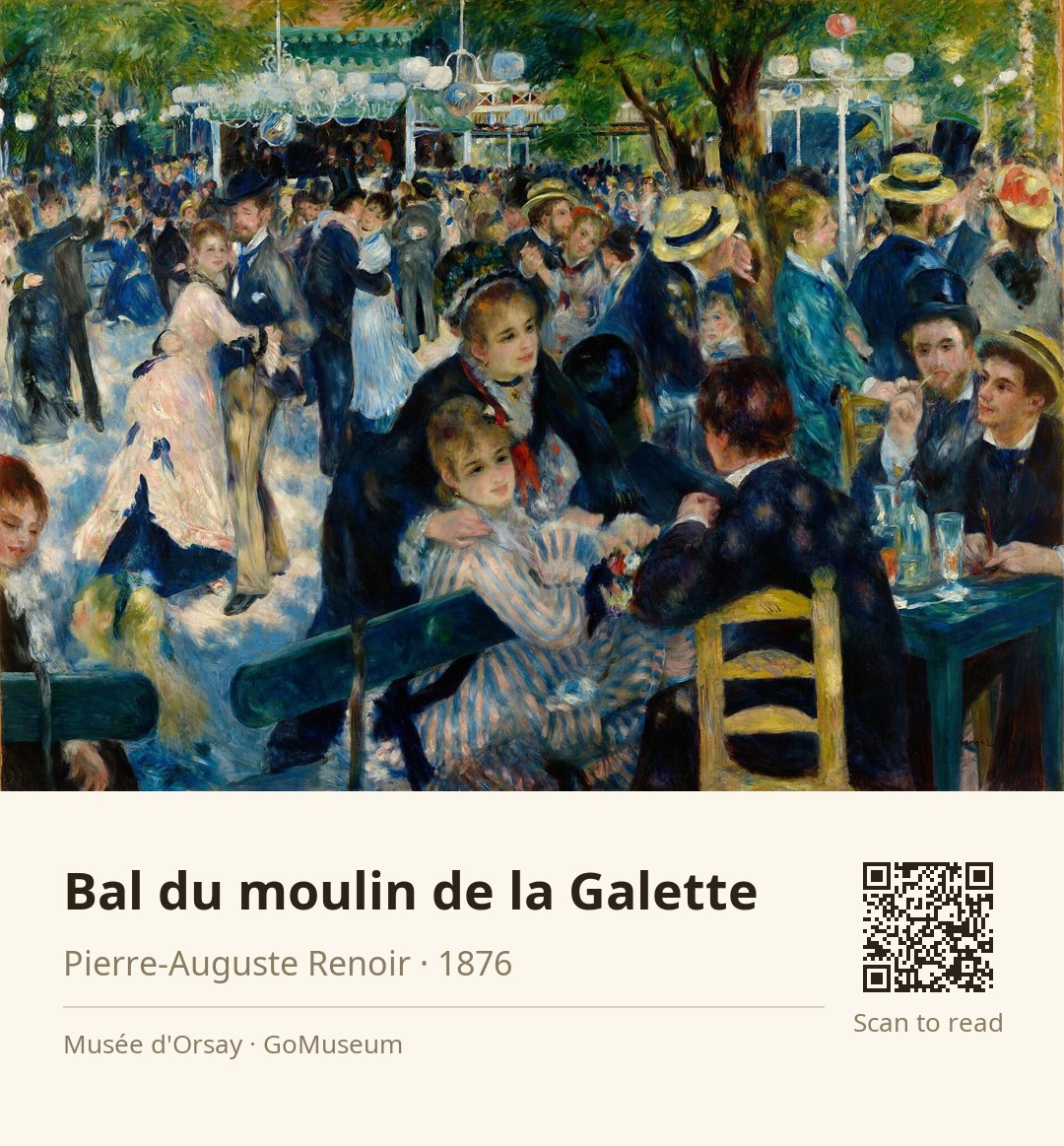
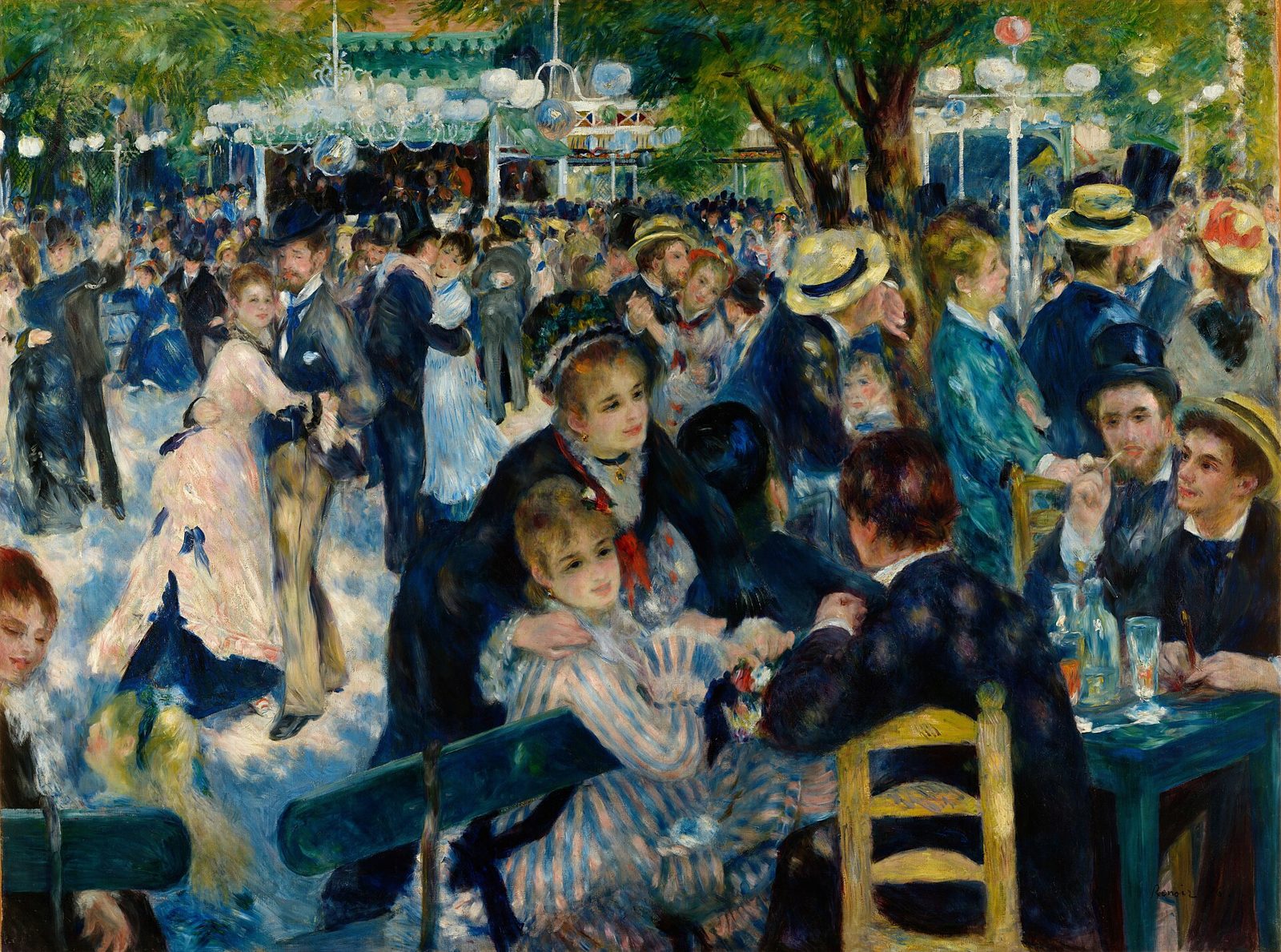
Take a moment to really absorb the scene in front of you. Renoir’s "Bal du moulin de la Galette" isn’t just a painting; it’s a vibrant snapshot of life in 19th-century Paris. Look closely at the figures dancing and chatting, their faces illuminated by dappled sunlight filtering through the leaves above. Notice how the light plays across the scene, creating a warm, inviting atmosphere that makes you feel as if you could step right into the painting. What’s remarkable here is how Renoir captures the joy and energy of a Sunday afternoon at the Moulin de la Galette, a popular spot for working-class Parisians to unwind. The fluid brush strokes and the way he blends colors give a sense of movement and life, almost as if the figures might burst into laughter or song at any moment. This isn’t just a depiction of a gathering; it’s a celebration of community and camaraderie, a moment frozen in time that reflects the spirit of the Belle Époque. Painted in 1876, this masterpiece was created during a time when Impressionism was still finding its footing. Renoir, along with his contemporaries, sought to break away from traditional techniques, opting instead for a style that emphasized light and everyday moments. The painting was first exhibited in 1877, where it garnered attention for its lively portrayal of social life, and it has since become one of the defining works of the Impressionist movement. As you stand here, think about the stories behind the faces in the painting. Each figure represents a friend or acquaintance of Renoir, bringing a personal touch to the scene. Who do you think they were? What conversations might they have had on that sunny afternoon? Let your imagination wander as you take in the beauty and warmth of this iconic work.
Pierre-Auguste Renoir, born on February 25, 1841, in Limoges, France, emerged as a pivotal figure in the Impressionist movement. His early life in a modest family led him to Paris, where he honed his artistic skills amidst the masterpieces of the Louvre. Initially apprenticed in a porcelain factory, Renoir's passion for painting flourished, particularly after studying under Charles Gleyre, where he befriended fellow artists like Monet and Sisley.
Renoir's work celebrated feminine beauty and vibrant social scenes, exemplified in iconic pieces like "Dance at Le Moulin de la Galette." Despite facing criticism early on, he gained recognition, especially after participating in the first Impressionist exhibition in 1874. His style evolved over the years, transitioning towards realism influenced by classical masters like Raphael.
Throughout his life, Renoir balanced personal struggles, including health issues, with a prolific output, reportedly creating around four thousand works. He became a beloved figure in art history, known for his warm palette and expressive brushwork. Renoir passed away on December 3, 1919, leaving a legacy that continues to inspire artists and art lovers alike.
Renoir's 'Bal du moulin de la Galette' was conceived in May 1876, during a vibrant period of artistic experimentation in Paris. He set up his studio in an abandoned cottage near the Moulin de la Galette, a lively dance hall in Montmartre, where working-class Parisians gathered to enjoy music and dance. The painting was first exhibited at the Third Impressionist Exhibition in April 1877, where it received significant attention for its lively depiction of social life. Art critic Georges Rivière praised it as a 'precious monument of Parisian life.' In 1879, the painting was acquired by Gustave Caillebotte, a fellow artist and friend of Renoir, who later bequeathed it to the French state in 1894. Over the years, it has been housed in several prestigious locations, including the Musée du Luxembourg and the Louvre, before finding its permanent home at the Musée d'Orsay in 1986. Its journey reflects the evolving appreciation of Impressionism, transitioning from initial skepticism to recognition as a cornerstone of modern art.
As you gaze at 'Bal du moulin de la Galette,' notice how Renoir's brushwork creates a sense of movement and spontaneity. The fluid strokes blend colors seamlessly, capturing the flickering light that dances across the scene. Renoir employs a technique known as 'broken color,' where he applies small dabs of paint rather than smooth blends, allowing the viewer's eye to mix the colors from a distance. This approach gives the painting its vibrant, lively quality. The composition is structured in layers: the foreground features seated figures engaged in conversation, while dancers fill the mid-ground, leading your eye to the background where the trees filter the sunlight. The use of light is particularly striking; it bathes the figures in a warm glow, enhancing the sense of joy and camaraderie. The overall effect is one of a sun-drenched afternoon, inviting you to step into the scene and join the celebration.
A fascinating tidbit about 'Bal du moulin de la Galette' is that Renoir faced significant challenges while painting it outdoors. The wind was a constant threat, often blowing his canvas around as he worked. This smaller version was sold in 1990 for a staggering $78 million, making it one of the most expensive paintings ever sold at auction.
Renoir struggled with the wind while painting 'Bal du moulin de la Galette,' which often threatened to blow his canvas away. This outdoor setting added a layer of difficulty to capturing the lively scene, as he had to adapt to the changing conditions.
Several of Renoir's friends and acquaintances are featured in the painting, including the Cuban painter Don Pedro Vidal de Solares y Cardenas and a young woman named Margot, who was known for her lively spirit. The figures represent a mix of artists and local workers, showcasing the vibrant social circle of Renoir.
Renoir created a smaller version of 'Bal du moulin de la Galette,' which is believed to be in a private collection in Switzerland. This version, sold for $78 million in 1990, sparked controversy when its owner suggested he might cremate it with him upon his death, highlighting the painting's dramatic afterlife.