Self-portrait
🎧 Free preview: one of 5 works you can listen to here in full.
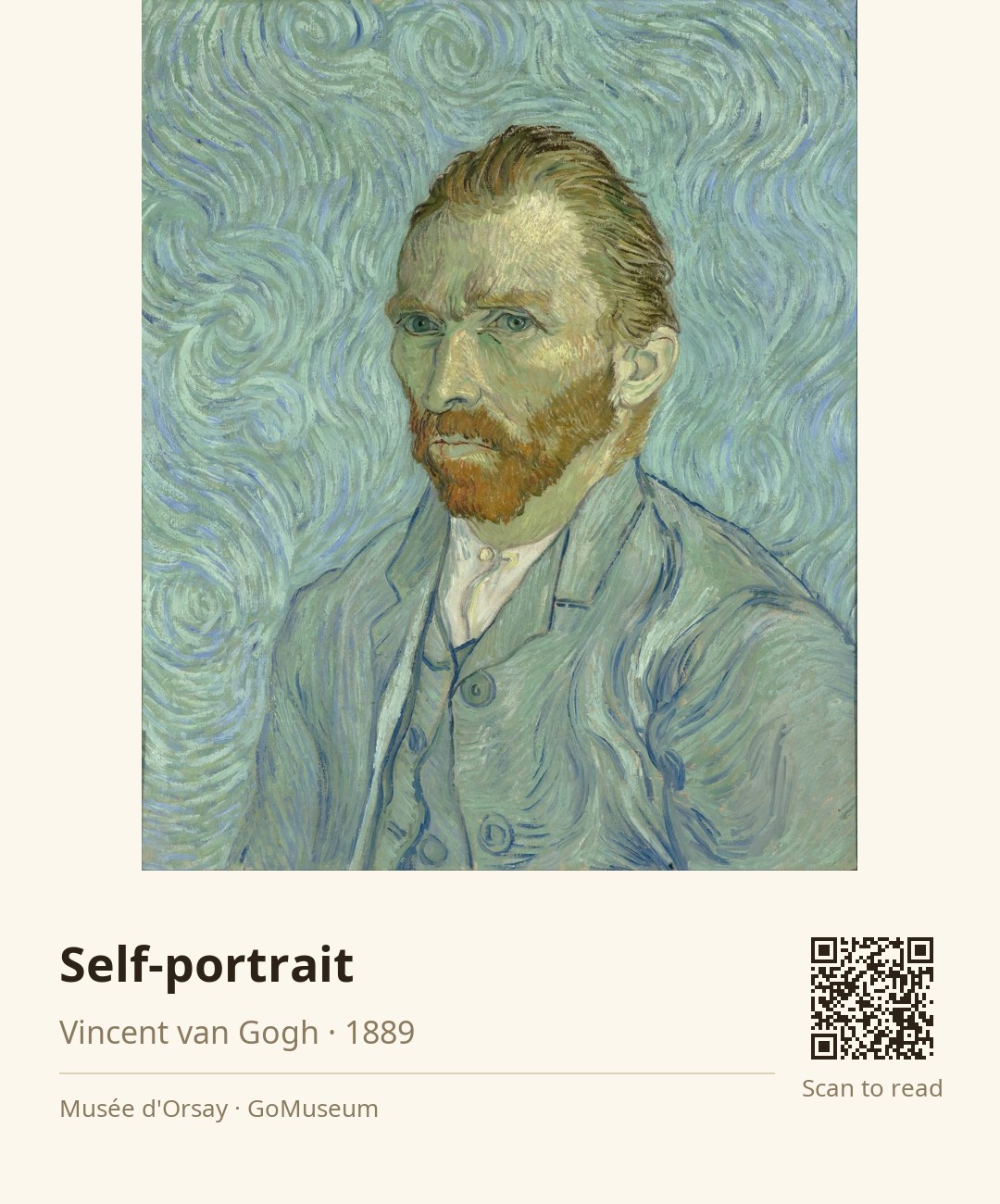
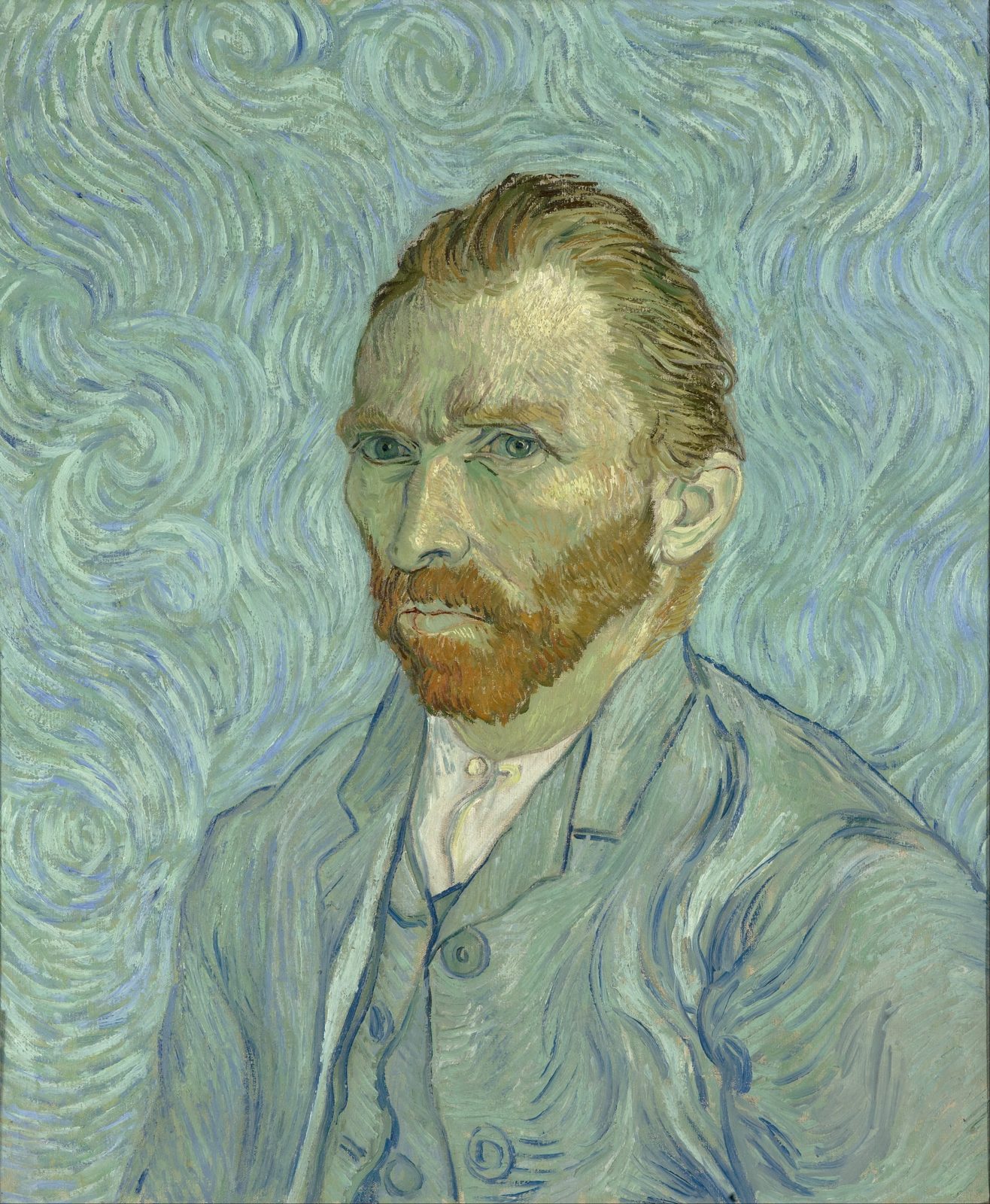
Take a moment to really look at Vincent van Gogh’s self-portrait. Notice the intensity in his gaze and the wild, swirling strokes of color that seem to pulse around him. What stands out is how his beard and hair almost blend into the background, creating a sense of movement and chaos that contrasts sharply with the stillness of his face. These details matter because they reflect van Gogh’s inner turmoil. This painting, created in 1889, captures not just his likeness but the emotional weight he carried. The undulating patterns around him symbolize the mental struggles he faced, hinting at the chaos that often accompanied his genius. It’s as if the canvas itself is alive with the tension of his thoughts and feelings. Van Gogh painted this self-portrait during a challenging period in his life, shortly before he left the asylum in Saint-Rémy-de-Provence. He often turned to self-portraits when he couldn’t afford models, making this work a deeply personal reflection of his state of mind. As you stand here, think about what it means to confront oneself in art. What emotions do you see in his eyes? Do they resonate with your own experiences of struggle and resilience?
Vincent van Gogh was a Dutch Post-Impressionist painter born on March 30, 1853, in Zundert. He is renowned for his vibrant use of color and expressive brushwork, which laid the groundwork for modern art. Despite creating around 2,100 artworks in just over a decade, including 860 oil paintings, he struggled with mental illness and poverty throughout his life. His early career as an art dealer was marked by disillusionment, leading him to pursue painting in 1881.
Van Gogh's intense passion for art was evident in his correspondence with his brother Theo, who provided emotional and financial support. His works evolved significantly after moving to Paris in 1886, where he mingled with avant-garde artists. His time in Arles in 1888 marked a peak in his creativity, producing iconic series like sunflowers and wheat fields.
Tragically, van Gogh's life ended in suicide at 37, after years of battling his demons. Initially unrecognized, he gained fame posthumously, becoming a symbol of the tortured artist. His legacy influenced movements like Fauvism and Expressionism, securing his place as one of the most significant figures in art history.
Vincent van Gogh's self-portrait, painted in September 1889, is a poignant reflection of his turbulent life during a critical period. Commissioned by no one but created out of necessity, it was part of a series of self-portraits that Van Gogh produced when he couldn't afford models. This particular piece was painted shortly before he left the asylum in Saint-Rémy-de-Provence, where he sought refuge from his mental health struggles. After its completion, Van Gogh took the painting to Auvers-sur-Oise, where he showed it to Dr. Paul Gachet, who was both his physician and a supporter of his art. Gachet's reaction was telling; he described the work as 'absolutely fanatical,' reflecting the intense emotional state captured in the piece. The self-portrait has since been exhibited in notable venues, including the 1905 retrospective at the Salon des indépendants in Paris and the 1937 Exposition Universelle. Today, it resides in the Musée d'Orsay, a testament to Van Gogh's enduring legacy.
As you gaze at Van Gogh's self-portrait, pay attention to the brushwork. The strokes are not just applied; they dance across the canvas, creating a sense of movement that echoes the chaos of his mind. The vibrant colors swirl around him, almost as if they are alive, pulling your eyes into the depths of his emotional landscape. Notice how the background's undulating patterns contrast with the stillness of his face, a deliberate choice that amplifies the tension between his inner turmoil and outer calm. The composition is tightly structured, with Van Gogh's figure occupying the center, drawing you in. His beard and hair blend into the background, suggesting a merging of self and environment, a reflection of his mental state. This technique of layering paint creates a textured surface that invites you to explore the nuances of his emotional expression, making the painting feel almost three-dimensional.
Interestingly, Van Gogh's correspondence with his brother Theo reveals that he was acutely aware of his changing emotional state. In a letter accompanying this self-portrait, he expressed hope that viewers would notice a calmer expression in his face, despite the 'insecure look' in his eyes.
Gachet was not only Van Gogh's physician but also an art enthusiast who supported the artist's work. His reaction, describing the painting as 'absolutely fanatical,' indicates the emotional intensity that Van Gogh captured, which resonated with Gachet's understanding of art.
Van Gogh often turned to self-portraits because he could not afford to hire models, making these works a crucial outlet for his artistic expression. This necessity led him to create around 32 self-portraits over a decade, each reflecting different aspects of his emotional and mental state.
In a letter to his brother Theo, Van Gogh expressed hope that viewers would notice a calmer expression in his face, despite the 'insecure look' in his eyes. This insight highlights his self-awareness and desire to convey a sense of emotional evolution through his art.