Paris › Musée de l'Orangerie › Pierre-Auguste Renoir
Pierre-Auguste Renoir at Musée de l'Orangerie
1841 – 1919
Pierre-Auguste Renoir, born on February 25, 1841, in Limoges, France, emerged as a pivotal figure in the Impressionist movement. His early life in a modest family led him to Paris, where he honed his artistic skills amidst the masterpieces of the Louvre. Initially apprenticed in a porcelain factory, Renoir's passion for painting flourished, particularly after studying under Charles Gleyre, where he befriended fellow artists like Monet and Sisley.
Renoir's work celebrated feminine beauty and vibrant social scenes, exemplified in iconic pieces like "Dance at Le Moulin de la Galette." Despite facing criticism early on, he gained recognition, especially after participating in the first Impressionist exhibition in 1874. His style evolved over the years, transitioning towards realism influenced by classical masters like Raphael.
Throughout his life, Renoir balanced personal struggles, including health issues, with a prolific output, reportedly creating around four thousand works. He became a beloved figure in art history, known for his warm palette and expressive brushwork. Renoir passed away on December 3, 1919, leaving a legacy that continues to inspire artists and art lovers alike.
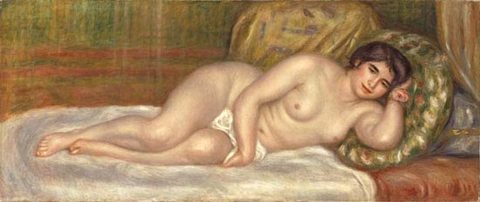 Femme nue couchée
Pierre-Auguste Renoir
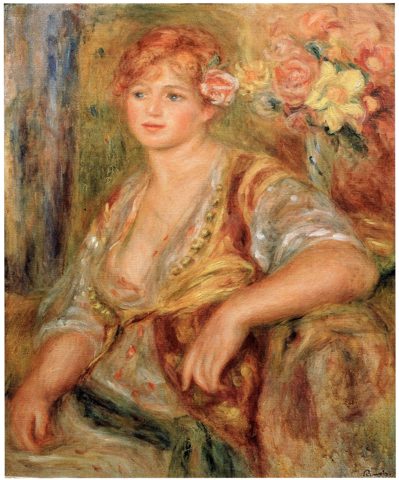 Blonde à la rose
Pierre-Auguste Renoir
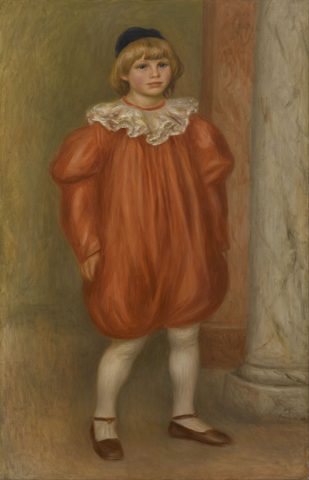 Claude Renoir en clown
Pierre-Auguste Renoir
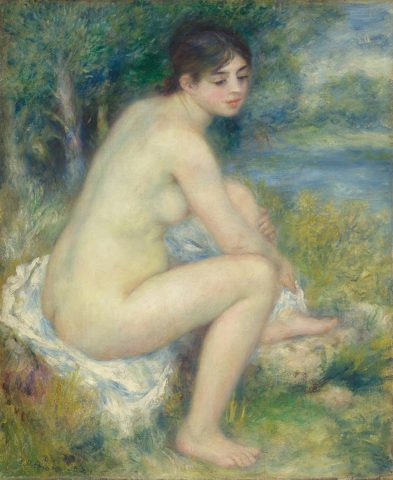 Femme nue dans un paysage
Pierre-Auguste Renoir
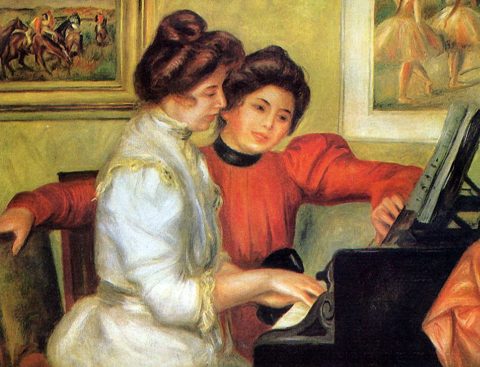 Yvonne et Christine Lerolle au piano
Pierre-Auguste Renoir
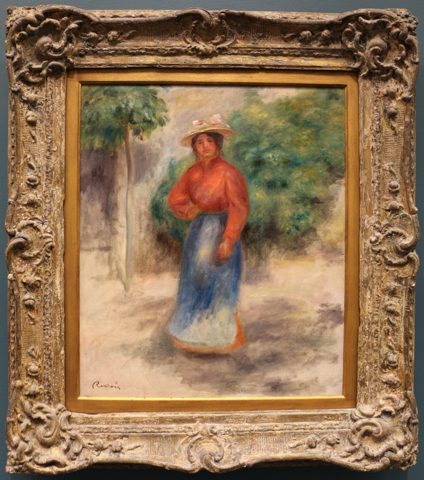 Gabrielle au jardin
Pierre-Auguste Renoir
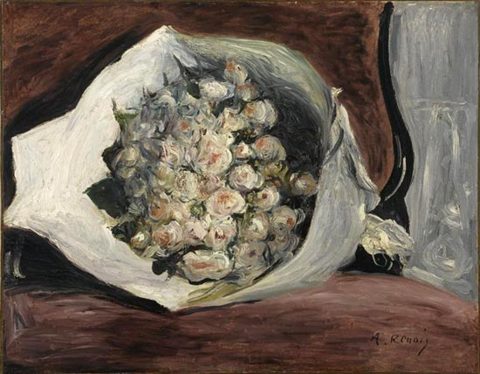 Bouquet dans une loge
Pierre-Auguste Renoir
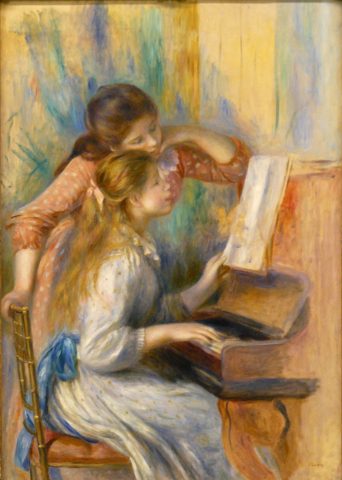 Jeunes filles au piano
Pierre-Auguste Renoir
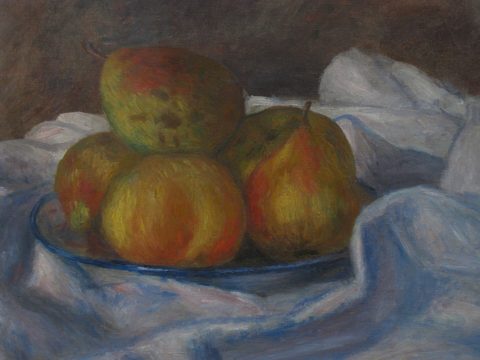 Pommes et poires
Pierre-Auguste Renoir
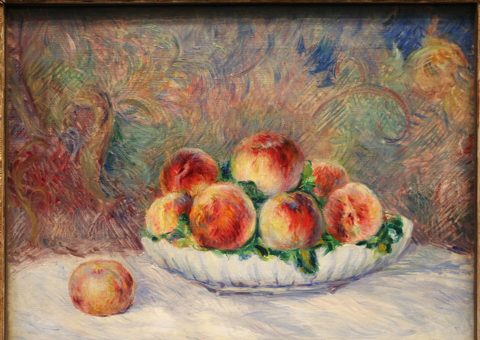 Pêches
Pierre-Auguste Renoir
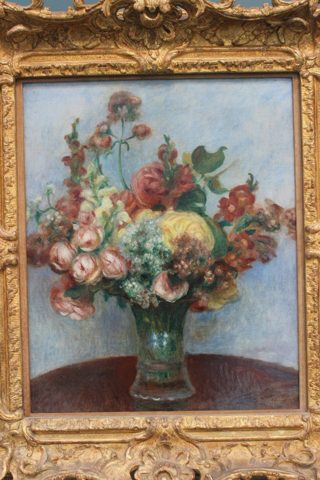 Fleurs dans un vase
Pierre-Auguste Renoir
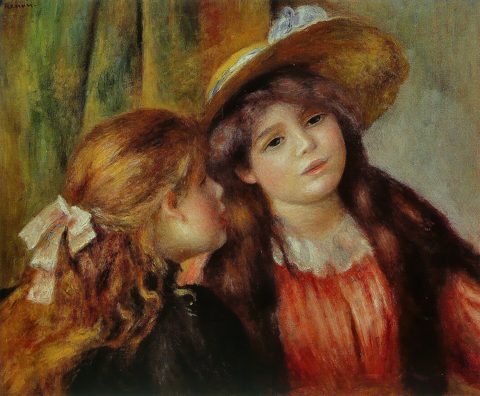 Portrait de deux fillettes
Pierre-Auguste Renoir
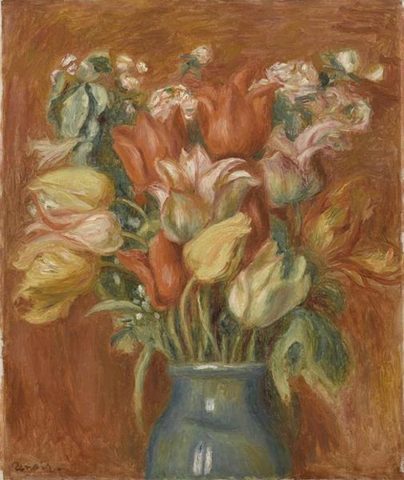 Bouquet de tulipes
Pierre-Auguste Renoir
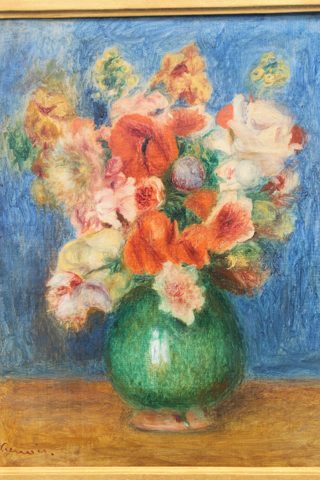 Bouquet
Pierre-Auguste Renoir
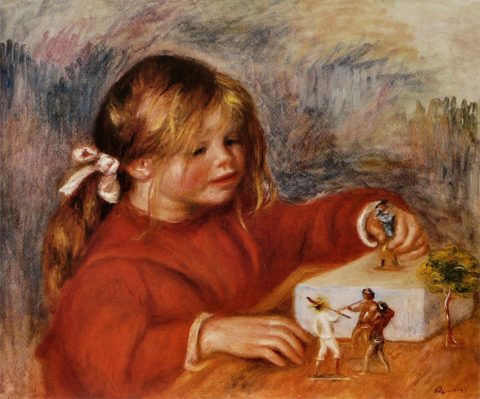 Claude Renoir, jouant
Pierre-Auguste Renoir
