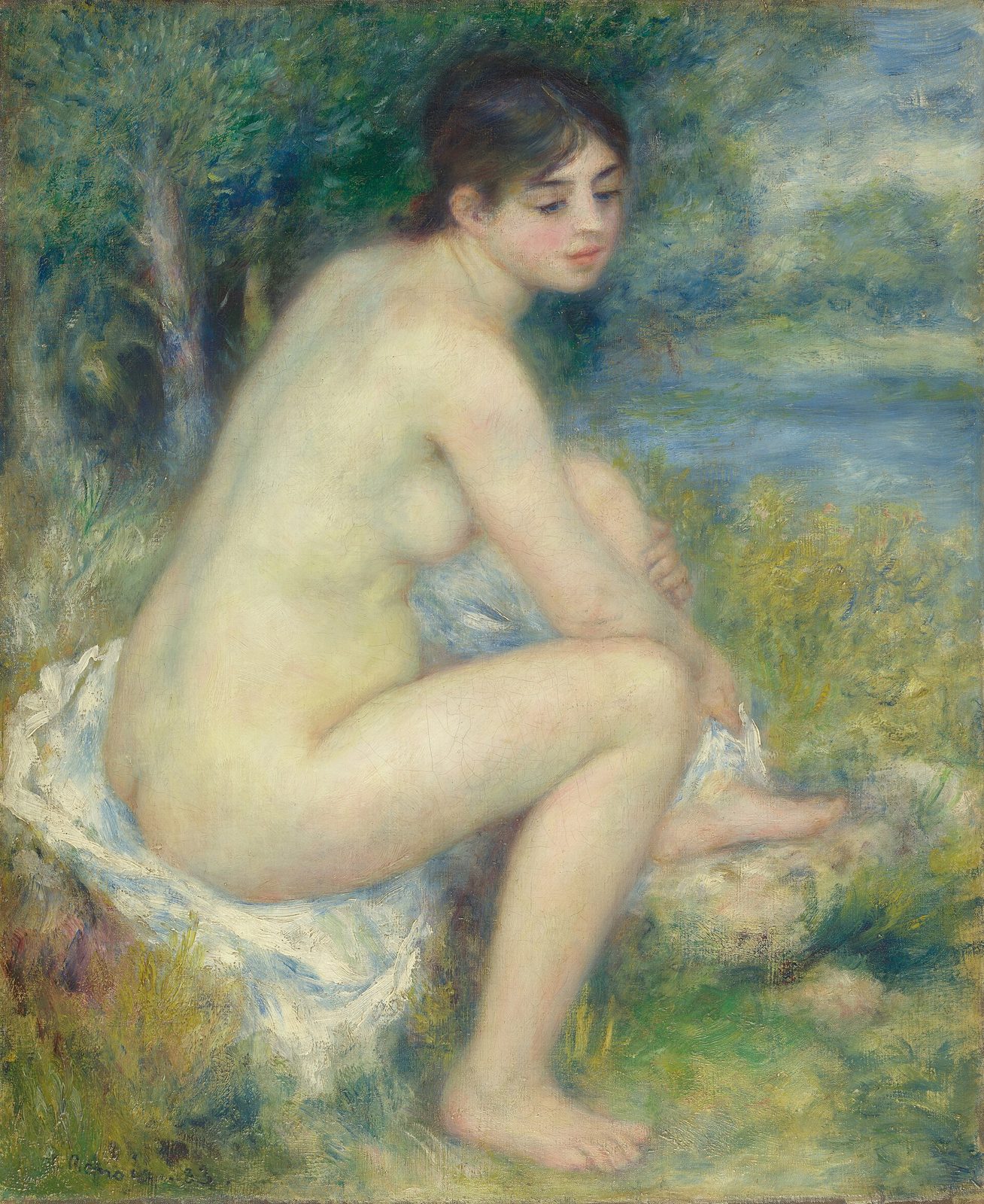
Femme nue dans un paysage
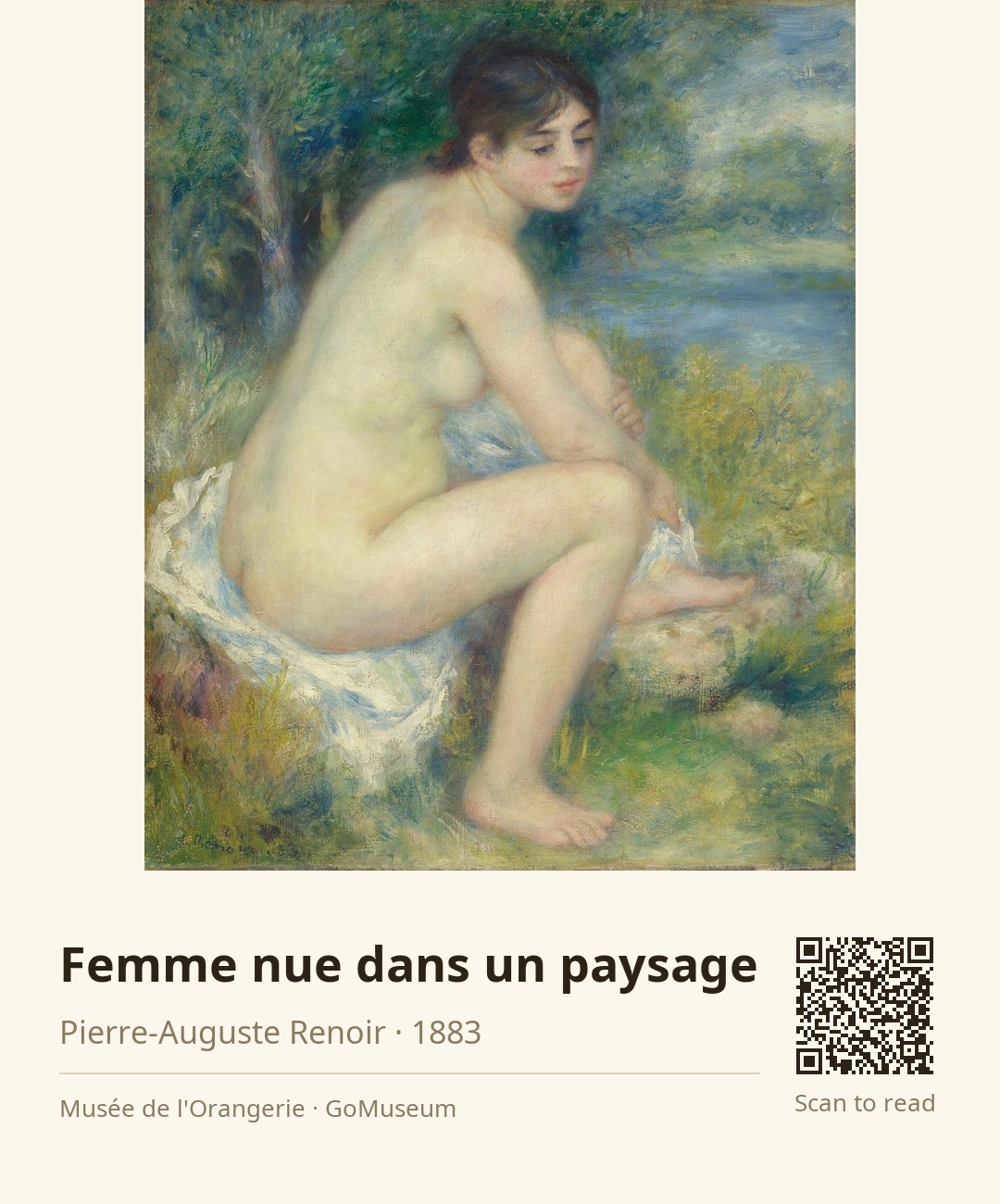
🎧 This work has audio narration — listen in the appA nude woman sits gracefully on the grass, her knees drawn up and arms resting in a moment of quiet contemplation. The soft pastels of her flesh tones blend seamlessly with the gentle greens and blues of the lush landscape surrounding her, creating a serene atmosphere that invites reflection. The way her dark hair is loosely tied back and her gaze directed downward adds to the intimacy of the scene, as if she is lost in thought, removed from the world around her.
Renoir's fluid brushwork enhances this softness, capturing the delicate interplay between the figure and nature. The white cloth draped beneath her not only provides a subtle contrast to the vibrant greens but also suggests a connection to the earth, grounding her in this tranquil setting. The lush background, with its hints of water, evokes a sense of peace and harmony, characteristic of Renoir's work during this period.
Pierre-Auguste Renoir, born on February 25, 1841, in Limoges, France, emerged as a pivotal figure in the Impressionist movement. His early life in a modest family led him to Paris, where he honed his artistic skills amidst the masterpieces of the Louvre. Initially apprenticed in a porcelain factory, Renoir's passion for painting flourished, particularly after studying under Charles Gleyre, where he befriended fellow artists like Monet and Sisley.
Renoir's work celebrated feminine beauty and vibrant social scenes, exemplified in iconic pieces like "Dance at Le Moulin de la Galette." Despite facing criticism early on, he gained recognition, especially after participating in the first Impressionist exhibition in 1874. His style evolved over the years, transitioning towards realism influenced by classical masters like Raphael.
Throughout his life, Renoir balanced personal struggles, including health issues, with a prolific output, reportedly creating around four thousand works. He became a beloved figure in art history, known for his warm palette and expressive brushwork. Renoir passed away on December 3, 1919, leaving a legacy that continues to inspire artists and art lovers alike.
Created in 1883, 'Femme nue dans un paysage' was a product of Renoir's deep engagement with both the human form and the natural world. Commissioned by a private collector, the painting found its way through various hands, including notable figures like Gaston Bernheim-Jeune and Paul Guillaume. It was exhibited at the Galerie des Beaux-Arts in Paris in 1954, where it garnered attention for its serene beauty and masterful technique.
The brushwork is fluid and expressive, with each stroke contributing to the overall softness of the scene. The gentle blending of colors creates a harmonious palette that enhances the figure's connection to the landscape. The use of pastels, particularly in the flesh tones, allows the woman to almost merge with her surroundings, embodying the tranquility of nature. The white cloth beneath her serves not just as a contrast but as a visual anchor, grounding her in the lush environment. Renoir's choice to depict her in a three-quarter pose invites intimacy, drawing viewers into her contemplative moment while maintaining a sense of naturalism that is both inviting and serene.
The painting was owned by notable figures such as Gaston Bernheim-Jeune and Paul Guillaume.