Claude Renoir en clown
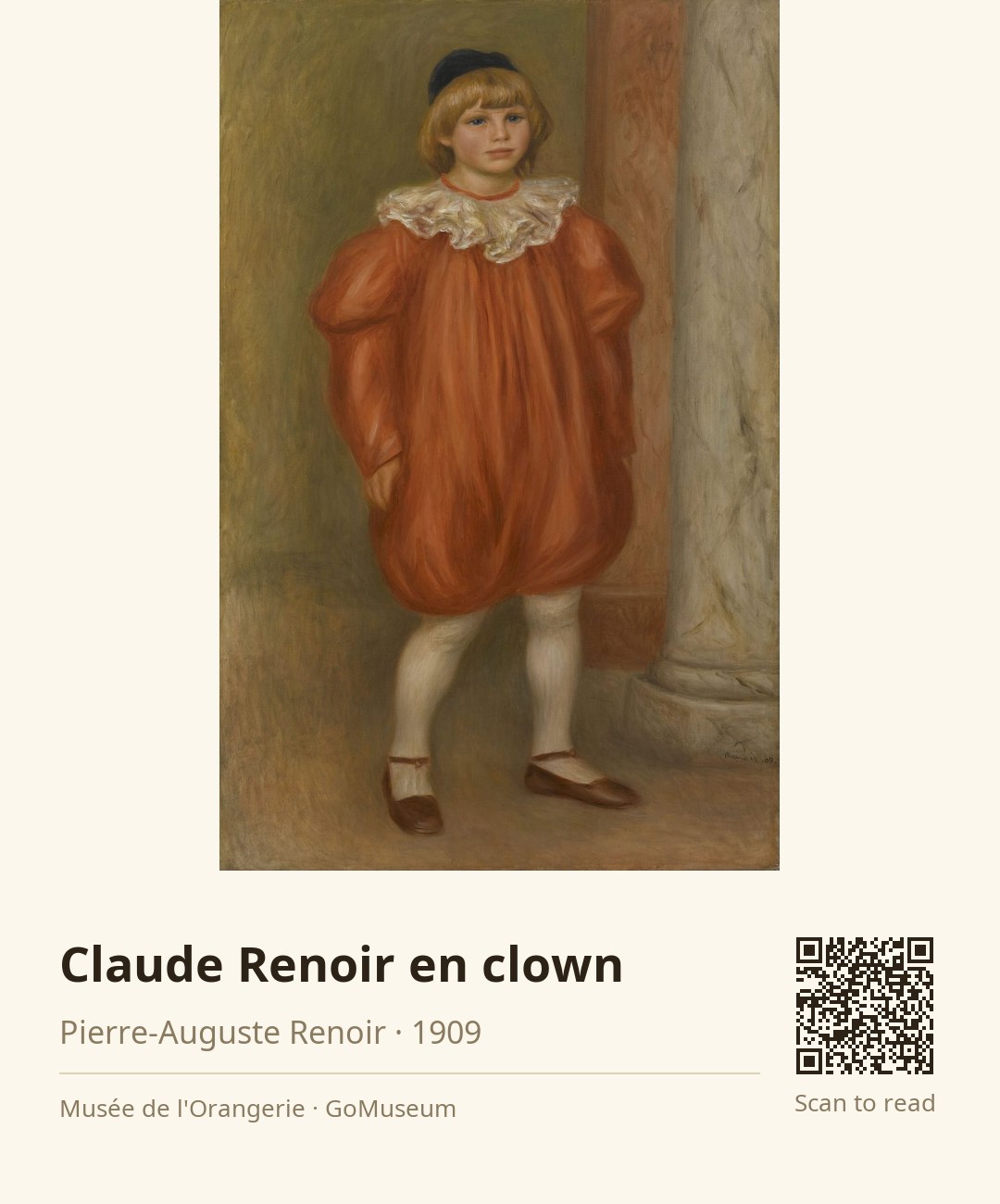
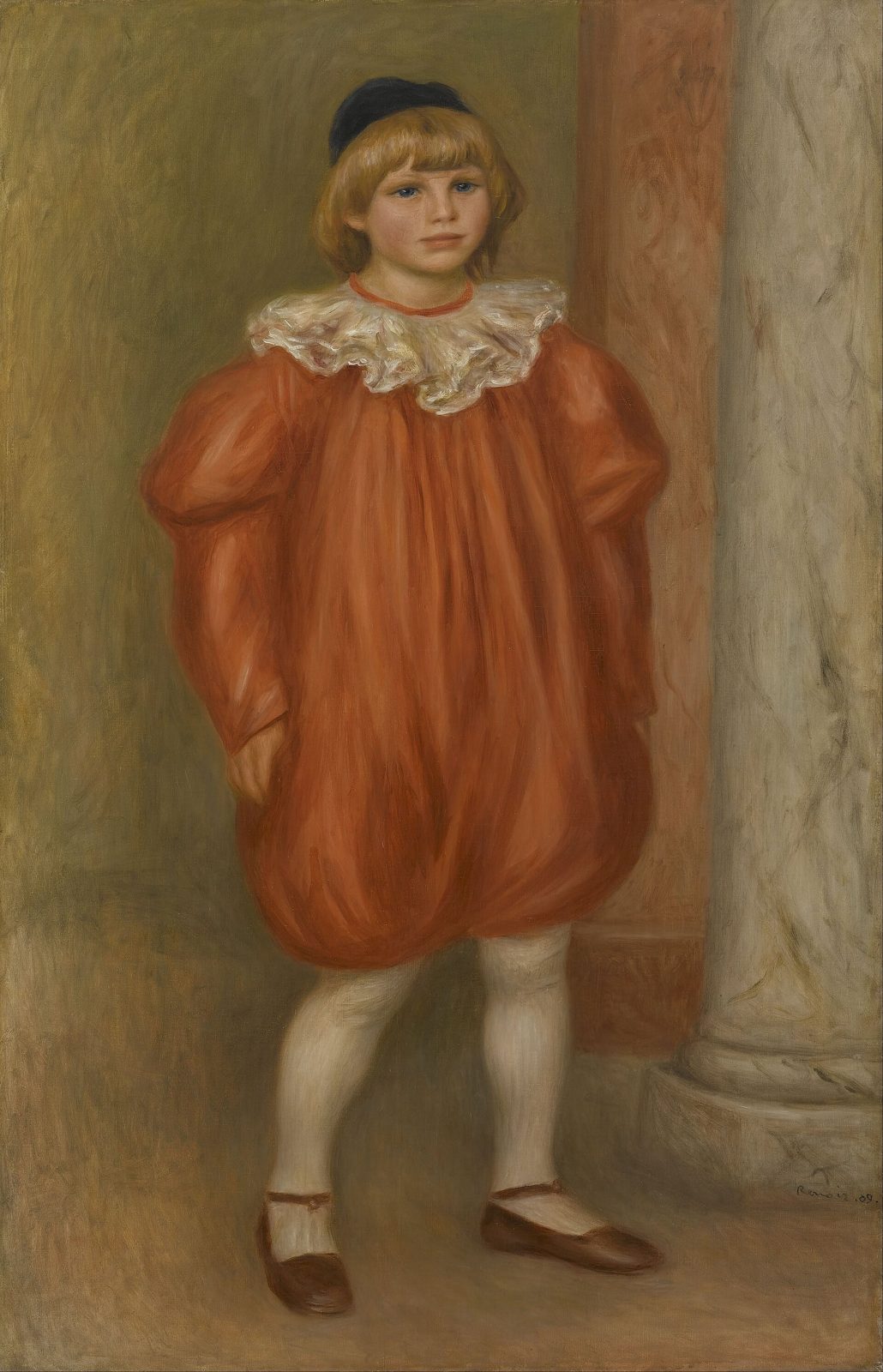
🎧 This work has audio narration — listen in the appA young child stands confidently in a bright orange clown costume, complete with a ruffled white collar that adds a playful touch. The soft brushwork captures the gentle contours of the garment, while the muted green wall and marble column create a harmonious backdrop that enhances the child’s vibrant presence.
This portrayal of Claude Renoir, the artist's son, reflects a tender moment in the artist's life, showcasing not just the innocence of childhood but also the joy of family. The warm palette, dominated by the striking orange of the costume, draws the viewer's eye and evokes a sense of warmth and affection. Renoir’s characteristic Impressionist technique is evident here, with the colors blending seamlessly to create a lively yet intimate atmosphere.
Painted in 1909, this work was part of a series of portraits that celebrated personal connections, emphasizing the importance of family in Renoir's later years. The painting was exhibited in various galleries, including the Galerie Flechtheim in Berlin in 1928, highlighting its significance in the artist's oeuvre.
Pierre-Auguste Renoir, born on February 25, 1841, in Limoges, France, emerged as a pivotal figure in the Impressionist movement. His early life in a modest family led him to Paris, where he honed his artistic skills amidst the masterpieces of the Louvre. Initially apprenticed in a porcelain factory, Renoir's passion for painting flourished, particularly after studying under Charles Gleyre, where he befriended fellow artists like Monet and Sisley.
Renoir's work celebrated feminine beauty and vibrant social scenes, exemplified in iconic pieces like "Dance at Le Moulin de la Galette." Despite facing criticism early on, he gained recognition, especially after participating in the first Impressionist exhibition in 1874. His style evolved over the years, transitioning towards realism influenced by classical masters like Raphael.
Throughout his life, Renoir balanced personal struggles, including health issues, with a prolific output, reportedly creating around four thousand works. He became a beloved figure in art history, known for his warm palette and expressive brushwork. Renoir passed away on December 3, 1919, leaving a legacy that continues to inspire artists and art lovers alike.
Renoir’s technique in 'Claude Renoir en clown' is a masterclass in Impressionist brushwork. The soft, fluid strokes create a sense of movement and life, particularly in the vibrant orange fabric of the clown costume. This choice of color not only draws the viewer's attention but also evokes warmth and joy. The gentle transitions between hues, particularly in the ruffled collar and the child's blond hair, showcase Renoir's ability to blend colors seamlessly. The composition balances the child against the muted green wall and the marble column, which adds depth without overpowering the subject.
After its creation, the painting was exhibited in various galleries, notably at the Galerie Flechtheim in Berlin in 1928.
Renoir's technique in this painting showcases his mastery of Impressionist brushwork, characterized by soft, fluid strokes that create a sense of movement and life.
The painting highlights Renoir's skill in blending colors seamlessly, especially evident in the gentle transitions between hues in the ruffled collar and the child's blond hair.