 Image: Miguel Hermoso Cuesta
Fleurs dans un vase
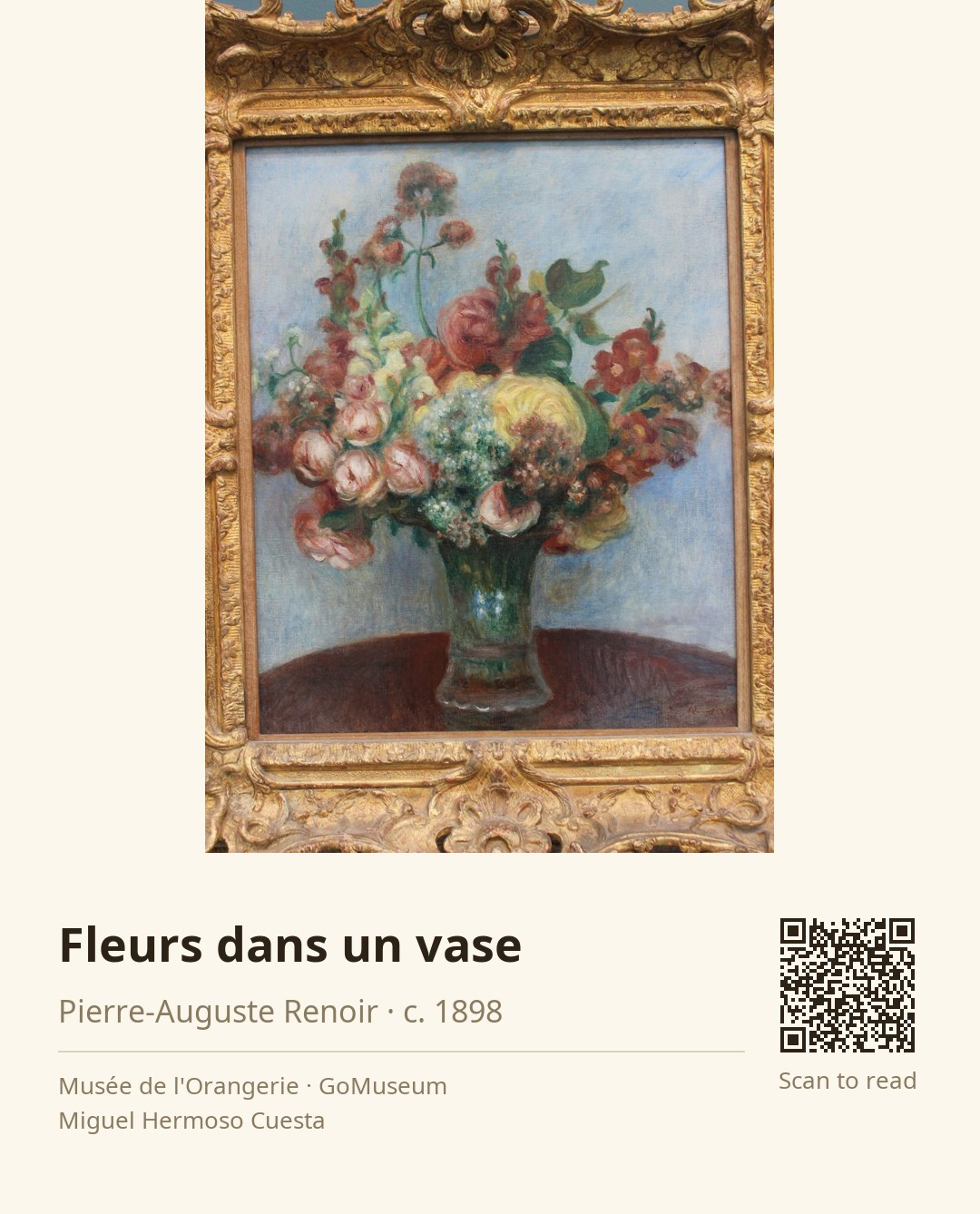
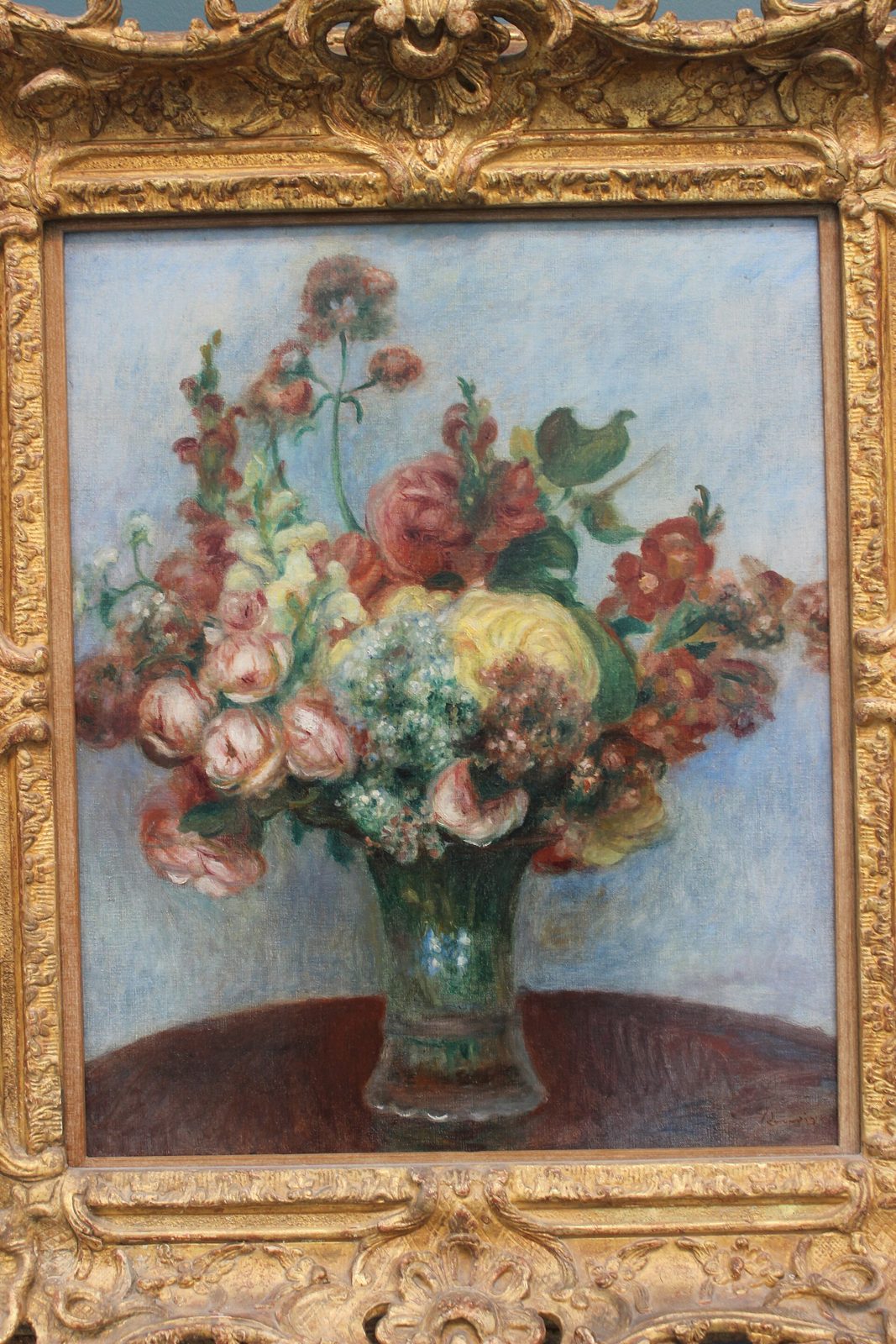
🎧 This work has audio narration — listen in the appA vibrant bouquet bursts forth from a clear glass vase, its colors dancing against a soft blue backdrop. Roses in shades of pink and red intermingle with yellow and white blooms, creating a lush, abundant display that draws the eye. The loose, expressive brushwork captures the texture of the petals, giving them a sense of life and movement, while the dark wooden surface grounds the composition, providing a striking contrast to the lighter tones of the flowers and background.
Painted around 1898, Renoir's "Fleurs dans un vase" exemplifies the artist's ability to infuse everyday subjects with vitality and emotion. This still life reflects the Impressionist focus on capturing fleeting moments and the beauty of nature, showcasing Renoir's mastery in portraying light and color. The arrangement is not merely decorative; it invites viewers into a sensory experience, evoking the fragrance and vibrancy of a garden in full bloom.
Renoir, who created this work during the late 19th century, was known for his ability to convey warmth and intimacy in his paintings, and this piece is no exception. The painting was part of Renoir's own collection until 1919, after which it changed hands several times before becoming part of the museum's inventory.
Pierre-Auguste Renoir, born on February 25, 1841, in Limoges, France, emerged as a pivotal figure in the Impressionist movement. His early life in a modest family led him to Paris, where he honed his artistic skills amidst the masterpieces of the Louvre. Initially apprenticed in a porcelain factory, Renoir's passion for painting flourished, particularly after studying under Charles Gleyre, where he befriended fellow artists like Monet and Sisley.
Renoir's work celebrated feminine beauty and vibrant social scenes, exemplified in iconic pieces like "Dance at Le Moulin de la Galette." Despite facing criticism early on, he gained recognition, especially after participating in the first Impressionist exhibition in 1874. His style evolved over the years, transitioning towards realism influenced by classical masters like Raphael.
Throughout his life, Renoir balanced personal struggles, including health issues, with a prolific output, reportedly creating around four thousand works. He became a beloved figure in art history, known for his warm palette and expressive brushwork. Renoir passed away on December 3, 1919, leaving a legacy that continues to inspire artists and art lovers alike.
Painted around 1898, 'Fleurs dans un vase' was created during a pivotal time for Renoir, as he was solidifying his reputation within the Impressionist movement. This piece was part of Renoir's own collection until 1919, reflecting his personal attachment to it. After his passing, the painting changed hands several times, first moving to the collection of Guillaume Paul, and later to Walter Mme Vve Jean. Each transition added layers to its story, as it was appreciated by various collectors who recognized its beauty and significance.
The brushwork is notably loose and expressive, which allows for a dynamic representation of the flowers. The vibrant colors are not just applied; they are blended and layered to create depth, with the pinks and reds of the roses contrasting beautifully against the soft blue background. The choice of a dark wooden surface beneath the vase grounds the composition, enhancing the brightness of the flowers. Renoir's decision to center the bouquet fills the canvas, inviting viewers to immerse themselves in this lush display, almost as if they could reach out and touch the blooms.
By centering the bouquet and filling the canvas, Renoir creates an immersive experience that makes viewers feel as though they can reach out and touch the flowers.