 Image: Miguel Hermoso Cuesta
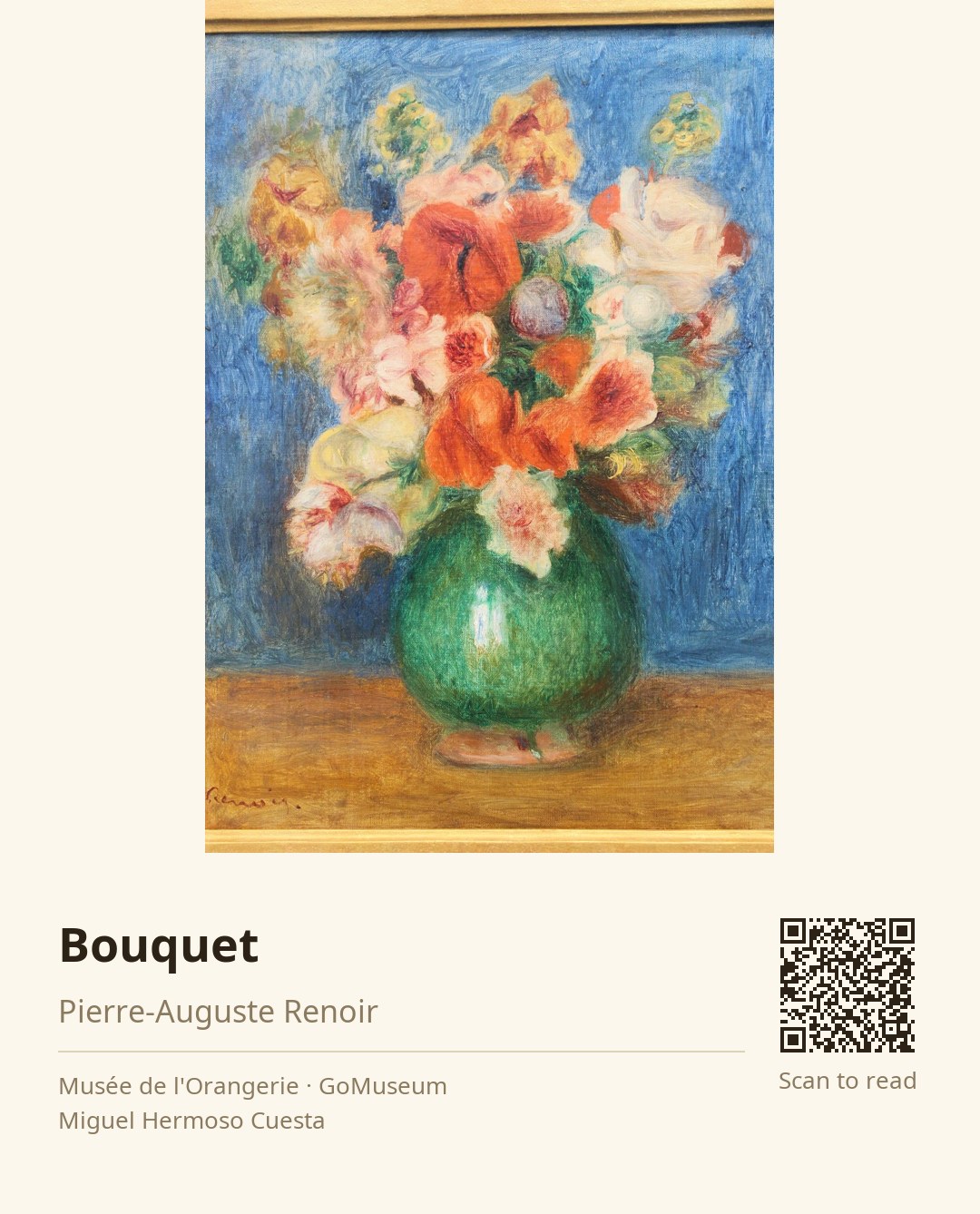
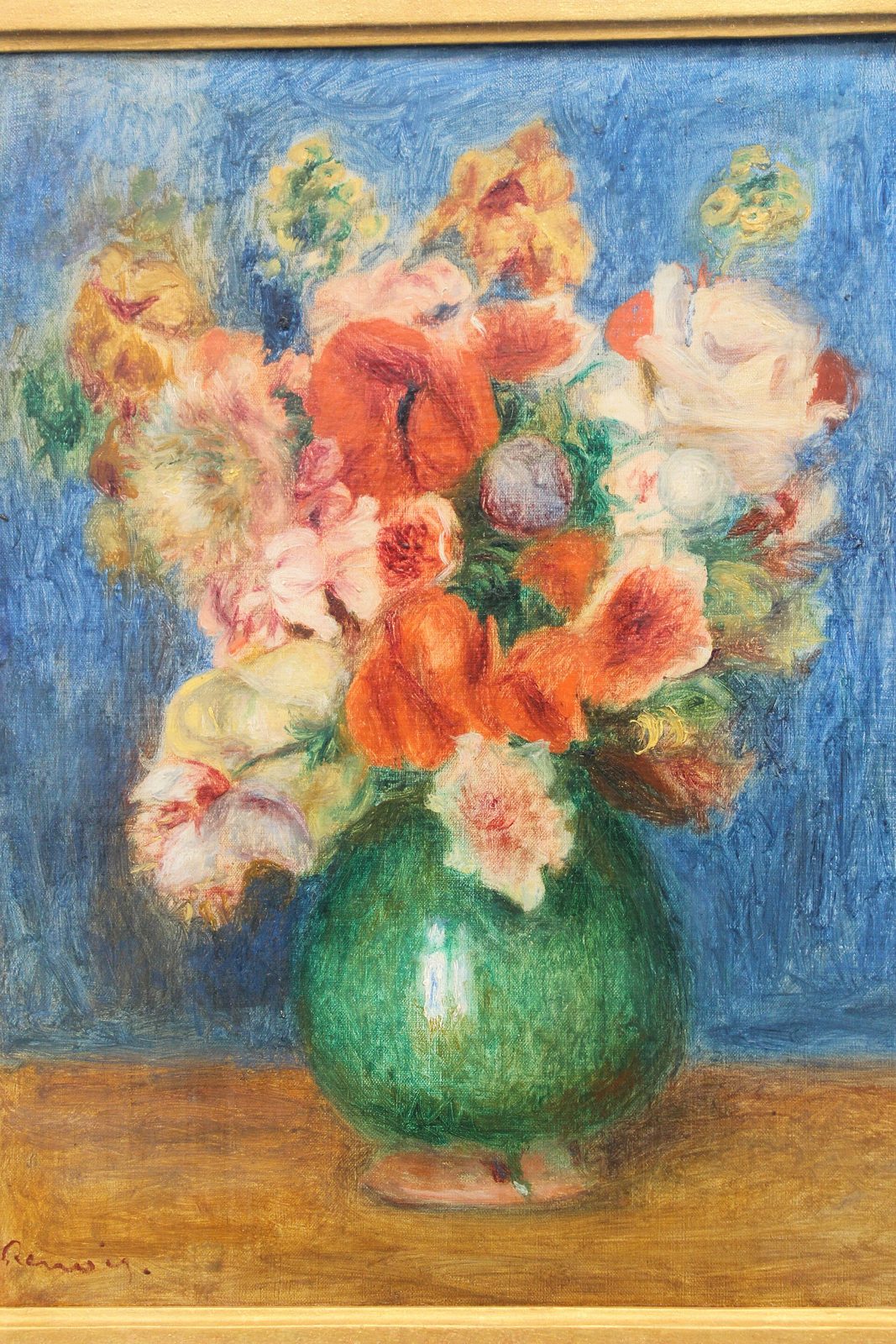
A vibrant bouquet bursts forth from a round green vase, its colors dancing in a lively display of oranges, pinks, whites, and yellows. The soft, textured blue background serves as a striking contrast, making the flowers pop with energy and warmth. Renoir's loose, expressive brushwork adds a sense of movement, inviting you to feel the vitality of each petal and leaf.
This painting, titled "Bouquet," captures not just the beauty of flowers but also the artist's ability to convey emotion through color and form. The arrangement is full and rounded, filling the canvas with life, while the warm brown tones of the wooden surface ground the composition, adding depth.
Created in the early 20th century, "Bouquet" reflects Renoir's mastery of still life, showcasing his unique approach to capturing the essence of nature. The work was exhibited in 1929 at the Galerie Bernheim-Jeune in Paris, highlighting its significance in the contemporary art scene of the time.
Pierre-Auguste Renoir, born on February 25, 1841, in Limoges, France, emerged as a pivotal figure in the Impressionist movement. His early life in a modest family led him to Paris, where he honed his artistic skills amidst the masterpieces of the Louvre. Initially apprenticed in a porcelain factory, Renoir's passion for painting flourished, particularly after studying under Charles Gleyre, where he befriended fellow artists like Monet and Sisley.
Renoir's work celebrated feminine beauty and vibrant social scenes, exemplified in iconic pieces like "Dance at Le Moulin de la Galette." Despite facing criticism early on, he gained recognition, especially after participating in the first Impressionist exhibition in 1874. His style evolved over the years, transitioning towards realism influenced by classical masters like Raphael.
Throughout his life, Renoir balanced personal struggles, including health issues, with a prolific output, reportedly creating around four thousand works. He became a beloved figure in art history, known for his warm palette and expressive brushwork. Renoir passed away on December 3, 1919, leaving a legacy that continues to inspire artists and art lovers alike.
Pierre-Auguste Renoir's 'Bouquet' was created in the early 20th century, a time when the artist was deeply engaged in exploring the beauty of everyday subjects. It made its public debut in 1929 at the Galerie Bernheim-Jeune in Paris, where it was showcased alongside other contemporary works, drawing attention from both critics and art lovers. The reception was enthusiastic, reflecting the growing appreciation for Renoir's vibrant palette and emotive brushwork.
In 'Bouquet', Renoir employs a technique characterized by loose, expressive brushwork that breathes life into the flowers. Each stroke is deliberate yet spontaneous, creating a sense of movement that mimics the gentle sway of petals in a breeze. The vibrant colors—rich oranges, soft pinks, and creamy whites—are layered with a thick application of paint, giving the flowers a tactile quality that invites touch. The blue background, textured and soft, serves not just as a backdrop but as a dynamic contrast that amplifies the warmth of the flowers. The composition is thoughtfully balanced, with the round vase positioned to draw the eye, while the warm brown tones of the wooden surface anchor the piece, adding depth and grounding the lively arrangement.
Renoir employed a thick application of paint to layer the vibrant colors, which gives the flowers a tactile quality that makes them appear inviting to touch.
The textured blue background enhances the warmth of the flowers by providing a dynamic contrast, making the colors of the bouquet stand out more vividly.