 Image: Rama · Gary Todd from Xinzheng, China · anonymous · Rama · Rama
Bentresh stela
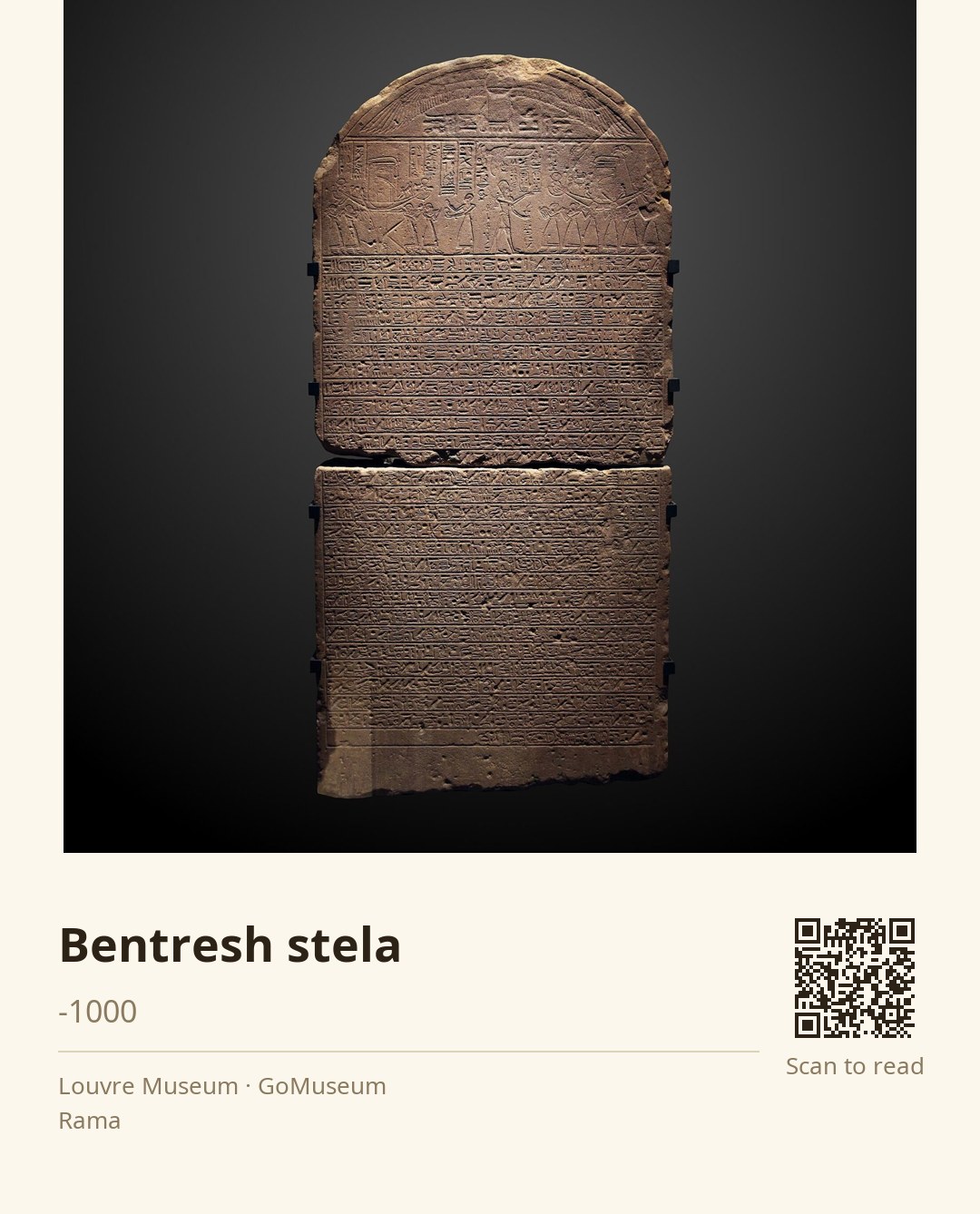
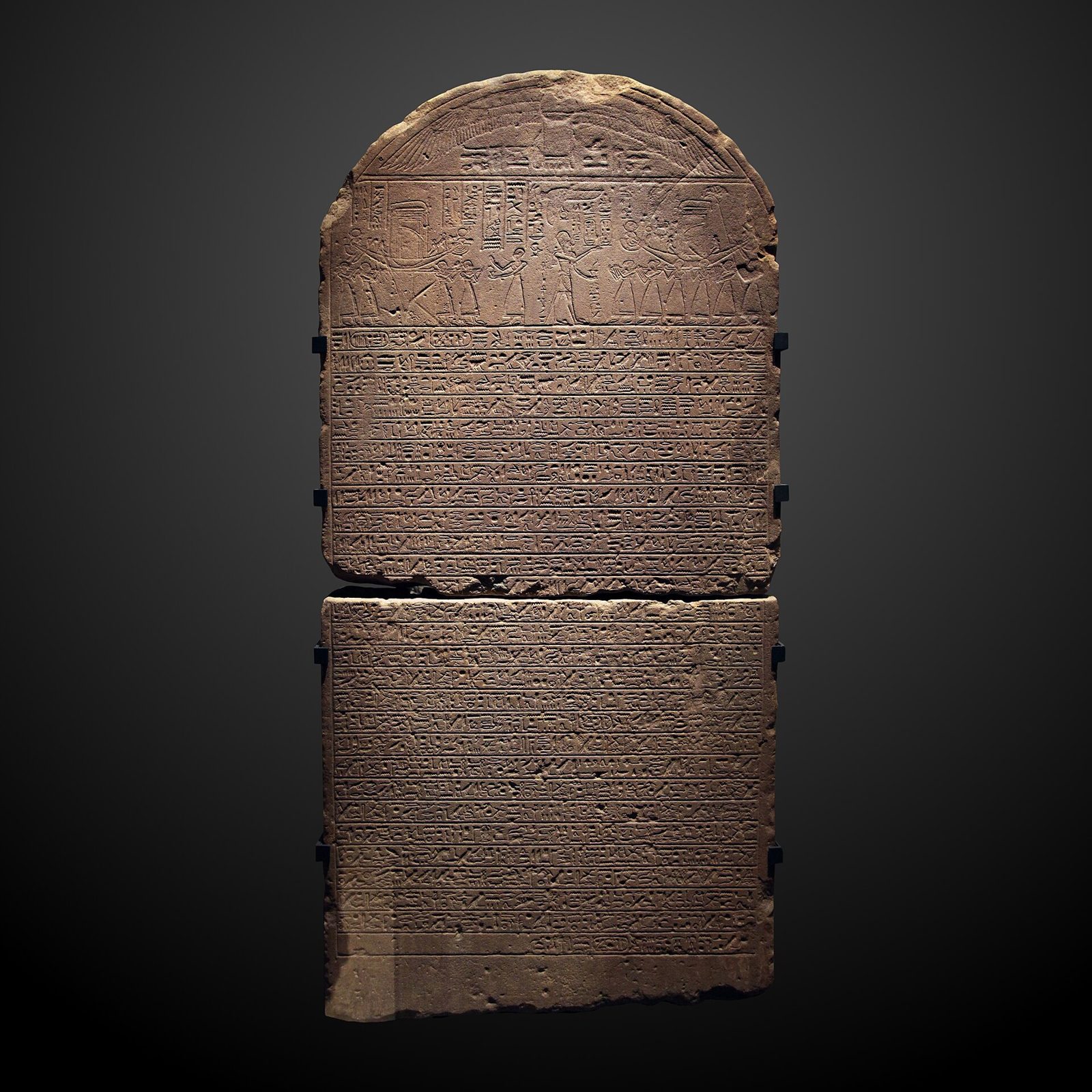
🎧 This work has audio narration — listen in the appTake a moment to really look at the Bentresh stela before you. Notice how the deep black sandstone contrasts with the intricate carvings that tell a story over three thousand years old. Look closely at the figures—there’s Ramesses II, depicted in a moment of reverence, offering incense to Khonsu, the god of the moon and time.
These details matter because they reveal not just a religious practice, but a cultural narrative about healing and divine intervention. The stela recounts the tale of Bentresh, the daughter of a foreign prince, who fell ill and was saved by Khonsu’s power. This connection between a foreign princess and an Egyptian god highlights the intertwining of cultures and the significance of divine favor in ancient Egypt.
As you stand here, think about the journey of this stela from its origins in a Ptolemaic shrine to its place in the Louvre. What stories do you think it could tell if it could speak?
The Bentresh stela, a striking piece of black sandstone, was unearthed in 1829 from a small Ptolemaic shrine adjacent to the Khonsu temple of Ramesses III in Karnak. This artifact, measuring 222 by 109 centimeters, is thought to have been commissioned during a time when Egypt was grappling with foreign influences, possibly reflecting a yearning for its past glory. The narrative inscribed on the stela, which recounts the tale of Bentresh, the daughter of the prince of Bakhtan, is set during the reign of Ramesses II, although scholars debate its actual dating, with some suggesting it was created in the Ptolemaic period. The text itself, while crafted in the style of the New Kingdom, is believed to have been executed much later, possibly as anti-Persian propaganda.
Crafted during a time when Egypt was grappling with foreign influences, this stela tells the story of a princess healed by the Egyptian god Khonsu. Its narrative, blending myth and history, reflects how Egyptians sought to remember their past glories amidst foreign rule. Scholars believe it may have served as a form of propaganda, reminding people of the power of their gods and the legacy of Ramesses II. This artifact not only influenced later storytelling, possibly inspiring the Christian Legend of Hilaria, but also illustrates the enduring impact of Egyptian mythology on subsequent cultures.
One surprising aspect of the Bentresh stela is its potential connection to the historical figure of Ramesses II, who is depicted in the narrative as marrying the daughter of the prince of Bakhtan. This relationship has been interpreted as an example of 'imitatio alexandri,' a practice where rulers sought to emulate the grandeur of Alexander the Great.
The tale of Bentresh has been suggested to have inspired the Christian Legend of Hilaria, indicating how ancient stories can evolve and influence later traditions, despite significant differences between the two.