 Image: Own work
Self-portrait with Her Daughter, Julie
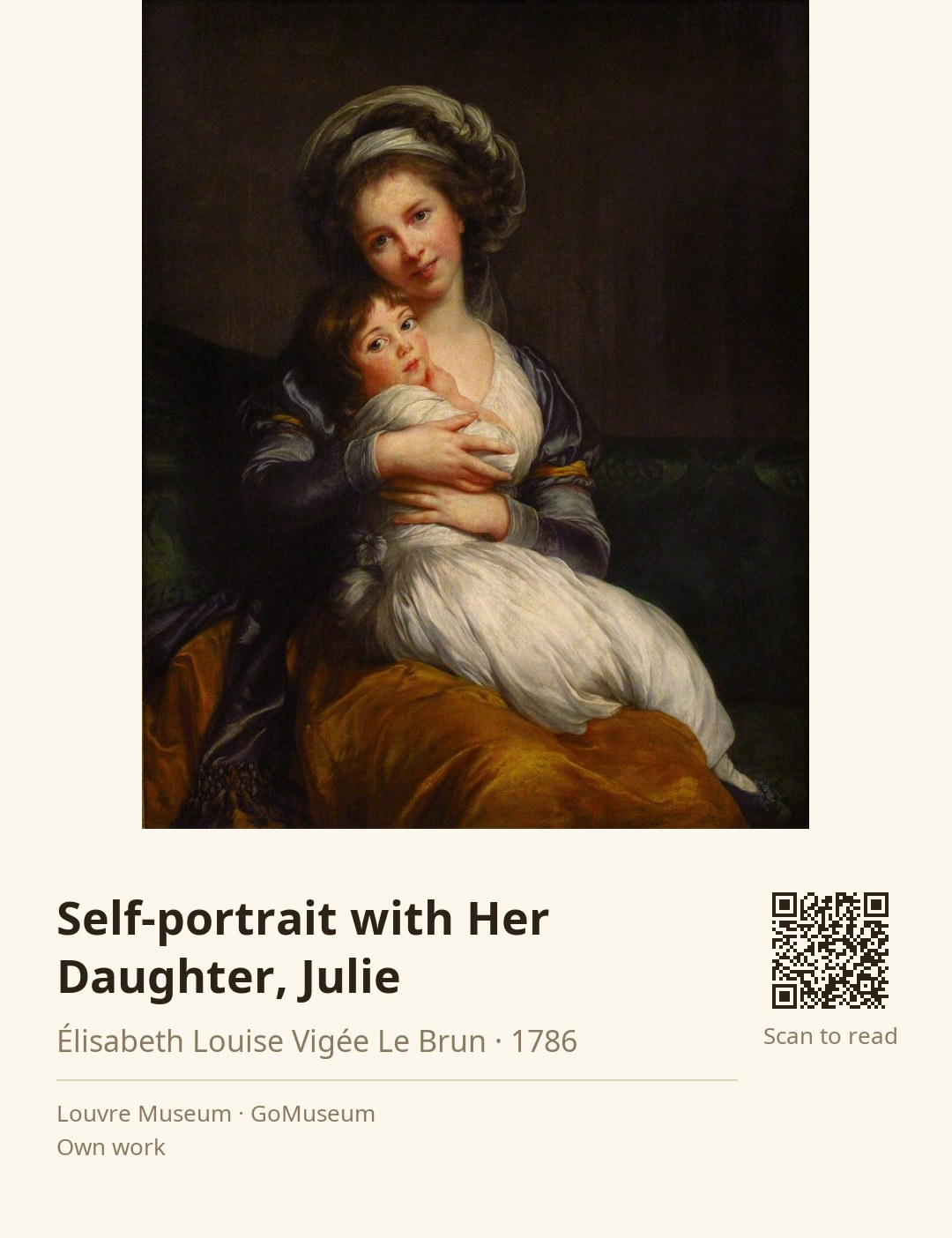
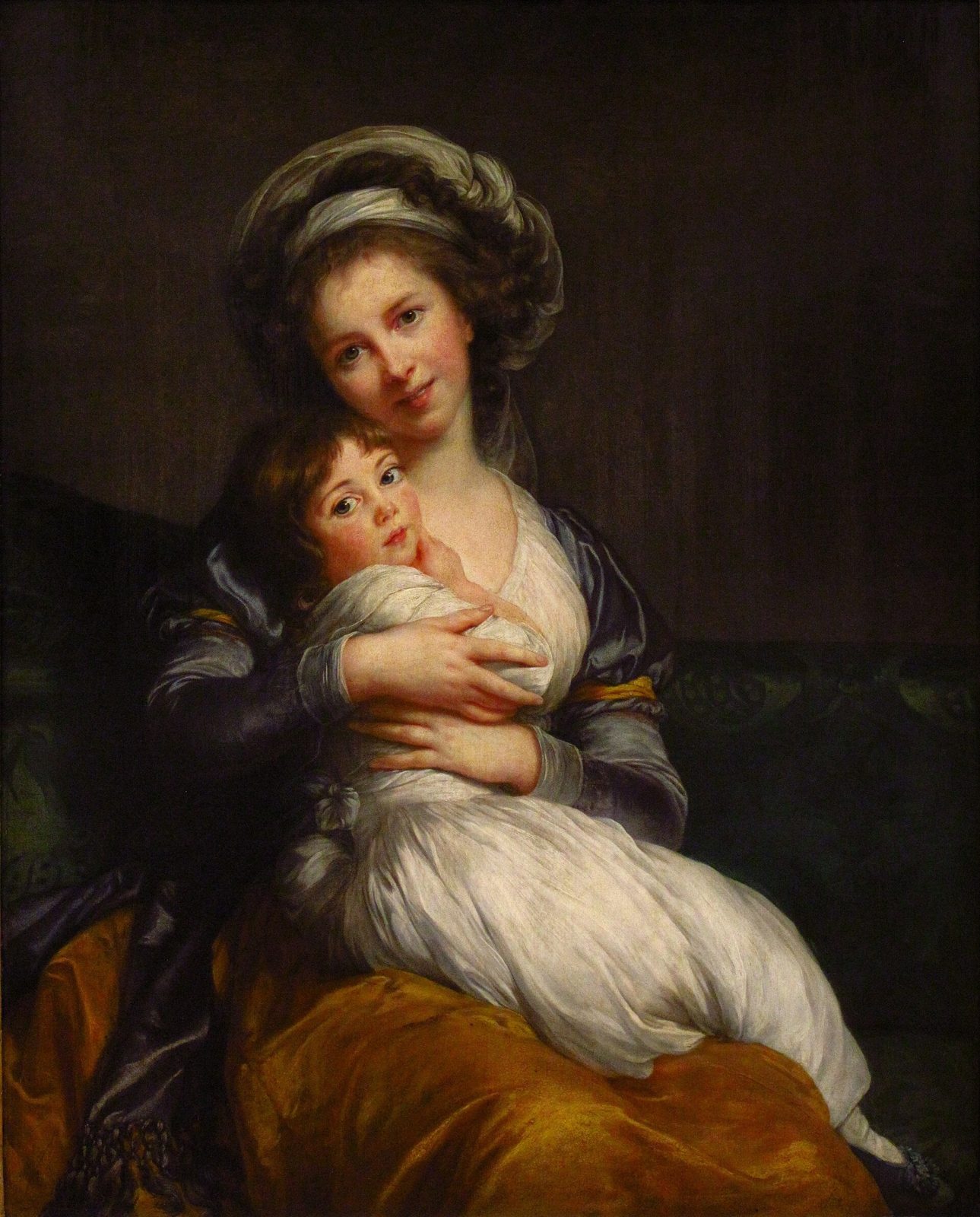
🎧 This work has audio narration — listen in the appLook closely at this intimate moment captured in Élisabeth Louise Vigée Le Brun's "Self-portrait with Her Daughter, Julie." Notice how she cradles her daughter in her lap, their gazes meeting ours with a warmth that feels almost tangible. The way Le Brun's hands envelop Julie speaks volumes about their bond—it's not just a mother and child; it's a celebration of maternal love.
Now, pay attention to Le Brun's smile. Unlike typical portraits of her time, where smiles were often reserved or subdued, here she shows her teeth, a bold choice that reflects a shift in societal norms. This detail isn’t just about aesthetics; it hints at a growing acceptance of personal expression in art, marking a transition from the rigid conventions of the past.
Created in 1786, this painting was a personal statement from a woman who was not only a mother but also a pioneering artist in a male-dominated field. Vigée Le Brun was renowned for her portraits of royalty, including Marie Antoinette, yet here she turns the canvas inward, revealing her own life.
As you stand here, think about the significance of this moment in art history. How does this portrait challenge your perceptions of motherhood and identity? What stories do you think Vigée Le Brun wanted to tell through this embrace?
Élisabeth Louise Vigée Le Brun, born on April 16, 1755, in Paris, emerged as one of the foremost portrait painters of her time. The daughter of a portraitist, she displayed artistic talent from a young age, receiving encouragement from her father and later studying under prominent artists. Her career flourished as she became the official portraitist for Marie Antoinette, gaining recognition among European aristocrats and artists alike.
Vigée Le Brun's style, a blend of Rococo and Neoclassicism, was marked by a sensitivity to color and composition, often draping her subjects in elegant fabrics. Over her lifetime, she produced around 660 portraits and 200 landscapes, with her works housed in major museums worldwide. Despite the upheavals of the French Revolution, her royalist sentiments and artistic prowess allowed her to navigate the shifting tides of art and society.
Her memoirs, published in her later years, provide insight into her life and the challenges she faced as a female artist in a male-dominated field. Celebrated by contemporaries like Joshua Reynolds, she remains a pivotal figure in art history, symbolizing the transition from the ornate Rococo to the more restrained Neoclassical style. Vigée Le Brun passed away on March 30, 1842, leaving behind a legacy that continues to inspire.
It was first unveiled to the public at the Salon of 1787 in Paris, where it garnered attention for its intimate portrayal of the artist and her daughter. After changing hands over the years, it found a permanent home in the Louvre, thanks to a donation by Eugénie Tripier Le Franc in 1843. This artwork not only showcases Vigée Le Brun's skill but also reflects the evolving norms of portraiture, particularly with the artist's bold smile, which was a rarity among elite portraits of the era. As you stand before this painting, consider the personal and historical layers that surround it, from the artist's life to the shifting tides of society.
One surprising detail about this painting is the way Vigée Le Brun's smile, showing her teeth, was quite revolutionary for elite portraiture of the time. Historian Colin Jones notes that this display of teeth was unusual until then, suggesting that improvements in dental care were beginning to influence social norms and perceptions of beauty among the upper classes.
Vigée Le Brun's relationship with her daughter Julie was deeply personal, and this portrait reflects her desire to assert her identity as both an artist and a mother, challenging the norms of her era where women were often relegated to domestic roles.