 Image: Marie-Lan Nguyen · Unknown artistUnknown artist
Chatsworth Apollo
🎧 This work has audio narration — listen in the appTake a moment to really look at the Chatsworth Apollo. Notice how the curls of his hair cascade down, each lock meticulously crafted to catch the light. And check out those eyes—originally, they would have held vibrant inlays of marble or glass, making him seem almost alive.
These details matter because they reveal the incredible skill of ancient Greek artisans. The way the bronze plates curl to form eyelashes shows a level of craftsmanship that was cutting-edge for its time, around 460 BCE. This was an era when artists were beginning to push the boundaries of realism in sculpture, and you can see that ambition reflected here.
This head was once part of a larger statue of Apollo, the Greek god of music and art, and was discovered in Cyprus in the 1830s. Unfortunately, the rest of the statue was lost during its recovery, but the head survived, eventually making its way to the British Museum after being owned by the Duke of Devonshire.
As you stand here, think about the journey this piece has taken—from the hands of a skilled sculptor in ancient Greece to the grand halls of a modern museum. What stories do you think this head could tell if it could speak?
Take a closer look at the craftsmanship of the Chatsworth Apollo. This head was created using the lost-wax casting technique, a method that allowed for incredible detail. Each section, like the head and limbs, was crafted separately and then joined together. Notice the bronze plates that curl out to form eyelashes—this was a clever way to enhance the lifelike quality of the eyes, which once held vibrant inlays of marble or glass. The reddish copper plating on the lips mimics their natural color, showcasing the artist's attention to realism and beauty. This meticulous work reflects the high level of skill among ancient Greek artisans.
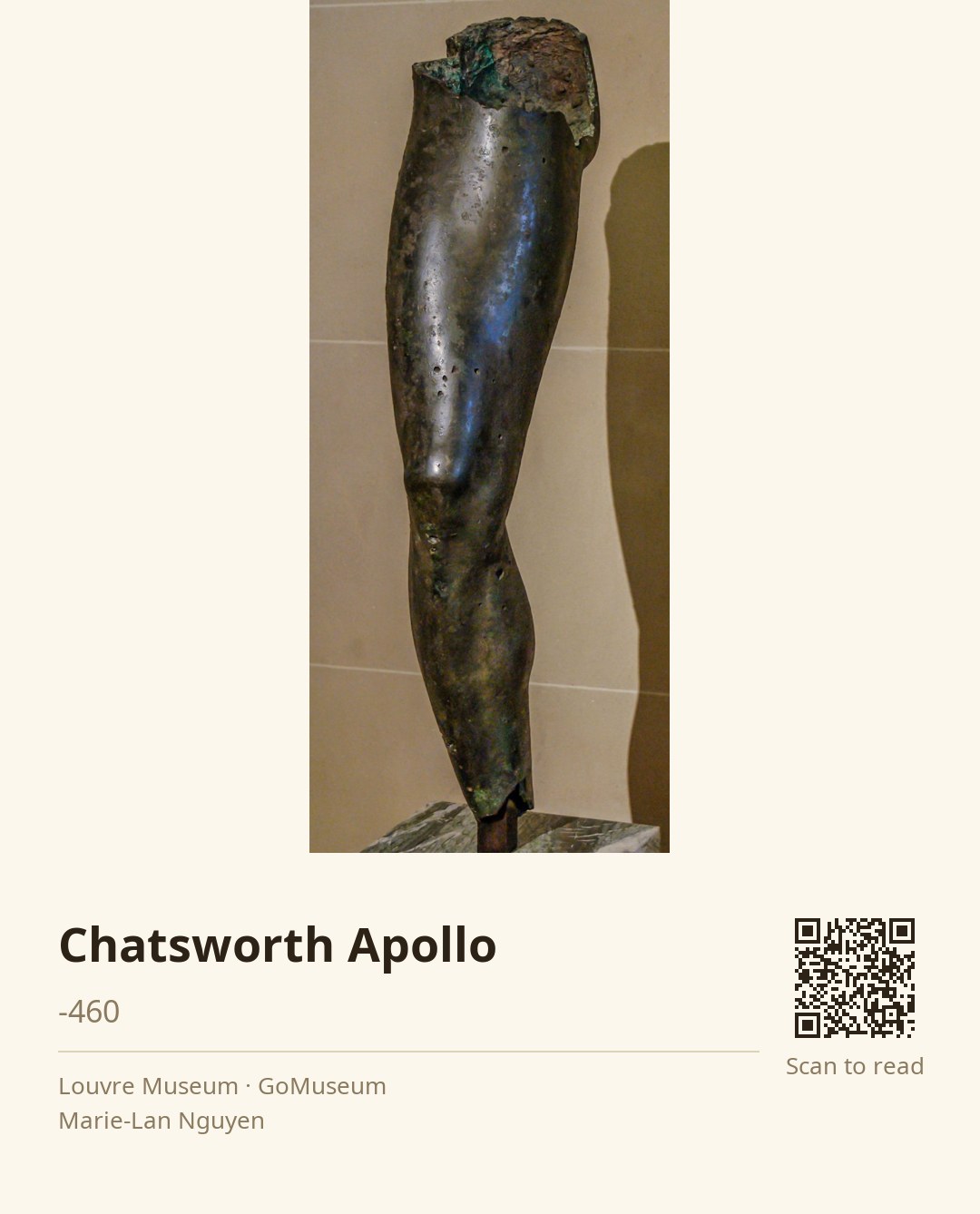
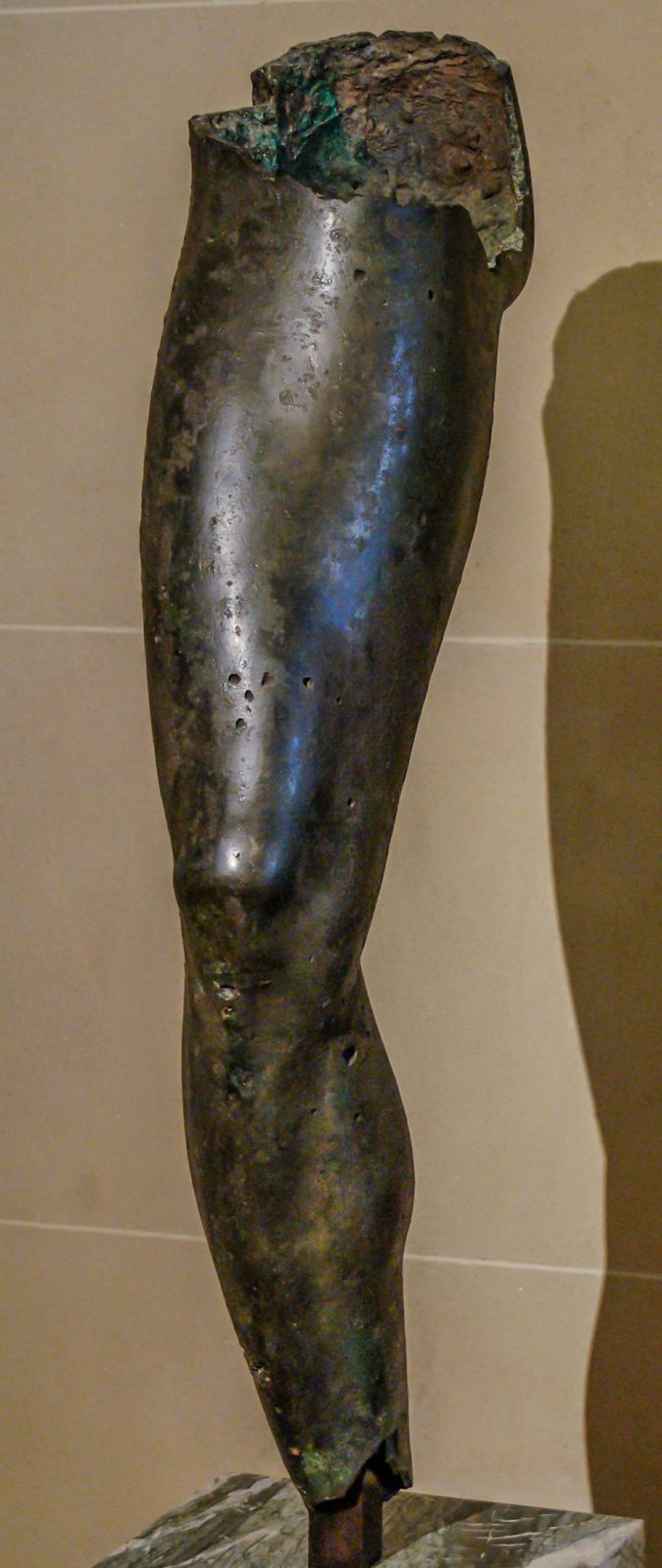
Unfortunately, as locals attempted to recover the statue, it fell apart, losing many of its parts. By 1838, the head was acquired by the 6th Duke of Devonshire, who purchased it from H. P. Borrell in Smyrna. It was kept at Chatsworth House, the Duke's residence, and later loaned to the Fitzwilliam Museum in the 1930s. In 1958, the British Museum acquired it from the 11th Duke of Devonshire. Interestingly, a leg from the same statue is housed in the Louvre, suggesting that while the head survived, much of the original statue did not.
Its influence is felt in how it showcases the advanced techniques of lost-wax casting, a method that allowed for intricate details and lifelike expressions. This sculpture not only reflects the artistic mastery of its time but also set a precedent for future generations of sculptors. The way the eyes were originally inlaid with materials like marble or glass speaks to a level of craftsmanship that would inspire countless artists.
When a complete statue of Apollo was discovered in Cyprus, locals were so eager to retrieve it that they dragged it away using oxcarts. However, during this bumpy ride, the statue fell apart, losing its legs, arms, and torso! Today, while the head resides here in the British Museum, a leg from the same statue can be found in the Louvre, a testament to the statue's fragmented past.