 Image: ALFGRN · MLWatts · ALFGRN · ALFGRN · ALFGRN
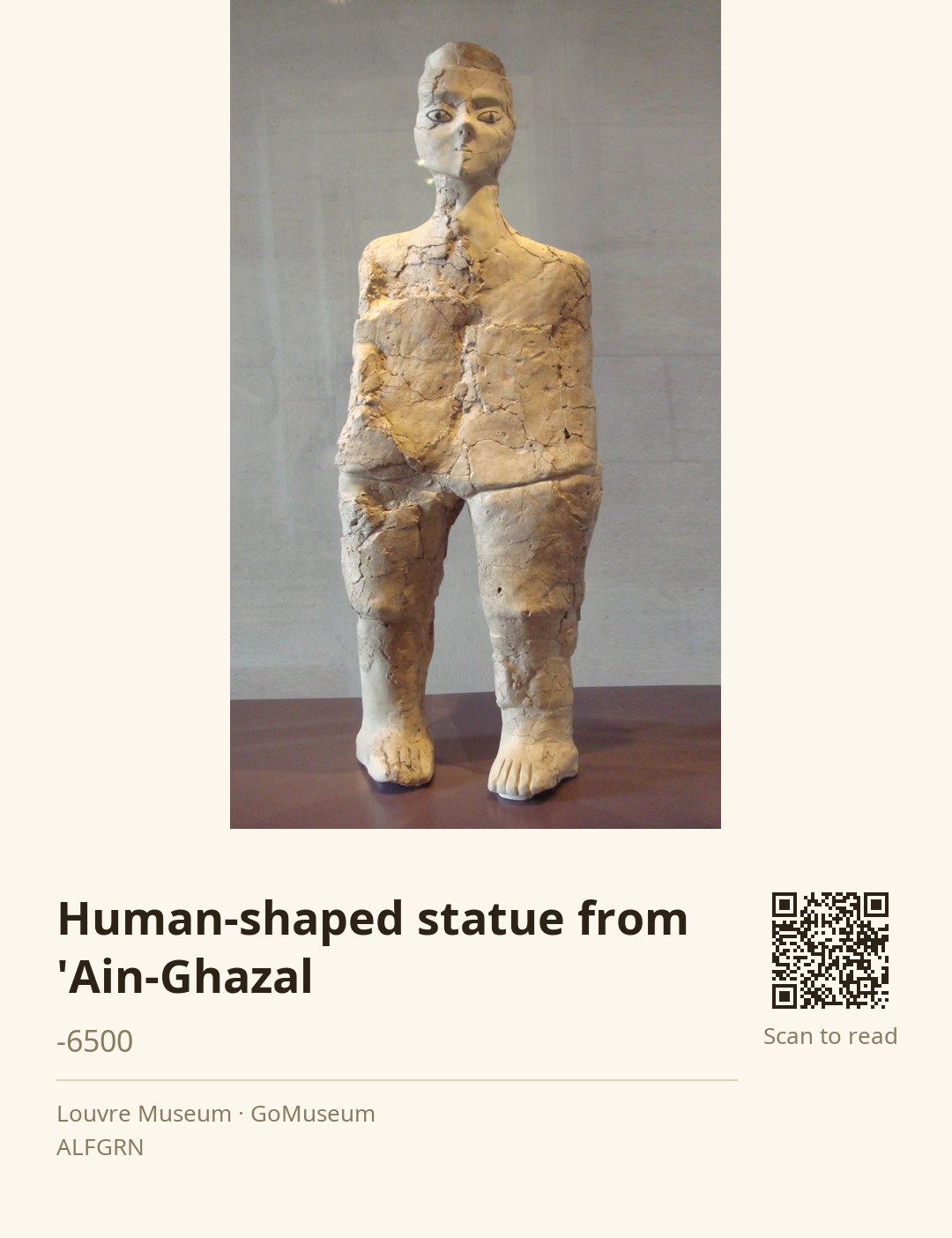
Human-shaped statue from 'Ain-Ghazal
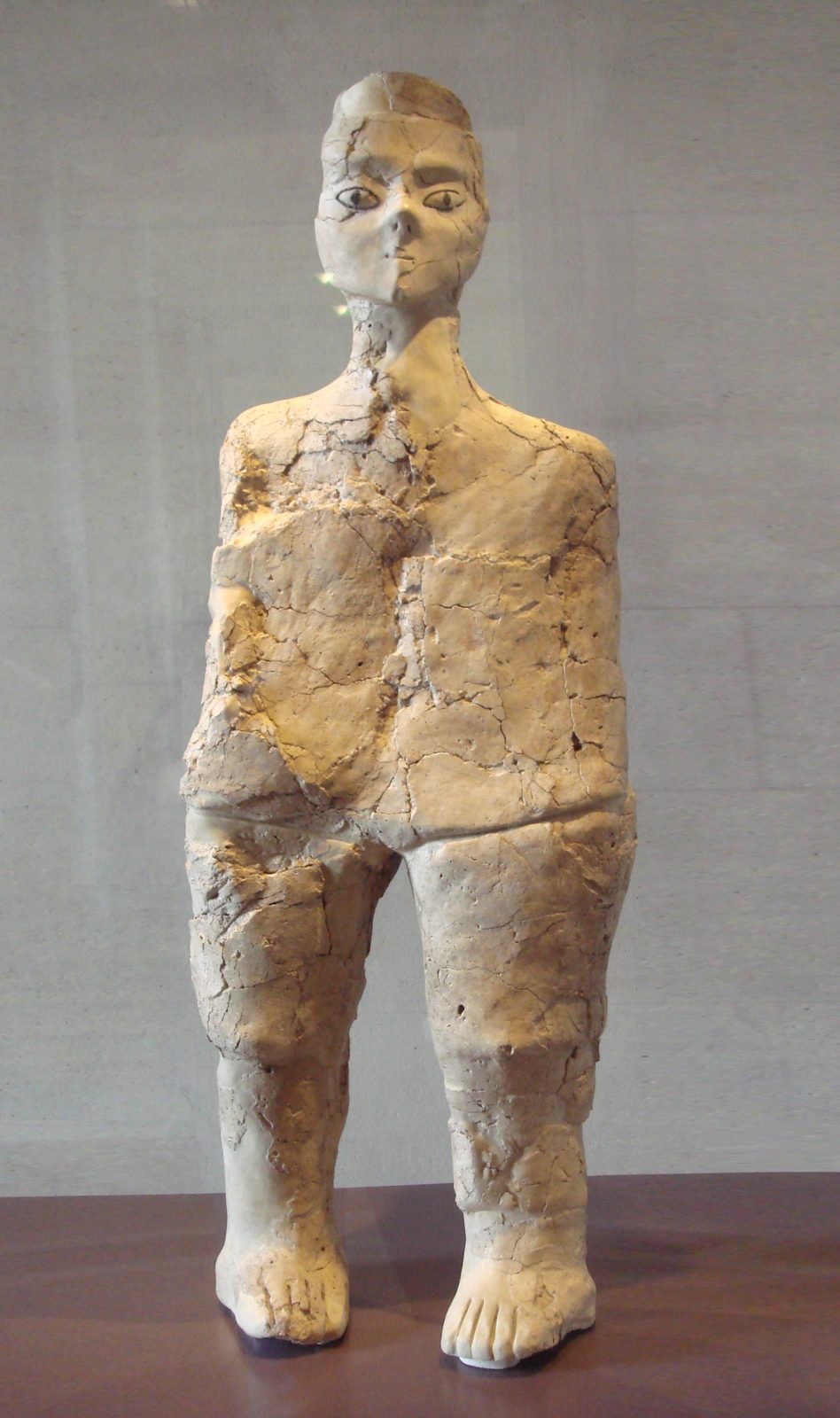
🎧 This work has audio narration — listen in the appIts maker worked in plaster, shaped over a core of rock asphalt, and the body still carries the marks of that long life: cracks run across the thighs and torso, small pits pock the surface, and patches of later repair show where conservators have stepped in.
Look at the eyes first, if you can. They are large and almond-shaped, outlined in dark, with a deeper pupil set into each socket, and they are the most striking thing about a face that is otherwise reduced to a ridge of nose and a faint line for a mouth. The feet, too, are carefully marked, with the toes of both bare feet cut into the plaster. Those small incised lines suggest the maker cared about the figure as a whole person, not just a silhouette.
The material record alone does not settle that question, so what we can say with confidence is more limited: this is a carefully made human figure from a farming community roughly six and a half thousand years before the common era, and it was shaped with a skill that still holds the eye today.
Feel how this figure is built up rather than carved out. The surface tells the story of that making: it is rough and uneven across the torso and thighs, pocked with small pits, and cracked in places. Look at the neck, shoulders and lower legs, which are noticeably smoother, and you can sense where the maker's hand moved differently. The toes of both bare feet were cut into the soft plaster with incised lines, a deliberate bit of detail added after the main form was shaped.