 Image: Unknown artistUnknown artist
Neirab steles
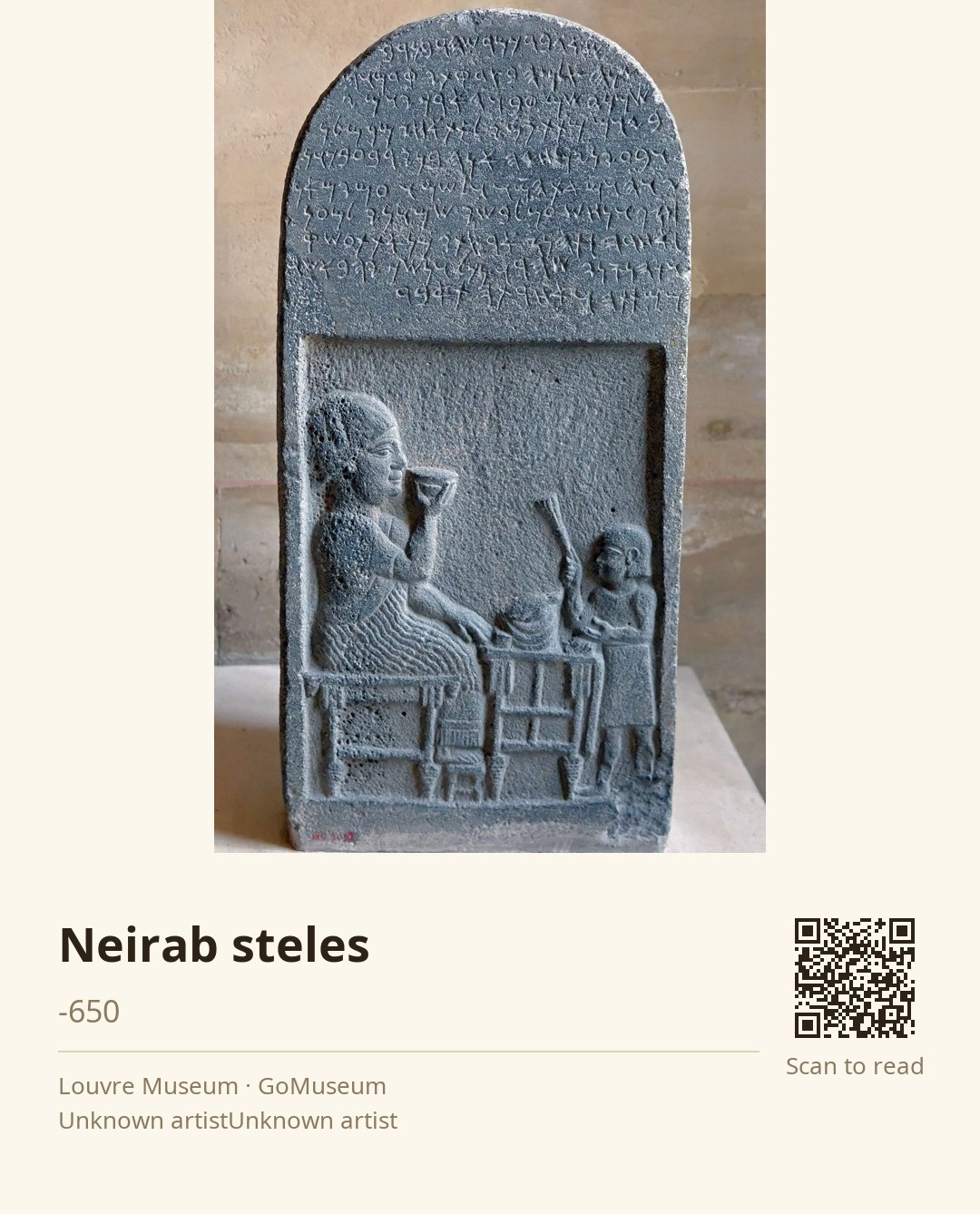
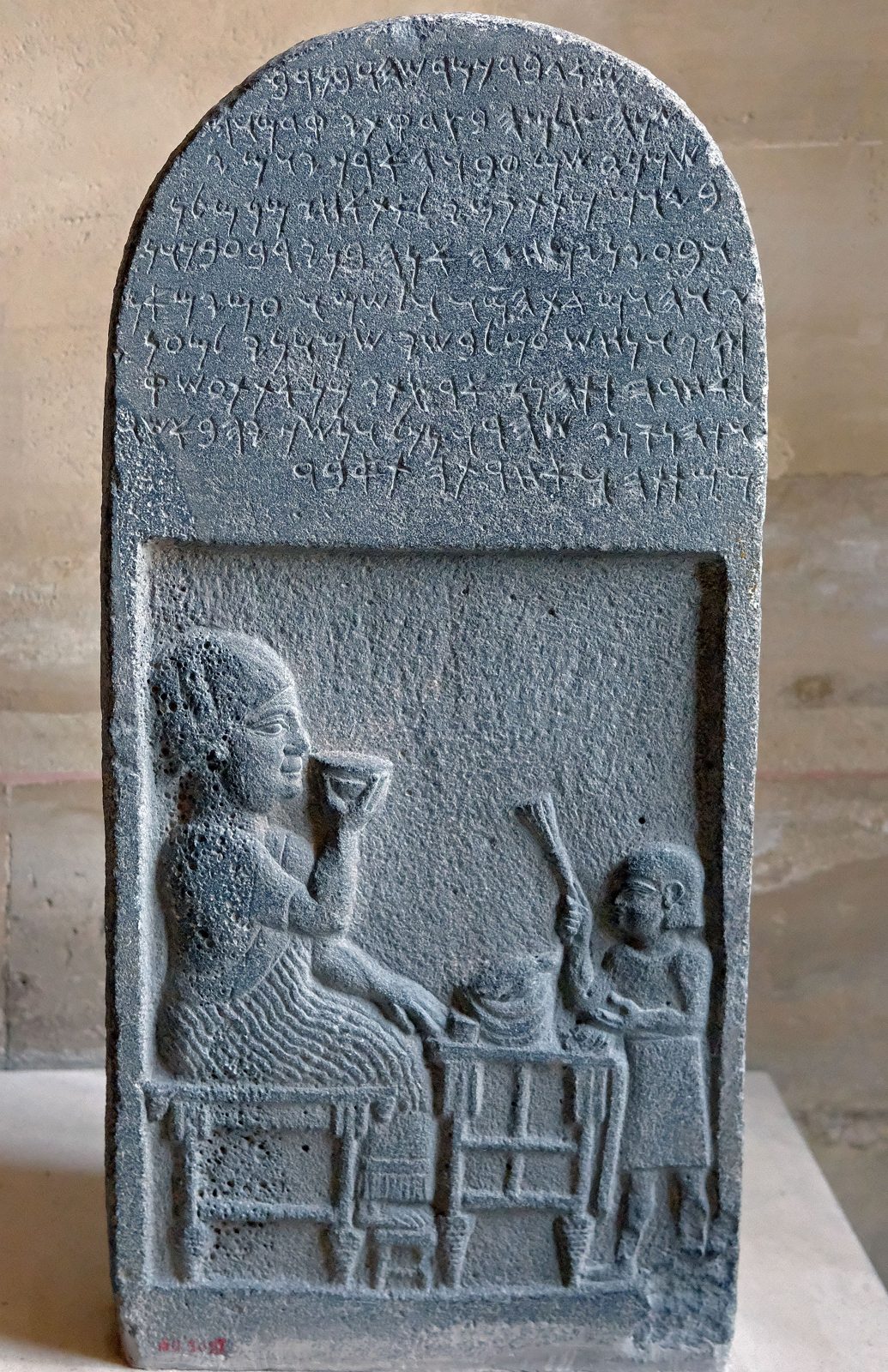
🎧 This work has audio narration — listen in the appThe seated figure on the left of the Neirab steles cradles a cup, while the standing figure on the right holds a fan, both carved with remarkable detail against the textured black basalt. Their attire, with intricate patterns, hints at the cultural significance of their roles, possibly indicating a ritual or ceremonial context.
These steles, created around 650 BC, bear Aramaic inscriptions that mark them as funerary monuments, providing insight into the burial practices of the time. Discovered in 1891 near Aleppo, Syria, they were unearthed during terrace repairs and quickly attracted scholarly interest, leading to a complex journey of acquisition by the Louvre. Initially met with skepticism regarding their authenticity, the steles were ultimately secured through negotiations by Charles Simon Clermont-Ganneau, who recognized their historical importance.
The Neirab steles, dating back to around 650 BC, were discovered on November 11, 1891, in Al-Nayrab, near Aleppo, Syria. Their unearthing was a serendipitous event during terrace repairs, initiated by workers who stumbled upon these remarkable artifacts. Adrien Barthélemy, a dragoman at the French consulate, quickly alerted Charles Simon Clermont-Ganneau, who recognized their potential significance. Initially, skepticism surrounded their authenticity, particularly after German expert Julius Euting raised doubts. However, Clermont-Ganneau's determination led to a two-year negotiation process, ultimately securing the steles for the Louvre in 1894 for a mere 2,000 Francs, a price reduced due to the prevailing doubts. The steles were transported to Paris, completing their journey in January 1897, where they became part of the Louvre's collection, captivating scholars and visitors alike with their intricate carvings and inscriptions.
After their initial excavation, the steles were offered to the Louvre for 10,000 Francs, but the museum's curator, Léon Heuzey, turned it down, focusing instead on other excavations. It was only after Clermont-Ganneau's persistent efforts and the eventual reduction in price due to skepticism that the steles were finally acquired, highlighting how close they came to being lost to history.
The steles were bought from the landowner by Nicolas Marcopoli, a member of a prominent merchant family in Aleppo, which is also associated with the Souq Marcopoli.
The Franciscan brothers assisted Charles Simon Clermont-Ganneau in the two-year negotiations to acquire the steles for the Louvre.
Julius Euting's skepticism regarding the authenticity of the steles contributed to a reduction in their purchase price and delayed their acquisition by the Louvre.