 Image: Carnby
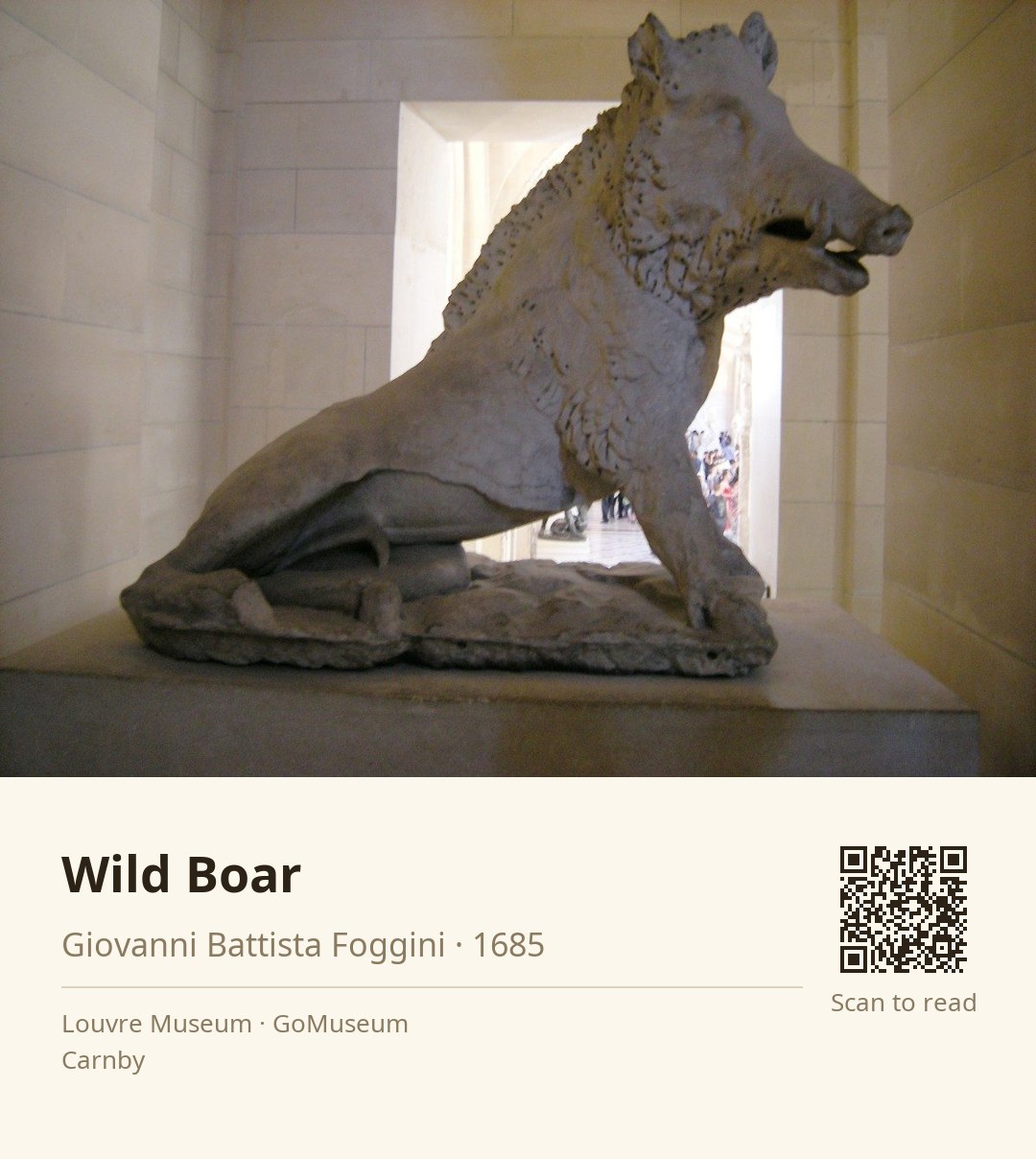
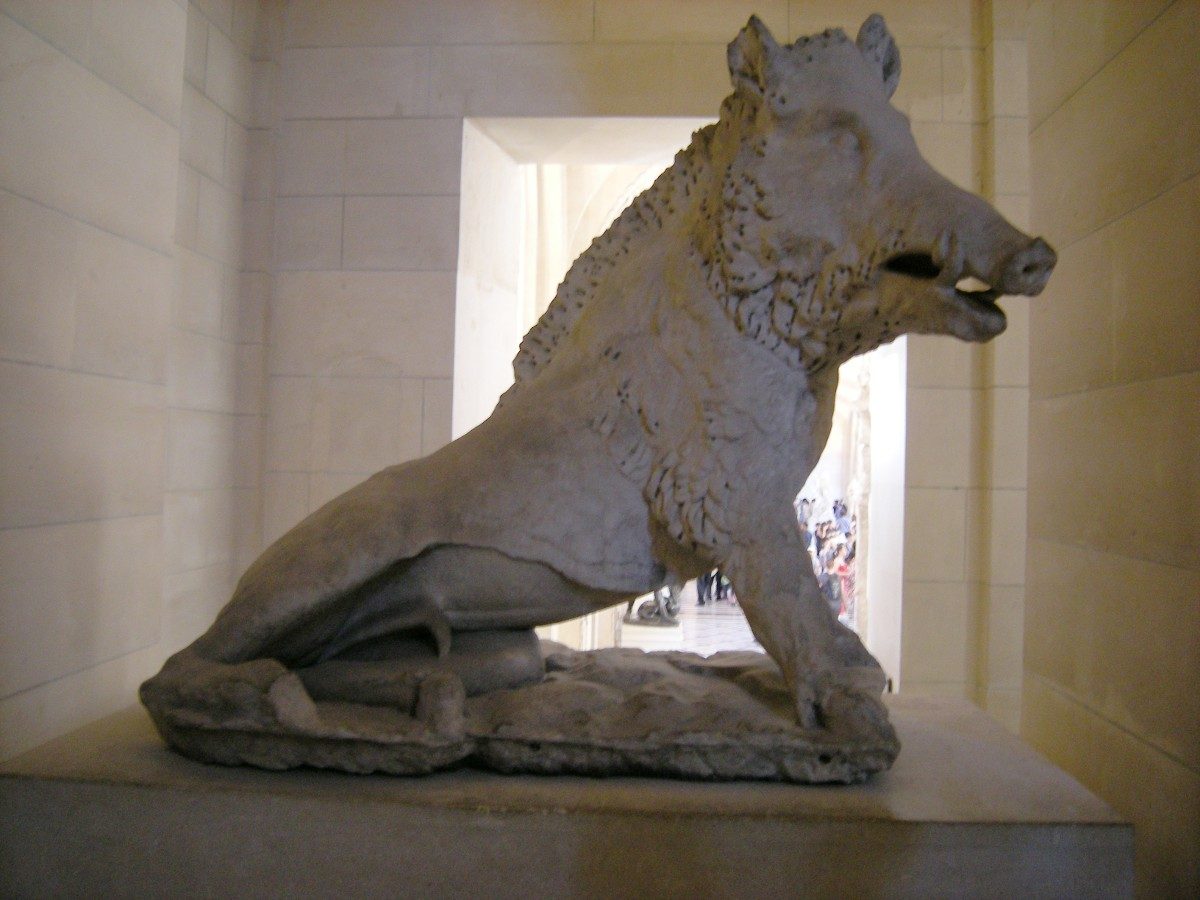
The wild boar, with its fierce expression and intricately carved fur, dominates this sculpture by Giovanni Battista Foggini. Its front legs stretch forward, while the head turns slightly, showcasing the open mouth and sharp teeth, which convey a sense of both realism and vitality. The texture of the fur is so detailed that it almost seems to invite touch, bringing the animal to life in a way that captures the viewer’s imagination.
Foggini's choice of a boar, a symbol of strength and ferocity, reflects the artist's mastery in conveying character through form. The boar rests on a rectangular base that mimics natural ground, grounding the creature in a tangible reality, while the stone wall and archway in the background hint at a larger environment, perhaps a gallery filled with spectators. This setting not only enhances the sculpture's three-dimensionality but also situates it within a public space, inviting interaction and admiration from passersby.
Active in Florence during the late 17th century, Foggini was renowned for his small bronze sculptures, but this marble piece showcases his versatility and skill in larger formats. Appointed as the court sculptor for Cosimo III, he became a pivotal figure in the Medici court, creating works that blended artistic excellence with the grandeur of public art. In 1685, Foggini completed this striking sculpture, which remains a testament to his significant contributions to Baroque art in Italy.
Giovanni Battista Foggini was an influential Italian sculptor born in Florence on April 25, 1652. He trained in Rome under Ercole Ferrata and Ciro Ferri, honing his skills in the Accademia Fiorentina. Returning to Florence in 1676, he became the court sculptor for Cosimo III and eventually the leading sculptor of the Medici. Foggini specialized in small bronze statuettes, leveraging a foundry previously owned by Giambologna, which allowed him to create nearly 400 designs that showcased his mastery of form and detail.
His notable works include the marble reliefs in the Corsini Chapel, depicting the life of San Andrea Corsini, and the bronze "David with the Head of Goliath." Foggini's style, characterized by the integration of sculptural elements with decorative mounts, set a standard in Florentine art that influenced his pupils and extended into the 18th century. His legacy continued through students like Fernando Fuga and Balthasar Permoser, ensuring his impact on the Baroque movement and the evolution of sculpture in Italy. Foggini passed away in Florence on April 12, 1725, leaving behind a rich artistic heritage.
The boar's fur is not just carved; it's almost alive with texture, each stroke of the chisel revealing a new layer of realism. You can see how the artist meticulously shaped the muscles and contours, making the creature appear as if it could leap off its base. The rectangular base, resembling natural ground, is also a testament to Foggini's skill, grounding the boar in a way that feels both organic and intentional.
Interestingly, Foggini's career took a pivotal turn when he acquired a foundry that once belonged to Giambologna, a master sculptor of the time. This acquisition allowed him to produce small bronzes that became highly sought after, not just in Italy but across Europe, showcasing his entrepreneurial spirit alongside his artistic talent.
Foggini's body of work includes nearly 400 surviving designs for various forms of sculpture, bronze statuettes, and decorative furniture.