 Image: Shonagon · Jean-Pol GRANDMONT · Jean-Pol GRANDMONT · Tangopaso
Great Sphinx of Tanis
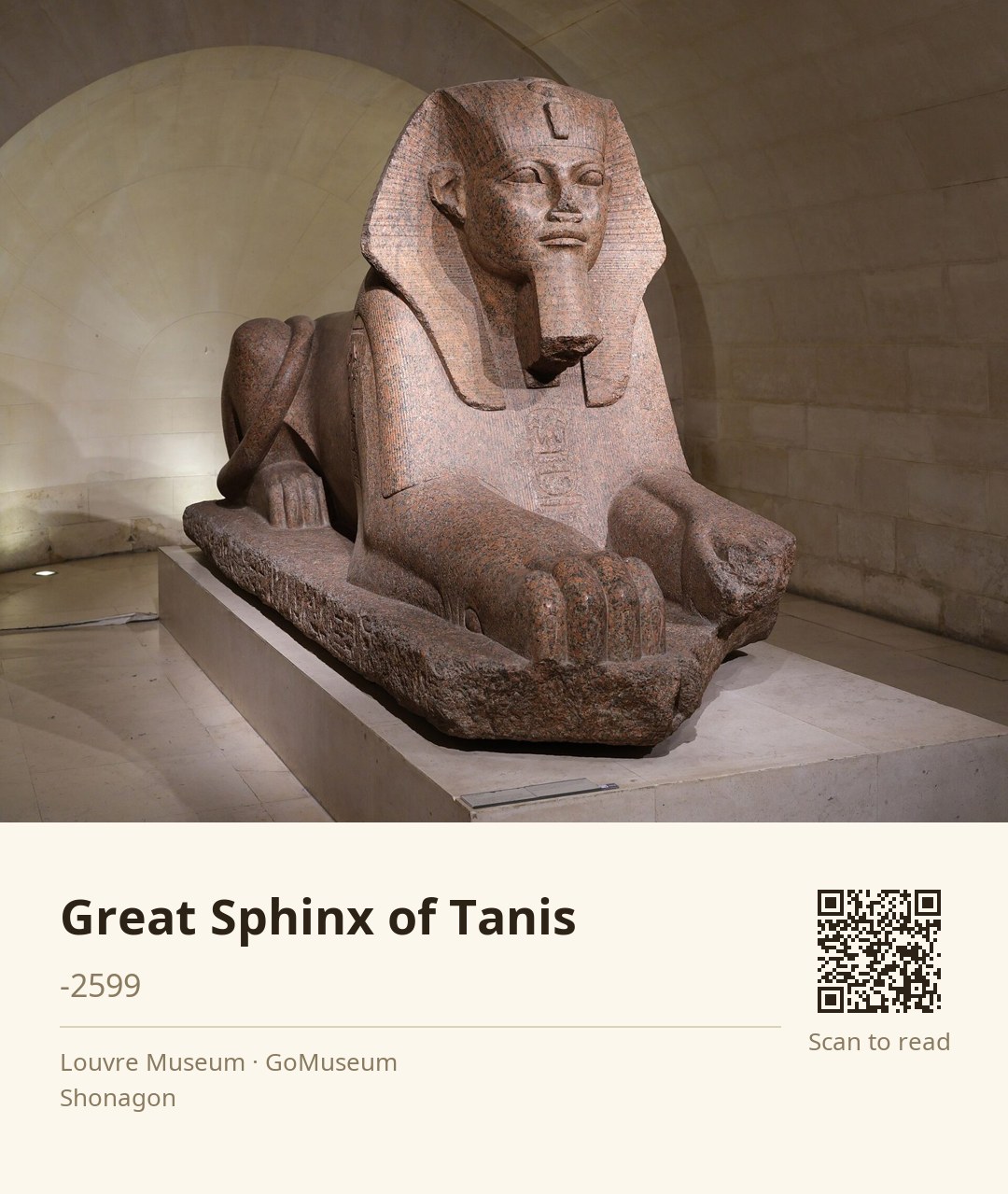
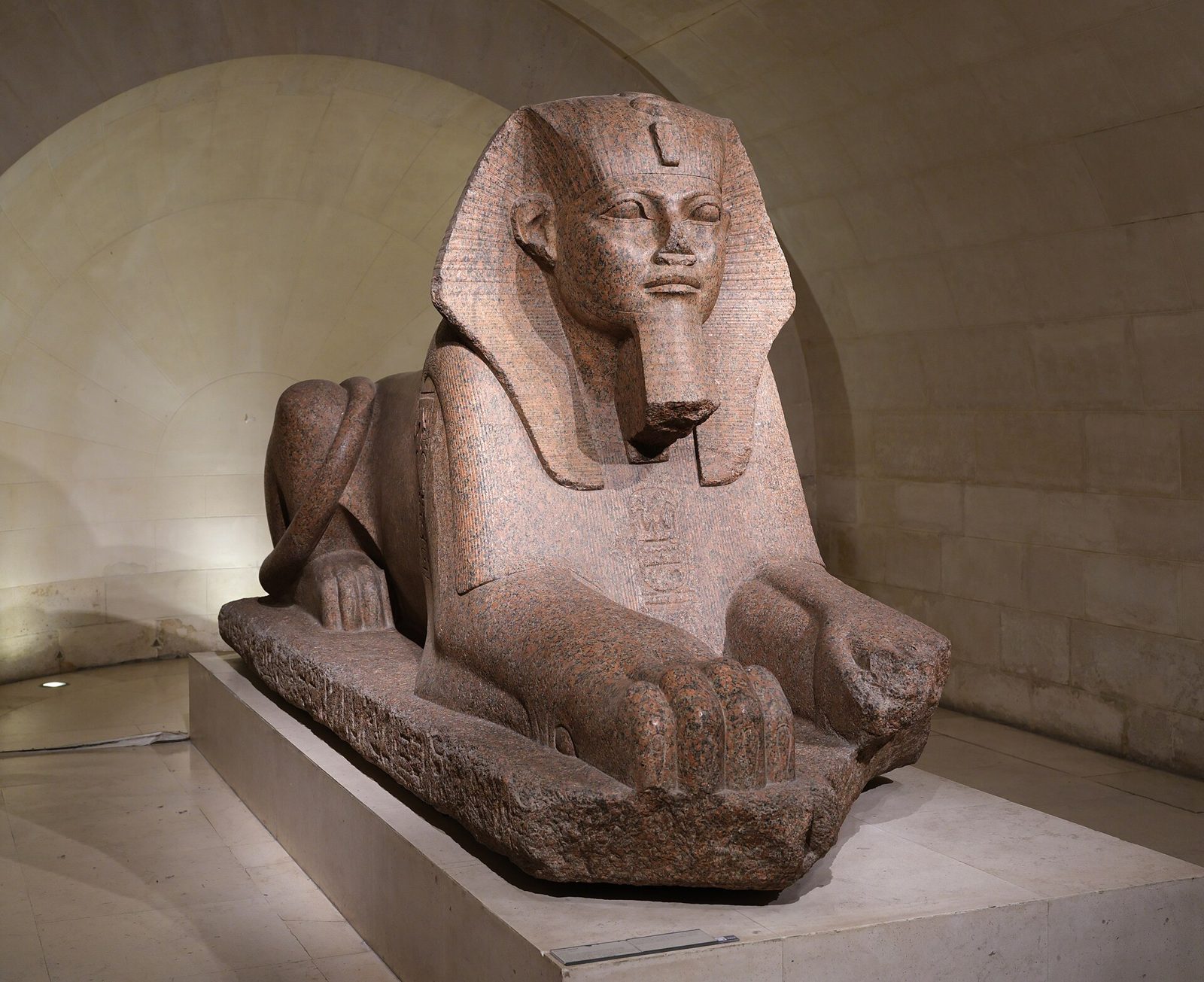
🎧 This work has audio narration — listen in the appTake a moment to really look at the Great Sphinx of Tanis. Notice how its powerful, regal form seems to gaze into the distance, its pink granite glistening softly under the museum lights. Look closely at the details of its headdress and the remnants of ancient inscriptions along its base.
These inscriptions are more than just markings; they tell a story of continuity and reverence through the ages.
Discovered in the ruins of that very temple in Tanis, this Sphinx has traveled through time and space, eventually finding its home here in the Louvre. It’s fascinating to think about the hands that carved it and the generations that have marveled at its presence.
As you stand here, consider: what stories do you think this Sphinx could tell if it could speak?
As you look at the Great Sphinx of Tanis, pay attention to the pink granite that gives it such a warm, inviting glow. This material isn’t just beautiful; it’s incredibly durable, which is why this sculpture has withstood the test of time. The craftsmanship is remarkable, with the details of the headdress and facial features carved with precision. Notice the way the granite has been polished to a smooth finish, allowing the light to dance across its surface. The sculptor’s hand must have been steady and skilled, as they shaped this majestic figure, capturing both strength and serenity in its gaze.
The Great Sphinx of Tanis was unearthed in 1825, nestled in the ruins of the Temple of Amun-Ra, a site that once thrived in ancient Egypt. This temple was a significant religious center during the 21st and 22nd dynasties, and the Sphinx itself is believed to date back even further, possibly to the 4th or 12th Dynasty. After its discovery, Henry Salt, an English traveler and antiquities dealer, acquired the Sphinx in 1826. Initially, it was intended to be displayed outdoors in the Cour Carrée, but instead, it found its home in the museum's courtyard, known as the cour du Sphinx, until it was moved to its current location in the crypt designed by architect Albert Ferran in the mid-1930s.
Its discovery in the ruins of the Temple of Amun-Ra in Tanis sparked a renewed interest in Egyptian antiquities during the 19th century, leading to a wave of Egyptomania in Europe. The Sphinx has also been a canvas for inscriptions from various pharaohs, showcasing how rulers sought to connect themselves to the divine lineage of their predecessors. This layering of history makes the Sphinx a living document of ancient Egypt's cultural evolution, reminding us of the ways art can transcend time and speak to the aspirations of humanity.
Did you know that the Great Sphinx of Tanis was discovered in the ruins of the Temple of Amun-Ra in 1825? But here's the twist: this majestic sculpture was created much earlier, possibly during the 4th or 12th Dynasty, and has had a fascinating history of inscriptions added by various pharaohs over the centuries. Imagine the stories it could tell, having witnessed the rise and fall of dynasties, and yet, it was only in the 19th century that it found its way to the Louvre, where it was initially planned to be displayed outdoors. Instead, it now resides in a crypt designed specifically for it, a hidden gem in the museum's Egyptian collection.
Initially, the Great Sphinx was intended to be displayed outdoors in the Cour Carrée, but plans changed, and it was instead housed in the museum's courtyard, demonstrating the evolving appreciation of its significance.