 Image: Shonagon · Gary Todd from Xinzheng, China · Jean-Pol GRANDMONT · Brigitte ALLIOT (conjointe) · Nathanael Burton
Athena of Velletri
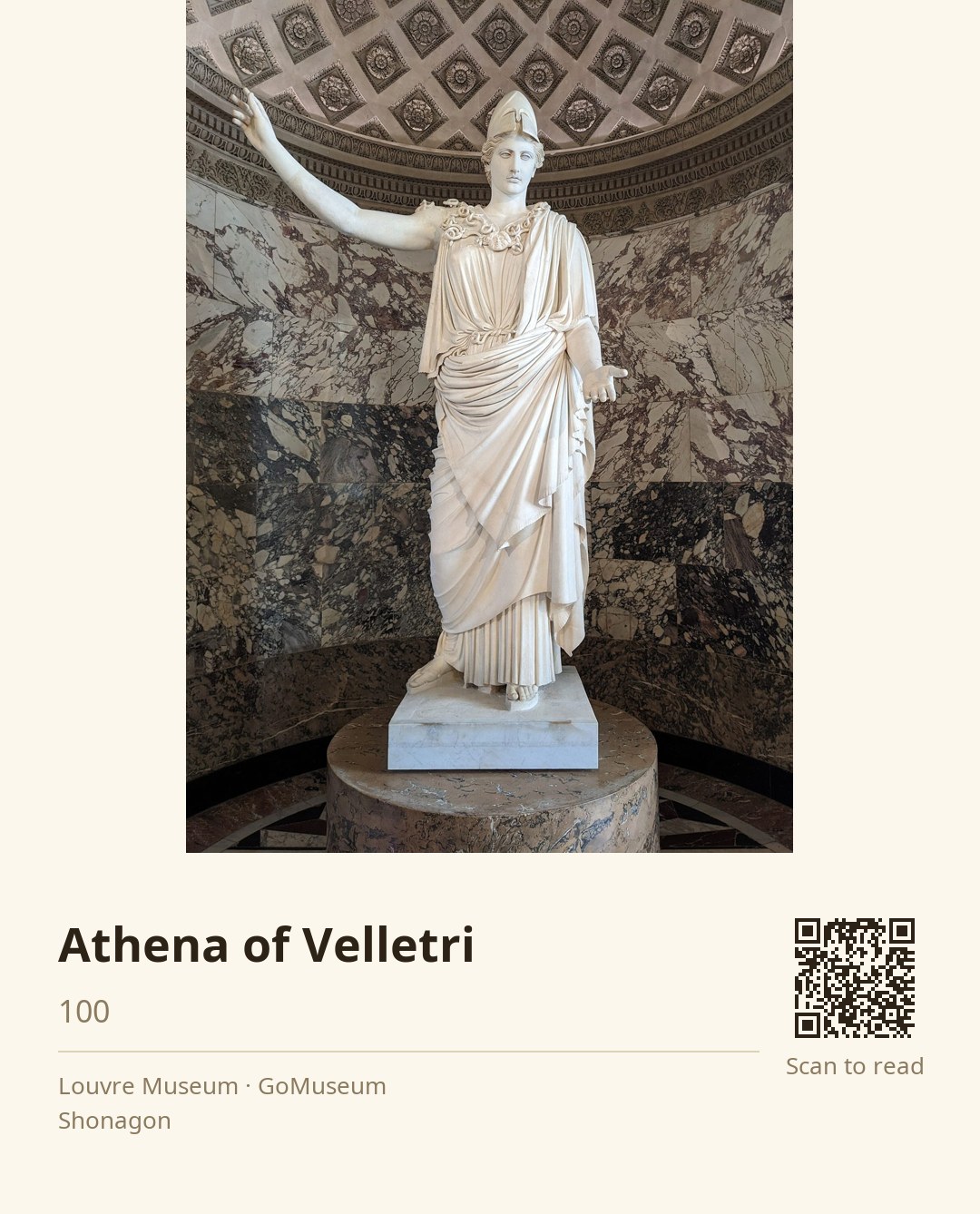
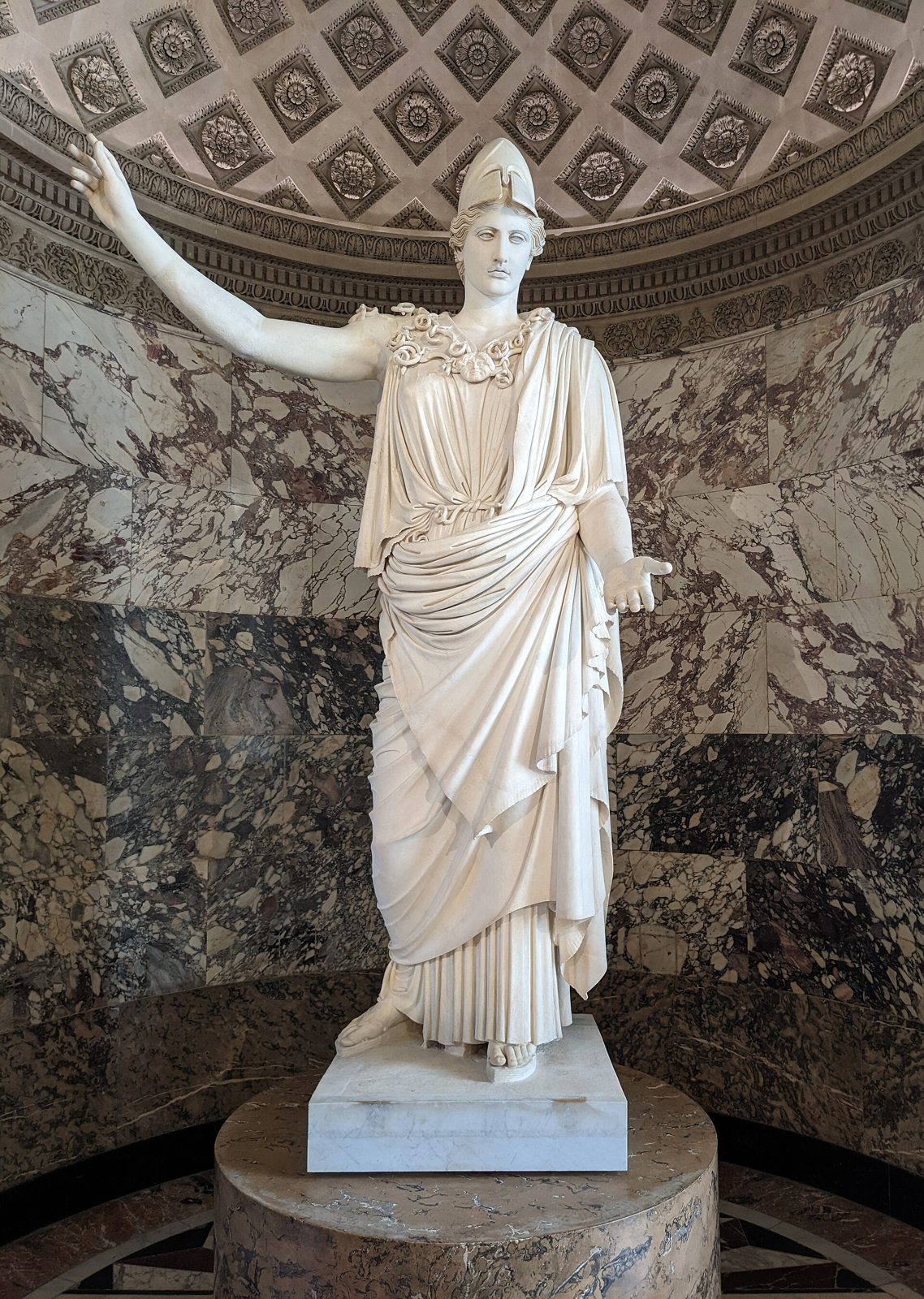
🎧 This work has audio narration — listen in the appTake a moment to really look at the Athena of Velletri. Notice how her helmet sits perfectly atop her head, the fierce gaze of her eyes piercing through the ages.
This statue, created in 100 AD, is a Roman copy, but it embodies the reverence for Athena, the goddess of wisdom and warfare. The traces of red in her hair and around her eyes hint at a once-vibrant polychrome finish, reminding us that ancient sculptures were often more colorful than we imagine. It’s fascinating to think about how this statue was rediscovered in a vineyard near Velletri in 1797, and how it has traveled through history, from the hands of a restorer named Vincenzo Pacetti to its home here in the Louvre.
As you stand here, consider what Athena represents: strength, wisdom, and the complexities of war. What thoughts or feelings does she evoke in you?
Take a closer look at the marble of the Athena of Velletri. The artist's hand has carved this stone with incredible precision, capturing the delicate features of Athena's face. You can almost feel the tension in the lines of her helmet and the intricate details of her armor. Notice how the surface has been polished to a smooth finish, allowing light to dance across her form. The traces of red around her eyes and hair suggest that she once wore vibrant colors, a reminder that ancient sculptures were not just monochrome but lively and full of life.
This statue is a Roman copy from around 100 AD, echoing a lost Greek bronze statue attributed to Kresilas, dating back to about 430 BC. The statue was initially restored by Vincenzo Pacetti, who added several elements to it, including the peak of the helmet and parts of the cloak. After its restoration, it changed hands several times, eventually being acquired by the French Directory. It faced a tumultuous journey during the War of the Second Coalition, being seized and later returned to France. By December 1803, it found its home in the Louvre, where it remains a centerpiece of classical art today.
Here's a curious tidbit: when the Athena of Velletri was rediscovered, it was so captivating that even Napoleon Bonaparte took a keen interest in it. He was determined to ensure its acquisition for the Louvre, recognizing its symbolic power as both a warrior and a goddess of wisdom.
Pacetti not only restored the statue but also added several elements, including the peak of the helmet, the straight forearm, and parts of the cloak, which were not part of the original sculpture. This practice of adding new components was common among restorers of his time, raising questions about the authenticity of restored works.
Upon its rediscovery in 1797, the statue captivated figures like Napoleon Bonaparte, who recognized its symbolic power and pushed for its acquisition for the Louvre. This interest led to a tumultuous journey, including being seized during the War of the Second Coalition before eventually finding a permanent home in the Louvre in 1803.
The Athena of Velletri shares stylistic similarities with the bust of the helmeted Pericles, which is attributed to the same sculptor, Kresilas. This connection not only helps date the statue but also highlights the influence of classical Greek art on Roman copies.