 Image: Sailko
Lady with Pansies
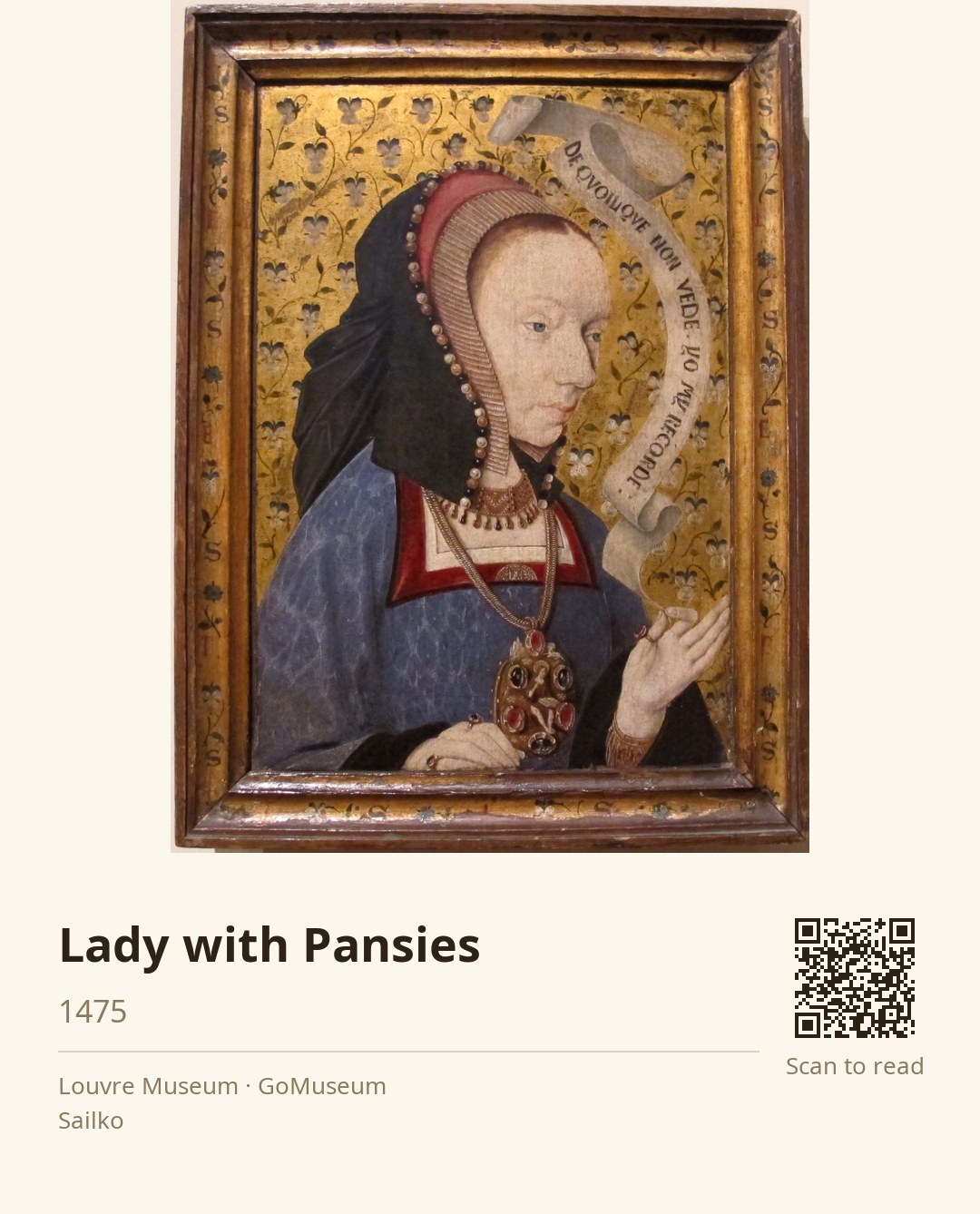
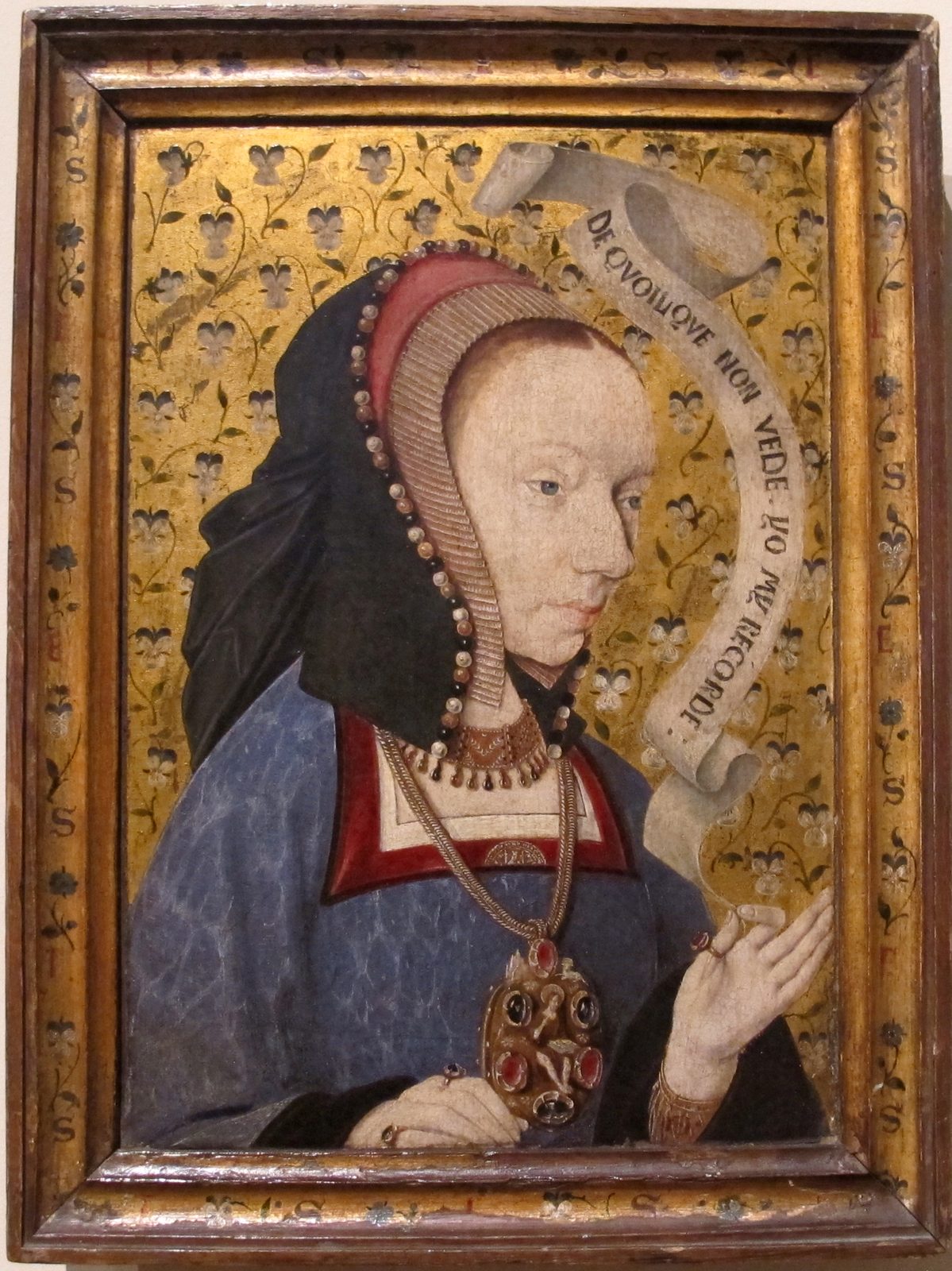
🎧 This work has audio narration — listen in the appWho is she, this woman with the lowered eyes and the pearled headdress? The museum does not know her name, and that absence is part of what you are looking at. Her face is pale and smoothly modeled, her gaze turned down and to the side, as if she is listening to something just out of reach.
Look at the scroll she holds between her raised fingers. Its white curl carries words in capital letters: "DE QVOILQVE NON VEDE. NO ME RECORDE." Beneath it hangs a large oval pendant, set with red and dark stones and tiny figures, the kind of jewel that tells you she was worth painting in fine detail.
The painting is an oil on wood panel, about 37 by 26 centimetres, and it was made in the last quarter of the fifteenth century. The painter is anonymous, so the records speak only of the work itself. Its French title, La Dame aux pensées, comes from those flowers, which tie the sitter to the old language of remembrance and thought. The panel has entered the museum's collection under inventory number INV 9925, and specialist catalogues have studied it under several reference numbers.
The surface is finely blended, so the transitions from face to shadow are soft rather than sharp, while the jewellery is the place where the painter lets the line become crisp. Look at the pendant at her chest: it is an oval set with red and dark stones, and inside it are tiny figures, painted small enough that they read more as jewellery detail than as narrative. Against that tight precision, the gold ground is spread with painted pansy-like flowers and green tendrils, a decorative field that frames her head without competing with the face. The dark green-black veil falls over the headdress, and the pink lining of the ridged headdress peeks out beneath it. Her blue, mottled gown is broken by a wide square collar in red and white, a strong block of colour that sits right under the pale oval of her face.
The museum's subject description classifies the sitter as Spanish, which is a catalogue attribution rather than something the painting itself states.
The catalogue identifies the jewel's tiny figures as a biblical subject linked to Saint John the Baptist, so the pendant may carry a religious image in miniature.