 Image: Shonagon
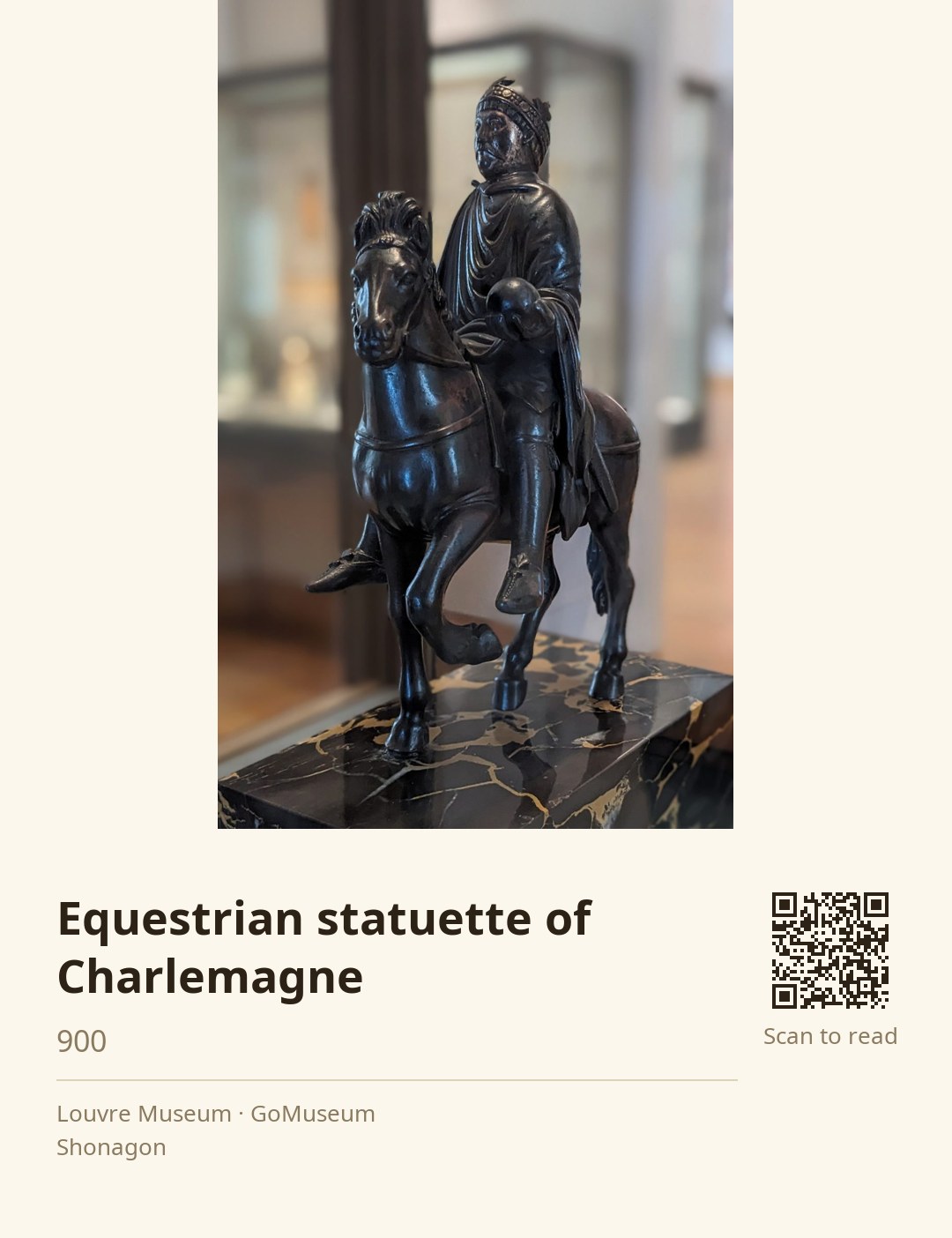
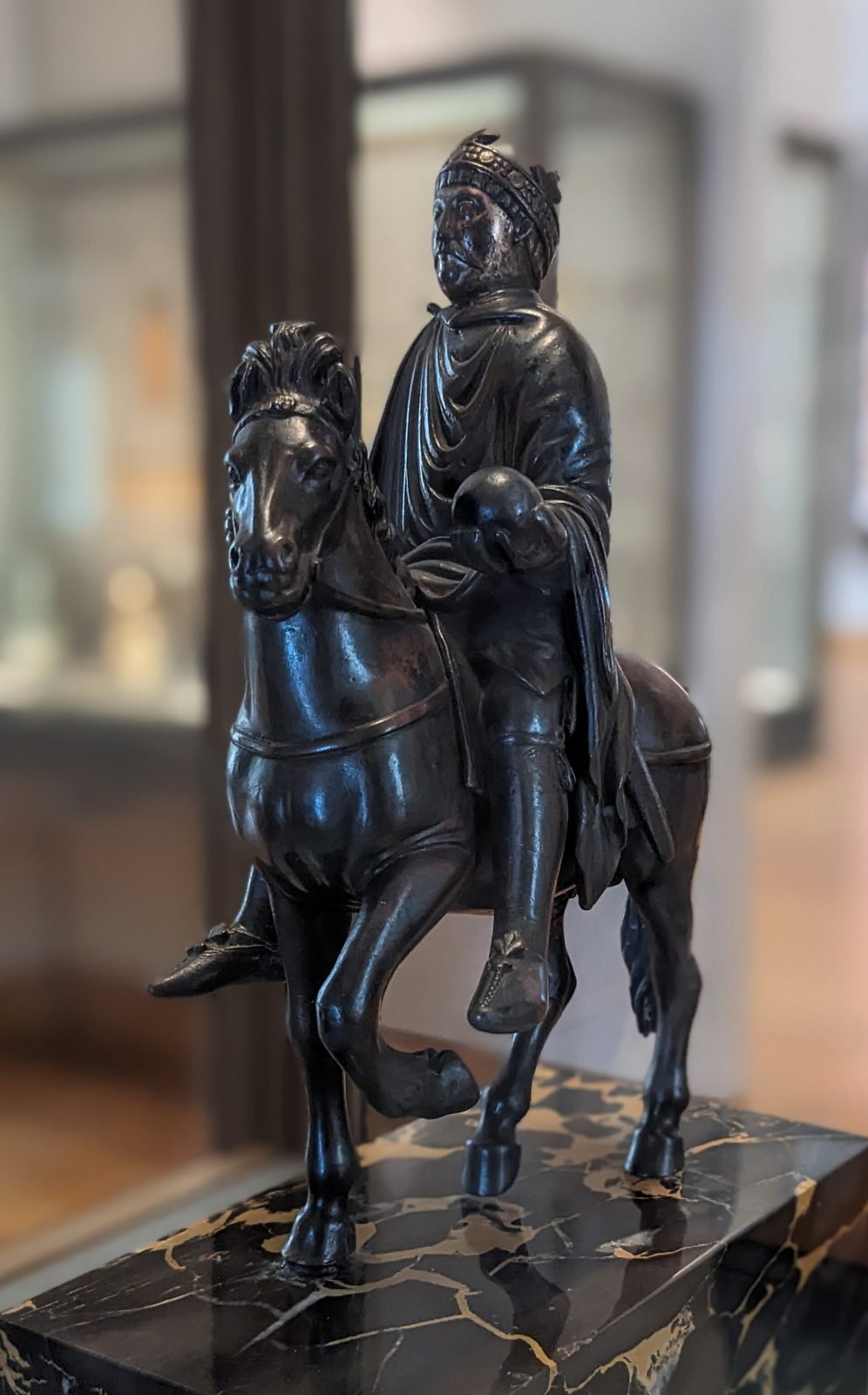
Equestrian statuette of Charlemagne
🎧 This work has audio narration — listen in the appTake a moment to really look at this striking equestrian statuette. Notice the intricate details: the rider's moustache, the way his left hand clutches an imperial orb, and the lost sword that once symbolized his might.
These elements matter because they reflect the ideals of leadership and authority in the Carolingian era, echoing the grandeur of Roman emperors. The statuette is not just a piece of art; it’s a statement of power, a visual link to the past that sought to legitimize the rule of its creator.
It was likely displayed in Metz Cathedral, a place of significance for Charlemagne, who made many donations there.
As you stand here, consider the legacy of this figure. Who do you think it represents, and what does that say about the aspirations of rulers during this transformative time in history?
It was likely commissioned for the coronation of Charles the Bald as King of Lotharingia in Metz Cathedral, a significant site for Charlemagne. The statuette was part of the cathedral's treasure, with records indicating its presence there as early as the 16th century. It was listed among two statuettes of Charlemagne in the cathedral's inventories, one made of gilded silver and the other, this bronze piece, noted in 1567. After changing hands several times, it was acquired by Alexandre Lenoir in 1807 and eventually sold to the city of Paris in 1855, where it found its home in the Louvre in 1934. The journey of this statuette reflects the evolving perceptions of power and legacy throughout the centuries.
Its significance lies in how it bridges the gap between the Roman imperial tradition and the emerging identity of the Carolingian Empire. By adopting the posture and iconography of Roman emperors, this piece not only reflects the artistic influences of its time but also serves as a powerful statement of authority and legitimacy for its patron. It’s a testament to the Carolingians' ambition to position themselves as the rightful heirs to the Roman legacy, reshaping the narrative of power in medieval Europe. Remember, this statuette is not just a work of art; it's a symbol of a new era, one that sought to reclaim the grandeur of Rome while establishing a distinctly Christian empire.
One intriguing aspect of this statuette is that it may have been created using an ancient horse figure, repurposed from the late Roman Empire. This blending of old and new not only showcases the Carolingian artists' reverence for antiquity but also their innovative spirit in crafting a new identity for their empire. The fact that the horse and rider were likely made from different bronzes suggests they were crafted separately, hinting at a complex production process that intertwines history with artistry.
The horse is believed to be a repurposed figure from the late Roman Empire, showcasing the Carolingian artists' respect for antiquity while also indicating their innovative approach to creating a new identity for their empire.