 Image: unknown
Panathenaic Amphora
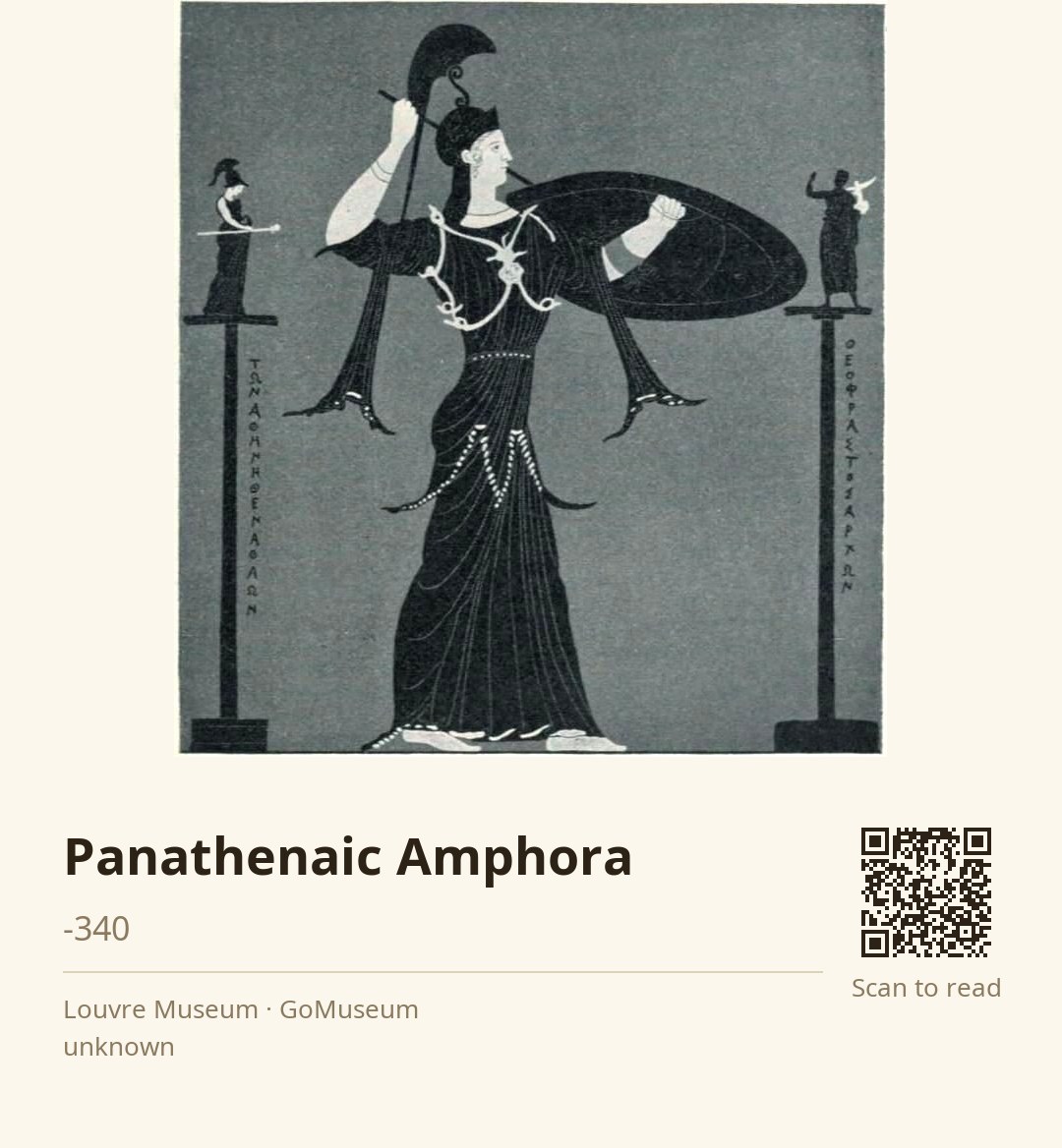
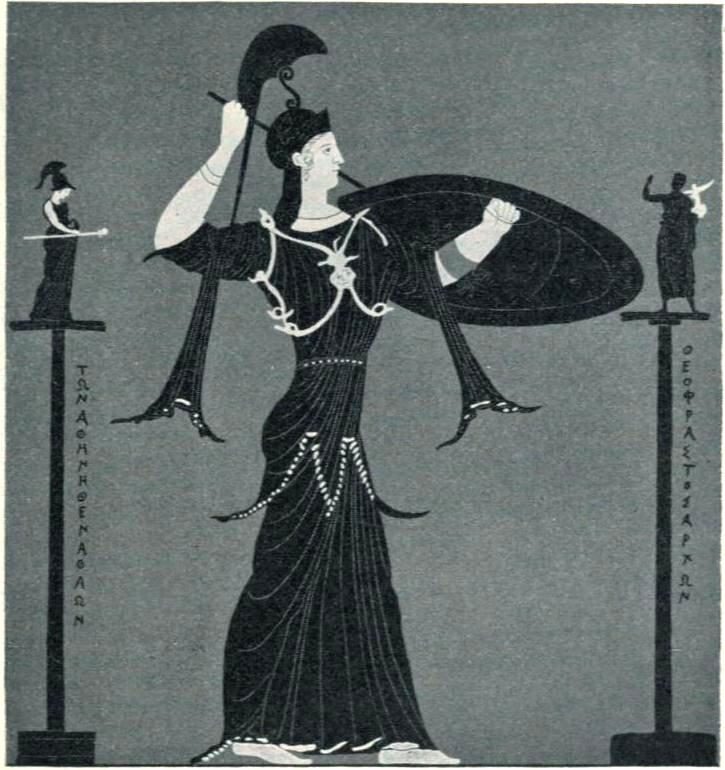
Standing before this clay vessel, the first thing that strikes you is the dark, glossy figure of a woman striding to the right, her spear slanting behind her and a round shield held against her left side. She is painted in black slip on a pale ground, the classic black-figure manner, and the artist has scratched fine lines into her robe so that the folds catch the eye like incised rope.
Look at the details the painter chose to leave pale. Her face, arms, and feet are reserved in the bare clay colour, so they glow against the black of her dress, and a crested helmet rises above her head. Beside her, two small figures stand on tall, slender columns, and vertical inscriptions run down the space on either side of them.
The painter first drew the whole figure in dark slip, then cut detail through it with a tool, letting the reddish-pale clay show through in lines and bands. The method was slow and demanding, and it rewarded precision: a single slip of the stylus could ruin a face or a fold. The material gives us the technique and the period, but not the name of the painter, the vessel's exact shape, or the particular occasion it was made to honour.