 Image: Commonists · Geffroy, Gustave, 1855-1926 · Anderson (photograph) · Unknown artistUnknown artist
Hanging Marsyas
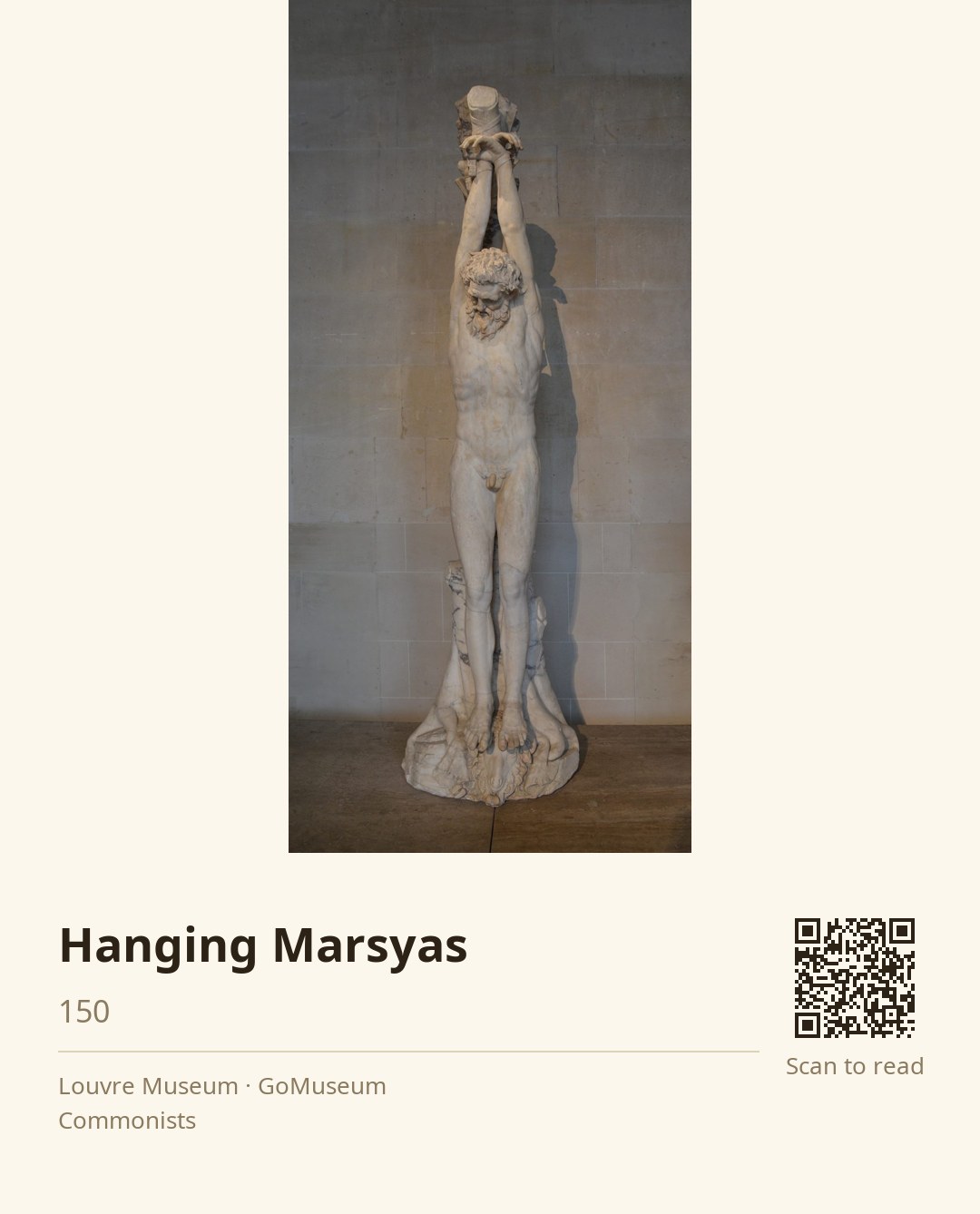
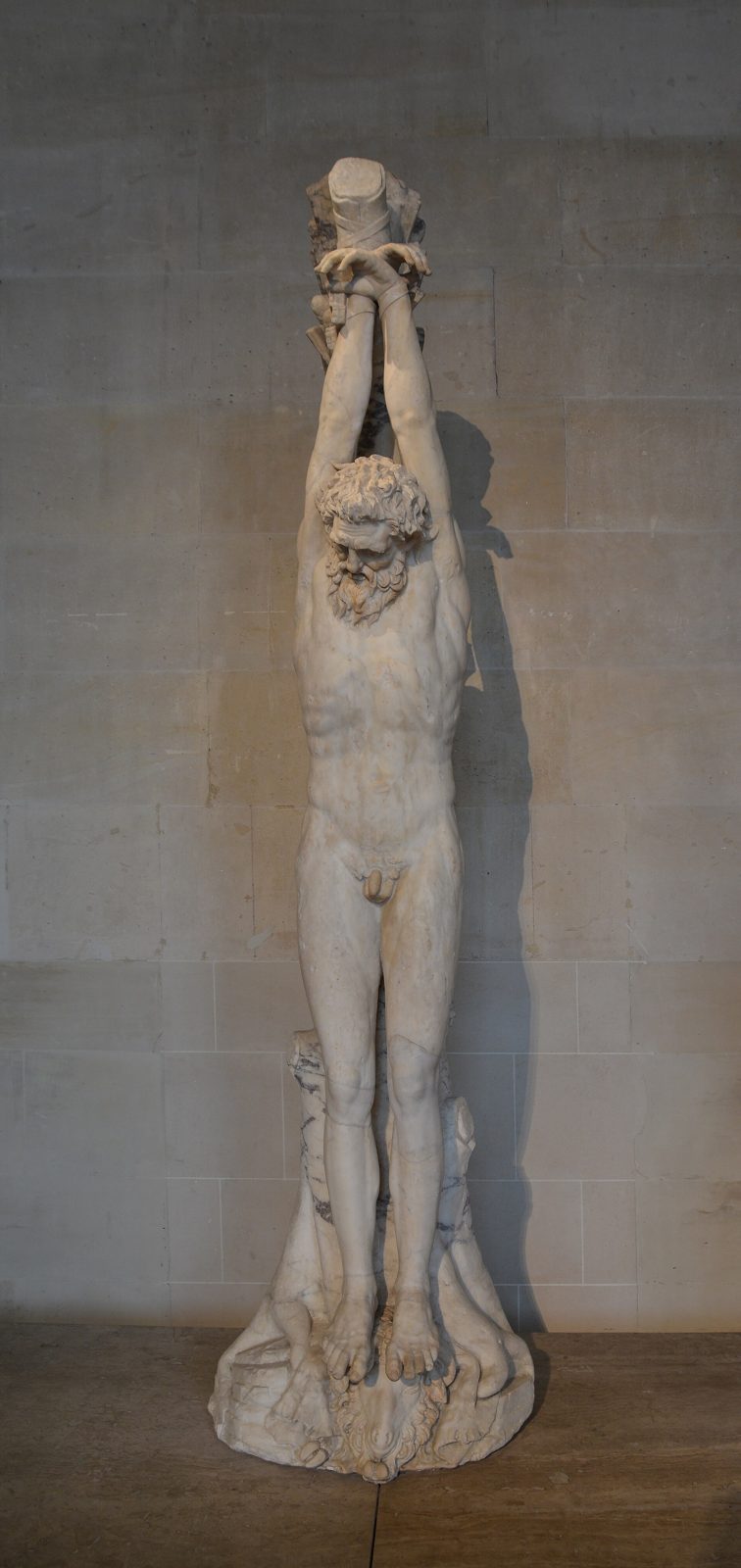
🎧 This work has audio narration — listen in the appLook at how his head sinks forward and to one side, the beard heavy and the face lined with exhaustion.
Those features do their work quietly. The bound wrists and the stretched, slackened body make the punishment plain before any story is told, and the rough trunk and uneven stones set him apart from the smooth, polished marble of his own form, as if nature itself has become his prison. The gesture is an unbearable one, and the carver has made it visible in the stance rather than in any action.
The material available to us says that the marble is pale cream with grey veining, that the body is finished smooth while the trunk and rocks are left rougher, and that the figure is identified as Marsyas. It is dated to 150 and classed as a sculpture. Beyond these points, the record offers no account of who carved it, where it was first placed, or how it was viewed in its own time, so we cannot say more than this about its making.
Look closely at the surfaces and you can read the two different treatments the material describes. The body is finished smooth, almost polished, while the trunk and the rocks beneath him are left rough and uneven, so the stone itself seems to change character as it moves from the living figure to the broken wood and the ground. The marble is pale cream, and grey veining runs through the trunk and the base. The material gives no more than this about the making, so the rest is for you to see in the stone.
The material records the title as Hanging Marsyas and the date as 150, and classes the work as a sculpture. Marsyas is named as the subject, and the marble is recorded as the medium. Beyond that, nothing further is recorded about this particular object, so there is no further anecdote to tell about it here.
The record gives only the title Hanging Marsyas, so there is no alternative name in the material to point to.
The material does not name the carver, so the identity of the sculptor is simply not recorded.
No inscription can be seen on the work, so it offers no written clue about its maker or origin.