 Image: Rama · Gary Todd from Xinzheng, China · Unknown authorUnknown author · Unknown artistUnknown artist
Osorkon II Triad
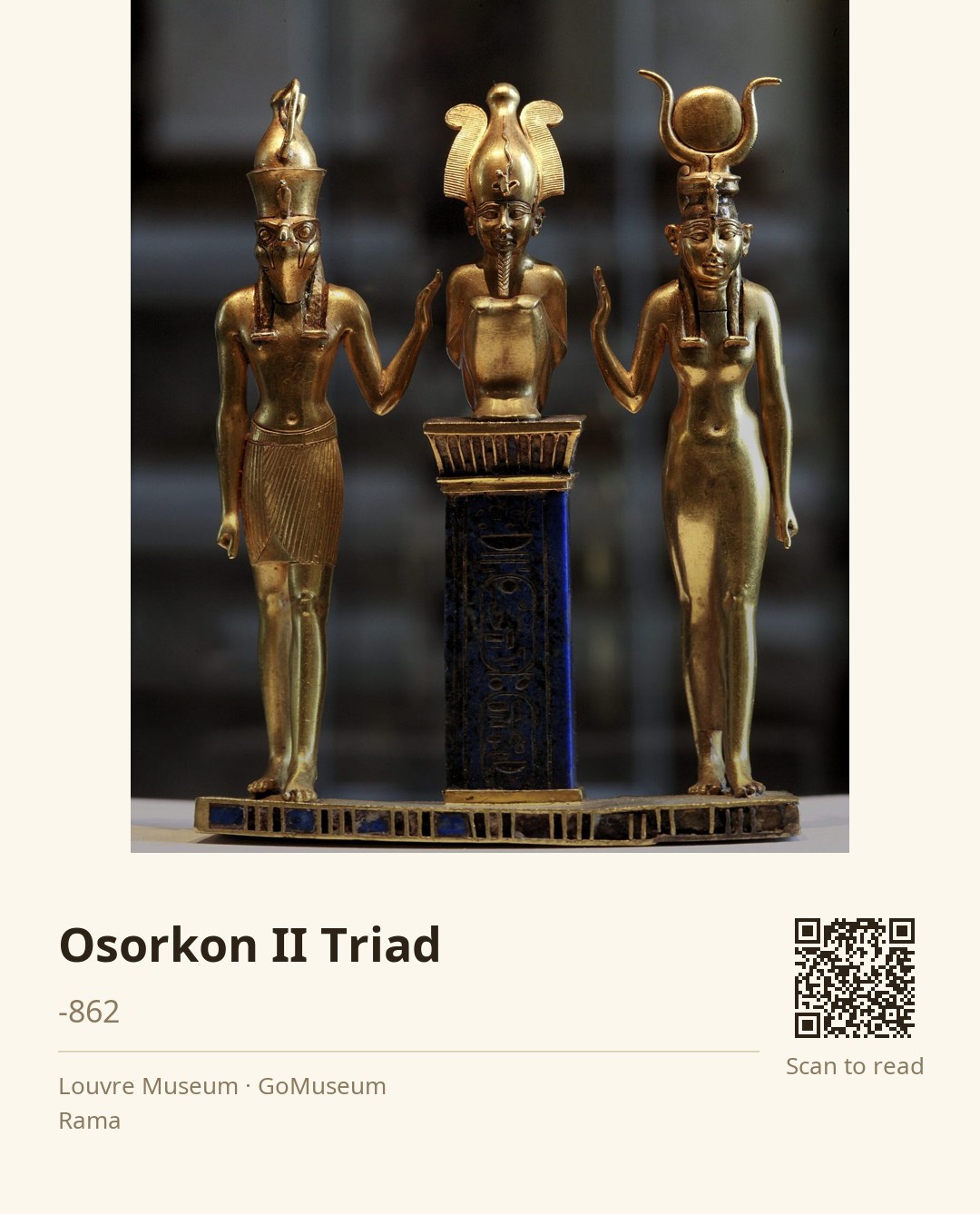
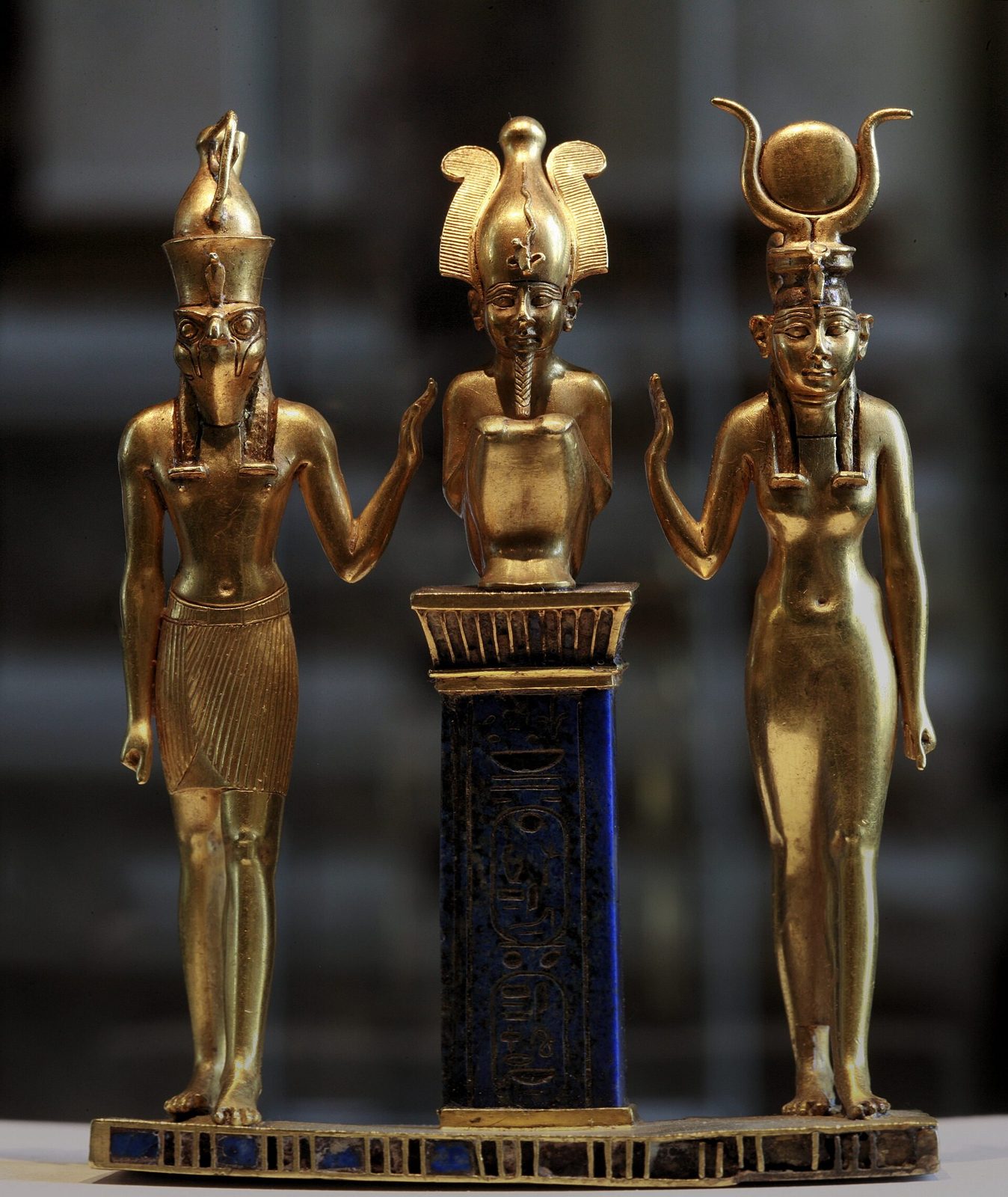
🎧 This work has audio narration — listen in the appThe Osorkon II Triad showcases three divine figures, with the central one seated majestically on a tall blue pedestal, intricately inscribed with hieroglyphs. This figure, adorned with a striking feathered crown, represents Osiris, the god of resurrection. To his left stands Horus, depicted with a falcon head and a headdress featuring a cobra, while to the right, Isis, the goddess of motherhood, wears a headdress with cow horns encircling a sun disk.
Crafted from gold and embellished with blue lapis lazuli inlays, the smooth surfaces and detailed features of these figures highlight the exceptional skill of ancient Egyptian artisans. The inscriptions on the pedestal and the base reveal the significance of this triad, linking it to the royal lineage and divine protection.
Dating back to 862 BCE, the Osorkon II Triad was created during the 22nd Dynasty, a period marked by a rich cultural and religious revival in ancient Egypt.
The Osorkon II Triad, crafted around 862 BCE, is a remarkable artifact from the 22nd Dynasty of ancient Egypt, a time of cultural and religious revival. Commissioned during the reign of Pharaoh Osorkon II, this piece was likely intended as a temple treasure rather than a funerary item, emphasizing the importance of the divine family it represents. The triad features Osiris, Horus, and Isis, three pivotal figures in Egyptian mythology. After its creation, the triad was preserved through centuries, eventually becoming part of the Louvre's collection in 1872, where it continues to captivate visitors with its intricate craftsmanship and historical significance.
The figures of Osiris, Horus, and Isis are central to Egyptian mythology, symbolizing resurrection, kingship, and motherhood respectively.
The use of gold and blue lapis lazuli showcases the high level of craftsmanship and the importance of these materials in ancient Egyptian art.
The triad was preserved over the centuries and was acquired by the Louvre in 1872, where it remains today.