 Image: Shonagon
Gudea cylinders
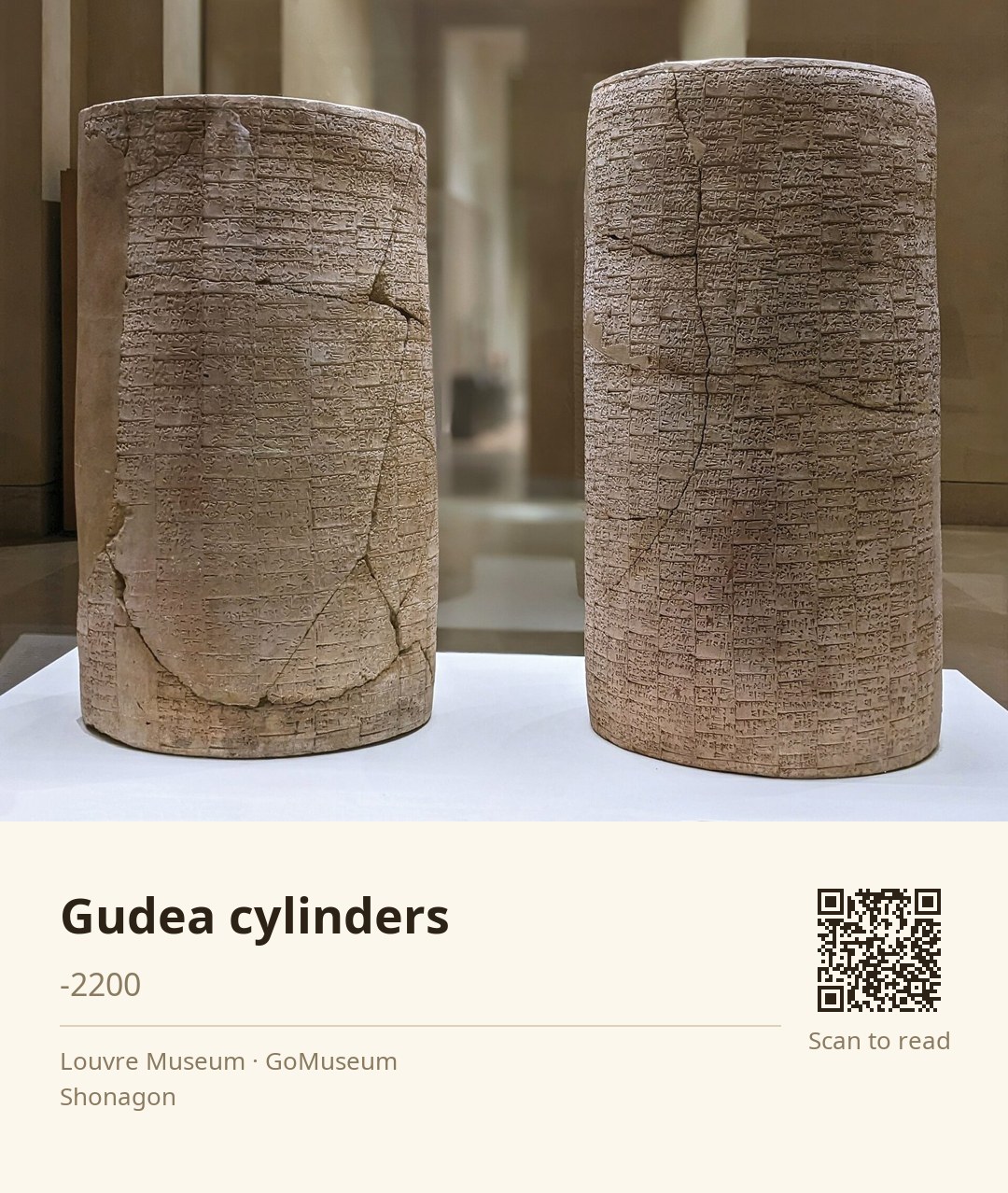
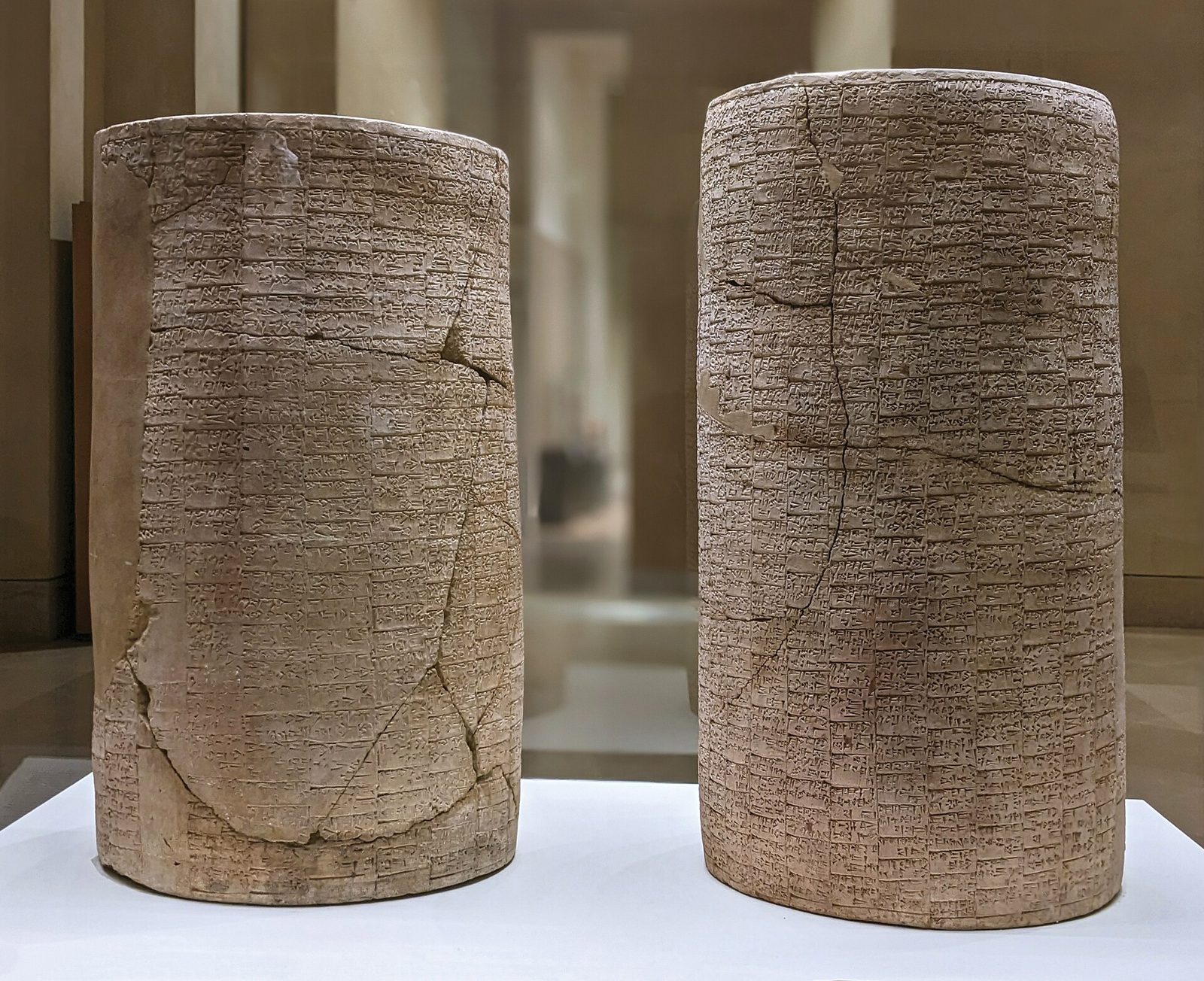
🎧 This work has audio narration — listen in the appTake a moment to really look at the Gudea cylinders before you. These aren’t just ancient artifacts; they’re the largest cuneiform cylinders ever found, standing as monumental testaments to a civilization long gone. Notice the intricate details of the inscriptions—each line of cuneiform is a whisper from the past, telling the story of Gudea, the ruler of Lagash, and his ambitious project to build the temple of Ningirsu.
Well, these cylinders are not only remarkable for their size but also for the wealth of information they contain. They hold the longest known text in the Sumerian language, a myth that intertwines the divine with the earthly, showcasing the importance of religion and architecture in Sumerian society.
Discovered in 1877 in what was once the sacred city of Girsu, these cylinders reveal the grandeur of Gudea’s reign and the cultural significance of his temple. They were likely placed in a ceremonial context, perhaps even a ritual performance, marking the dedication of the temple—a celebration of faith and power.
As you stand here, think about the stories these ancient texts could tell if only they could speak.
The Gudea cylinders were unearthed in 1877 by Ernest de Sarzec during excavations at Telloh, the ancient city of Girsu in Iraq. These remarkable terracotta cylinders, dating back to around 2125 BC, were discovered in a drain beneath the Eninnu temple complex. They were found near a building known as the Agaren, which contained inscriptions detailing its construction by Gudea, the ruler of Lagash. It’s believed that the cylinders fell into the drain during the city’s later destruction. In 1878, they made their way to Paris, where they are now housed in the Louvre, becoming the largest cuneiform cylinders ever found.
Created around 2200 BC, they are the largest known cuneiform cylinders, holding the longest text in the Sumerian language. This text isn't just a record; it’s a narrative of divine favor and political legitimacy. Gudea, the ruler of Lagash, used these inscriptions to immortalize his achievements and the construction of the temple of Ningirsu, showcasing how art and politics intertwined in ancient Mesopotamia.
Some scholars propose that they may have been used in a yearly festival dedicated to the temple, potentially serving as a script for a ritual play that enacted the myth of Ningirsu's temple construction. This idea suggests that these cylinders were not merely historical records but active participants in the cultural and spiritual life of the Sumerians.
It is believed that the cylinders fell into the drain during the destruction of Girsu, generations after their placement, indicating a tumultuous history for the city and its artifacts.