The Plague at Ashdod
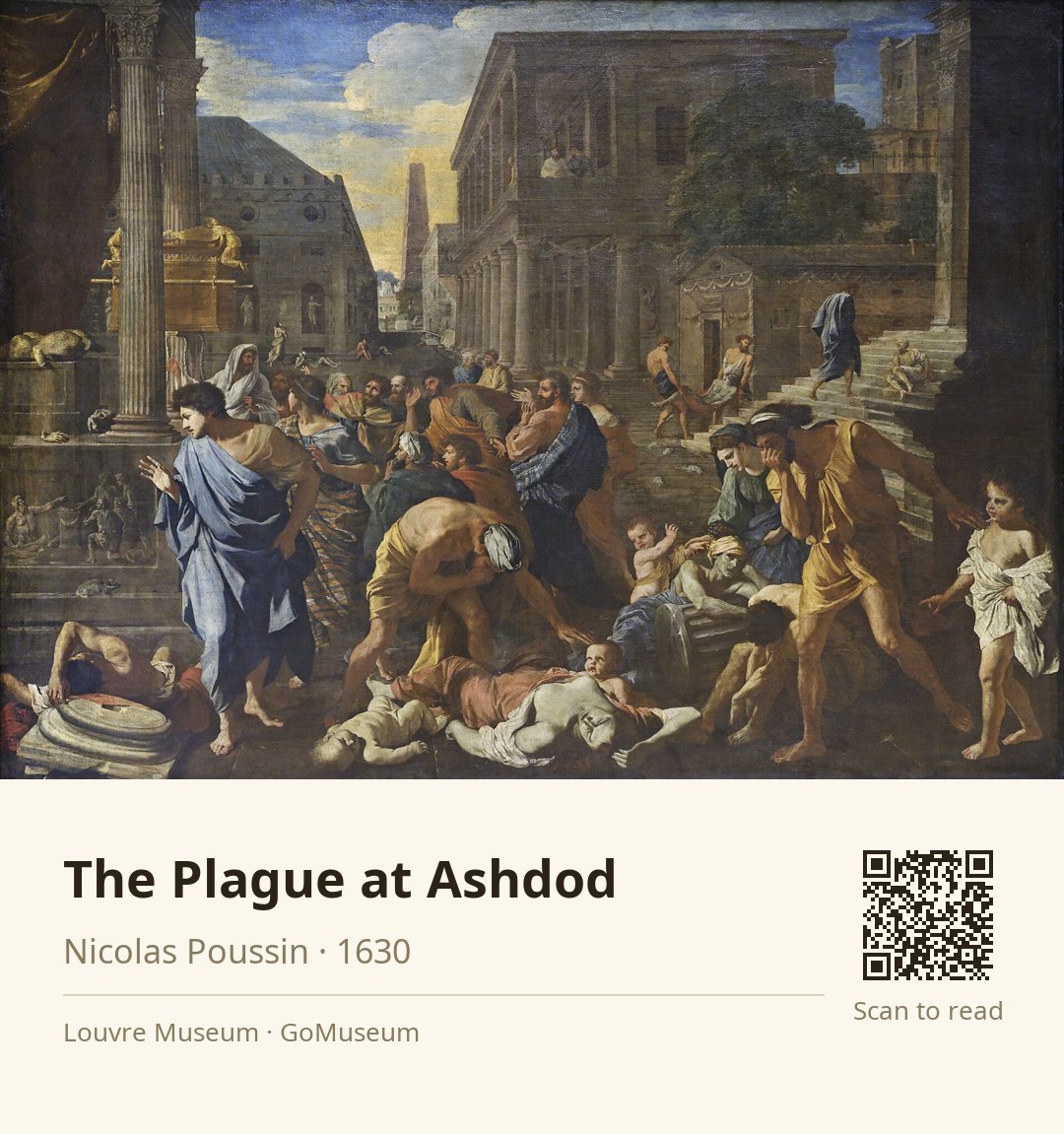
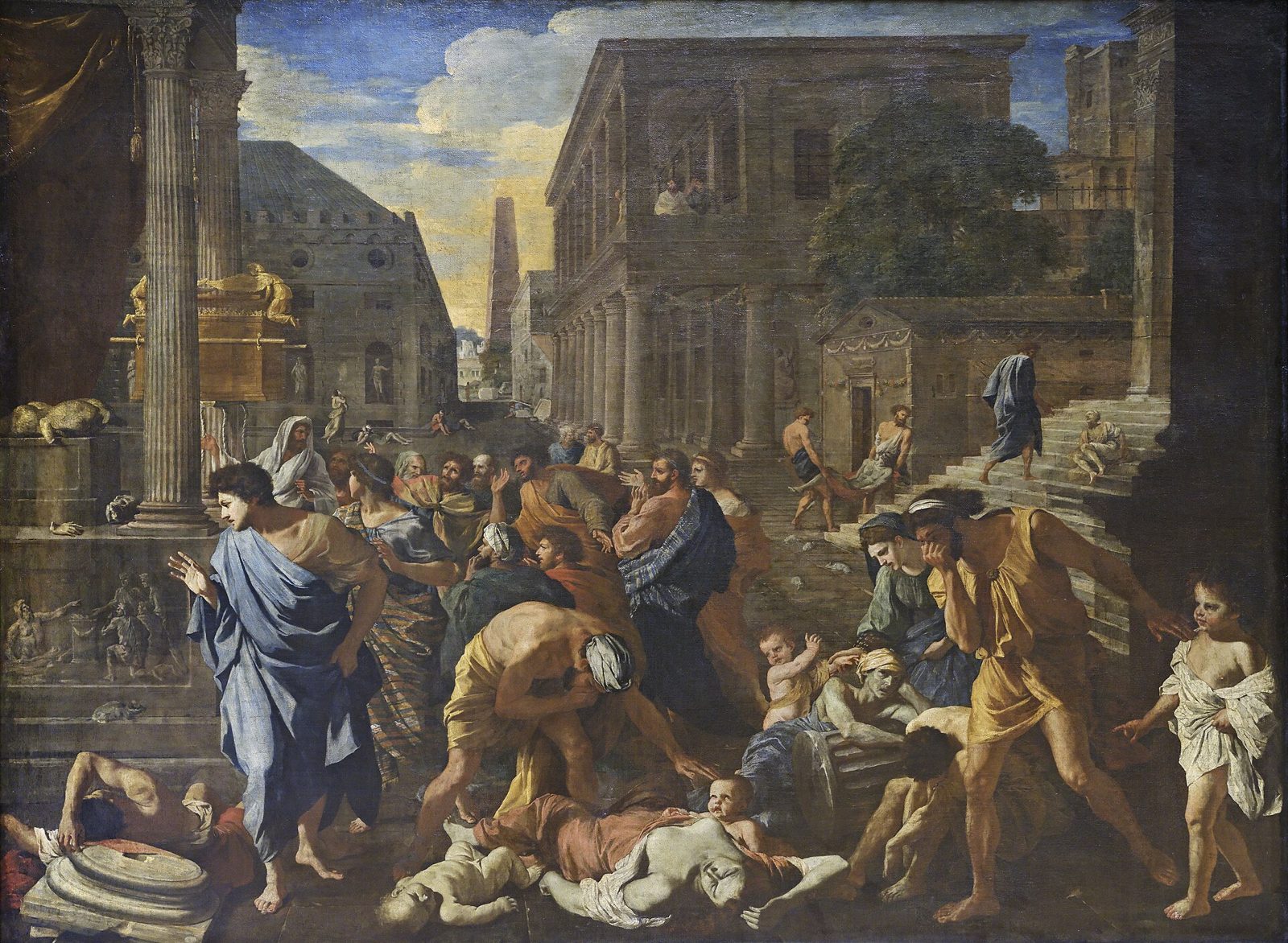
🎧 This work has audio narration — listen in the appTake a moment to really look at "The Plague at Ashdod." Notice the figure on the left, desperately pulling a child away from a lifeless mother. It’s a haunting moment, isn’t it? This stark detail isn’t just about the tragedy of loss; it symbolizes the moral decay and desperation that plague the city of Ashdod during this biblical crisis.
Poussin painted this scene in 1630, amidst a devastating plague in Italy, and you can feel that urgency in the way he captures human emotion. The men covering their noses, the lifeless bodies, and even the rats scurrying through the scene all speak to the fear and chaos of disease. This isn’t just a painting; it’s a commentary on how fear can erode loyalty and humanity.
The story behind this artwork comes from the Old Testament, where the Philistines, after stealing the Ark of the Covenant, are punished by God with a terrible plague. Poussin’s work reflects not only the biblical narrative but also the real-life horrors of his time, making it all the more poignant.
As you stand here, think about the choices we make in times of crisis. How do we respond when faced with fear? What does this painting evoke for you?
Nicolas Poussin, born in June 1594 near Les Andelys, was a pivotal figure in the classical French Baroque movement, spending most of his career in Rome. His early life was marked by a passion for art that led him to Paris at eighteen, despite his parents' opposition. In Paris, he struggled initially, but his exposure to royal collections ignited his admiration for Italian masters, particularly Raphael. This influence shaped his distinctive style, characterized by clarity, order, and a preference for line over color.
Poussin's artistic journey took him to Rome in 1624, where he developed a reputation for his religious and mythological works, often commissioned by a select group of collectors. His notable pieces include "The Death of Germanicus" and "The Massacre of the Innocents." Although he briefly returned to France as First Painter to Louis XIII, he found the court's demands stifling and returned to Rome, where he continued to evolve, integrating landscapes into his compositions.
His legacy is profound; Poussin's emphasis on classical themes and structure influenced generations of artists, including Jacques-Louis David and Paul Cézanne. He remains a cornerstone of classical painting, with around 260 attributed works and nearly 400 drawings, solidifying his place in art history until his death in 1665.
Nicolas Poussin began painting 'The Plague at Ashdod' in late 1630 while living in Rome, a city untouched by the bubonic plague ravaging Italy at the time. This piece was commissioned by Fabrizio Valguarnera, a Sicilian merchant who faced legal troubles for money laundering linked to the purchase of the painting. It was later housed in the royal collections and has been part of the Louvre since the late 17th century, showcasing its enduring significance in art history.
Notice the brushwork—it's both precise and expressive, capturing the chaos of the scene. The figures are arranged in a dynamic diagonal composition that leads your gaze through the painting, from the lifeless bodies to the frantic men covering their noses. The inclusion of rats adds a visceral element, enhancing the sense of decay and disease. Poussin’s choice of muted colors punctuated by the occasional bright detail heightens the emotional impact, making the viewer feel the weight of despair and moral decay.
Fabrizio Valguarnera, the commissioner, faced legal troubles for money laundering linked to the purchase of 'The Plague at Ashdod,' which cast a shadow over his reputation.
Poussin's experience during the bubonic plague outbreak in Italy informed his portrayal of the epidemic, as he demonstrated an advanced understanding of its effects on society and human behavior.