Marly horses
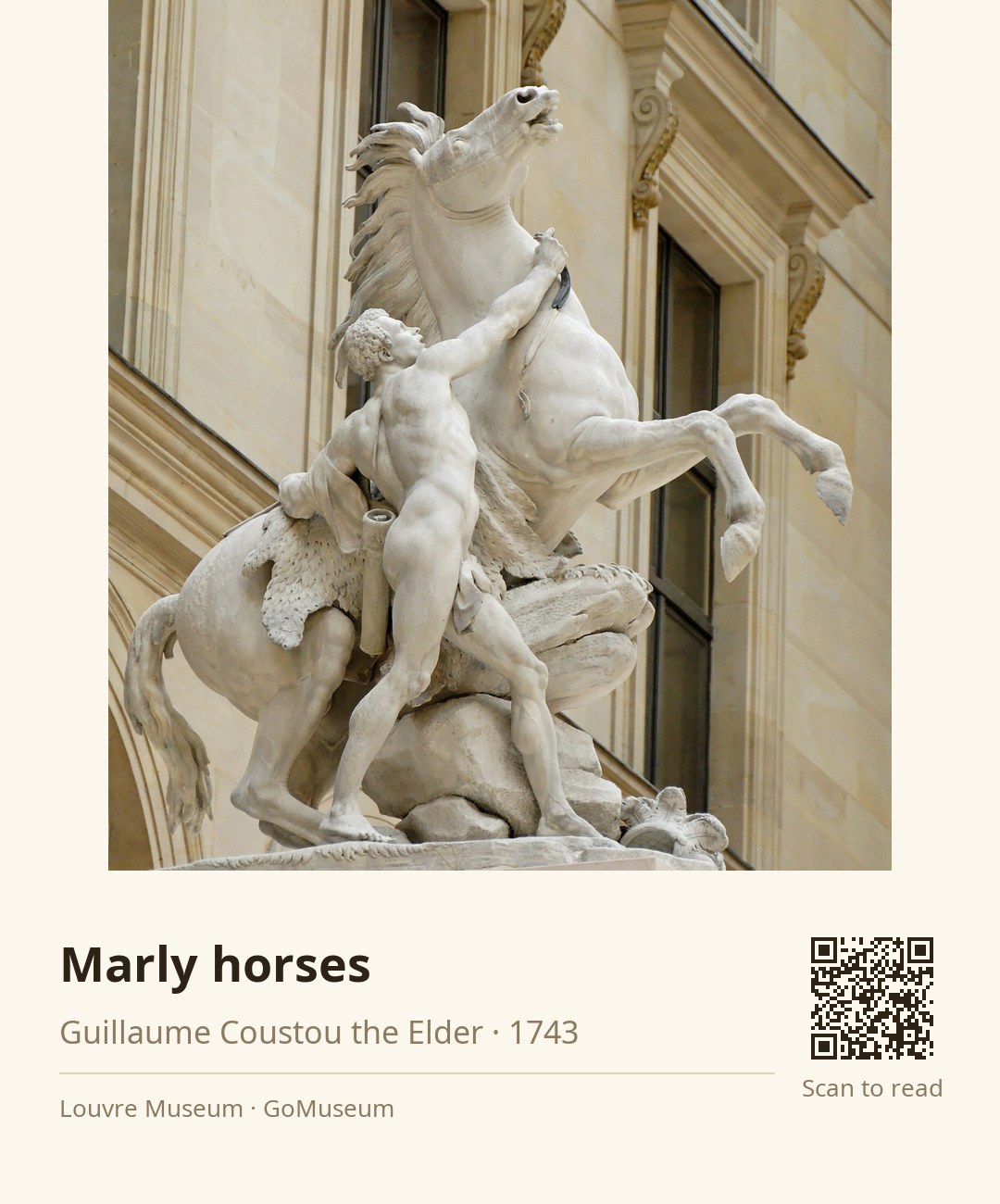
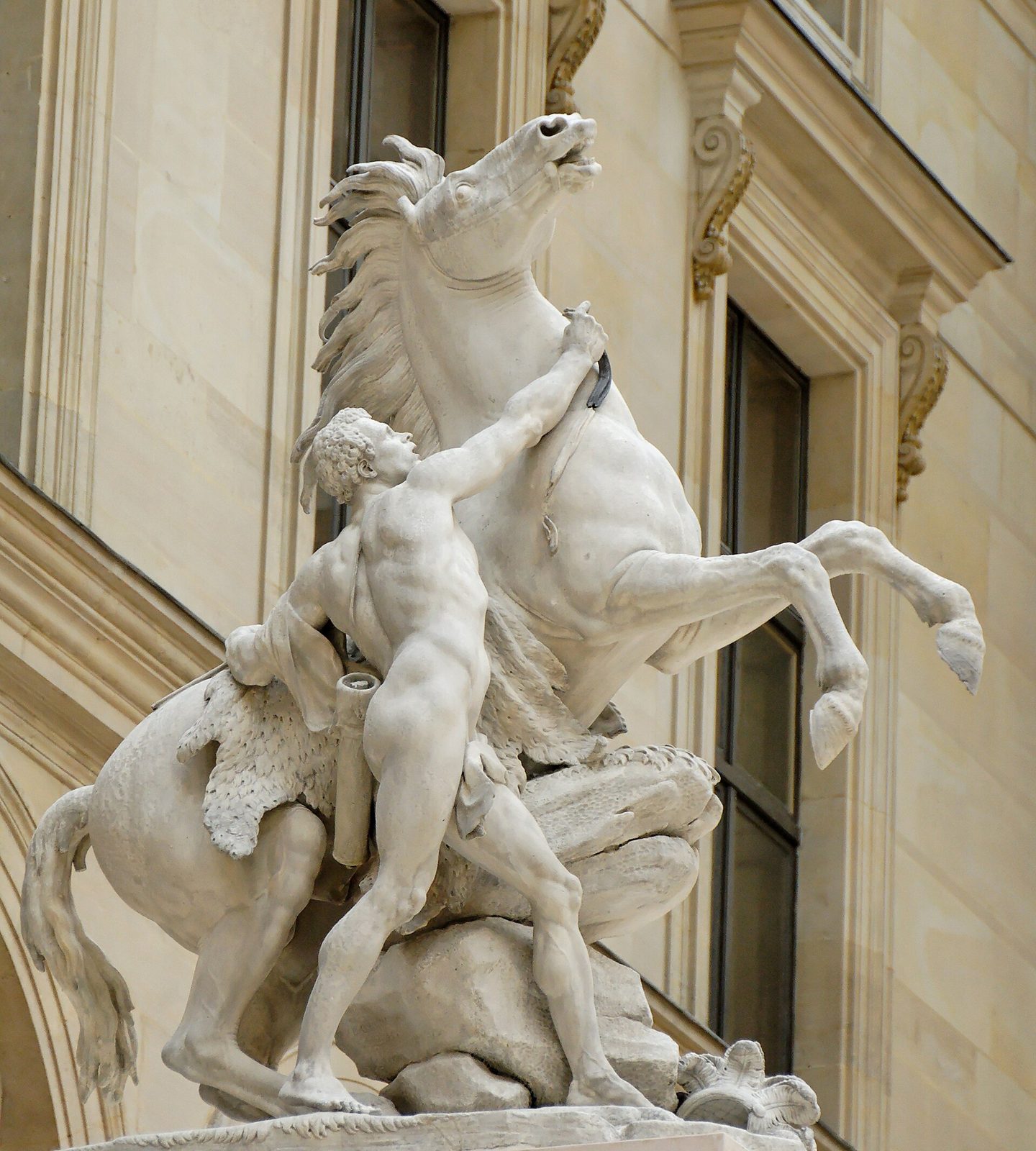
🎧 This work has audio narration — listen in the appTake a moment to really look at the Marly Horses. Can you feel the energy radiating from these magnificent sculptures? Notice how the horses rear up, their powerful muscles taut and straining, while their grooms grapple with them, desperately trying to maintain control. The way the marble captures the wildness in the horses' eyes and the frantic expressions of the grooms is nothing short of breathtaking.
This was one of his last major works, commissioned by King Louis XV, and it marked a significant shift in sculpture towards more dynamic and expressive forms.
Coustou's Marly Horses were originally created for the Château de Marly, a retreat for the king, and they replaced earlier works that were deemed less impactful. Over the years, these sculptures have become iconic, influencing countless artists and even appearing on television test cards in the 20th century.
As you stand here, think about the stories these horses could tell if they could speak. What emotions do you feel when you look at them? What do you think they symbolize in the context of their time?
Guillaume Coustou the Elder was a prominent French sculptor born on November 29, 1677, in Lyon. Coming from a lineage of esteemed sculptors, he was influenced by his uncle Antoine Coysevox and his brother Nicolas. Although he briefly studied at the French Academy in Rome, Coustou's rebellious spirit led him to abandon formal training, opting instead to forge his own artistic path. His career flourished as he became a royal sculptor for Louis XIV and Louis XV, eventually serving as Director of the Royal Academy of Painting and Sculpture.
Coustou is celebrated for his monumental equestrian statues, particularly the Marly Horses, which exemplify the grace and dynamism of the Late Baroque style. These masterpieces were commissioned by Louis XV and installed at the Château de Marly, later relocated to the Place de la Concorde. His work, characterized by intricate detail and expressive forms, reflects the grandeur of French sculpture during the 18th century. Coustou's legacy endures through his contributions to significant sites like Versailles and the Tuileries Gardens, marking him as a key figure in the evolution of French art history. He passed away on February 22, 1746, leaving behind a rich artistic heritage.
Take a closer look at the Marly Horses, and you'll notice the incredible craftsmanship that went into these sculptures. Carved from Carrara marble, a material renowned for its quality, the artist Guillaume Coustou the Elder worked with monolithic blocks, transforming solid stone into dynamic forms in just two years. The horses are depicted in a moment of struggle, their powerful muscles and wild expressions captured with remarkable detail. Notice the way the marble seems to flow, especially in the horses' manes and the grooms' tense postures, conveying a sense of movement and energy that feels almost alive.
The Marly Horses were commissioned by King Louis XV in 1739, intended to adorn the horse trough at the entrance of the Château de Marly, a retreat for the king. This work was meant to replace earlier sculptures by Antoine Coysevox, which had been moved to the Tuileries Gardens. Coustou was chosen for this significant project, and by 1745, the sculptures were installed, quickly becoming celebrated for their expressive power. Over the years, they were relocated several times, from Marly to the Place de la Concorde in 1794, and eventually to the Louvre in 1984 for preservation.
Commissioned by Louis XV, these pieces replaced earlier works and showcased a dramatic shift towards realism and emotional expression in sculpture. Their dynamic portrayal of horses in conflict with their grooms broke away from the traditional allegorical themes that dominated the era. This bold choice not only captivated contemporary audiences but also set the stage for Romantic artists like Théodore Géricault, who would later explore similar equestrian themes with fervor. The Marly Horses became iconic, influencing generations of artists and even making their way into modern culture, such as being featured in a television test card. Remember, these sculptures are not just beautiful; they represent a transformation in artistic expression that resonates through history.
Did you know that the Marly Horses were so iconic that they became part of a television test card in France? From 1953 to 1983, these sculptures were featured on the monochrome test card used by TF1, bringing their majestic presence into homes across the country, long after their original creation.
The Marly Horses were specifically commissioned to adorn the horse trough at the entrance of the Château de Marly, serving as a grand welcoming feature for visitors to the royal retreat.
The Marly Horses prefigured the Romantic obsession with equestrian subjects, influencing artists like Théodore Géricault, who drew inspiration from their dynamic forms and expressive power.
During the Revolution, the Marly Horses were at risk of destruction as they were seen as symbols of the monarchy, but they were saved by being encased in protective wooden structures until they could be relocated.