 Image: Ricardo André Frantz tetraktys (talk) 04:00, 26 March 2017 (UTC) · Unknown authorUnknown author · Unknown · Unknown · Gary Todd from Xinzheng, China
Apollo of Piombino
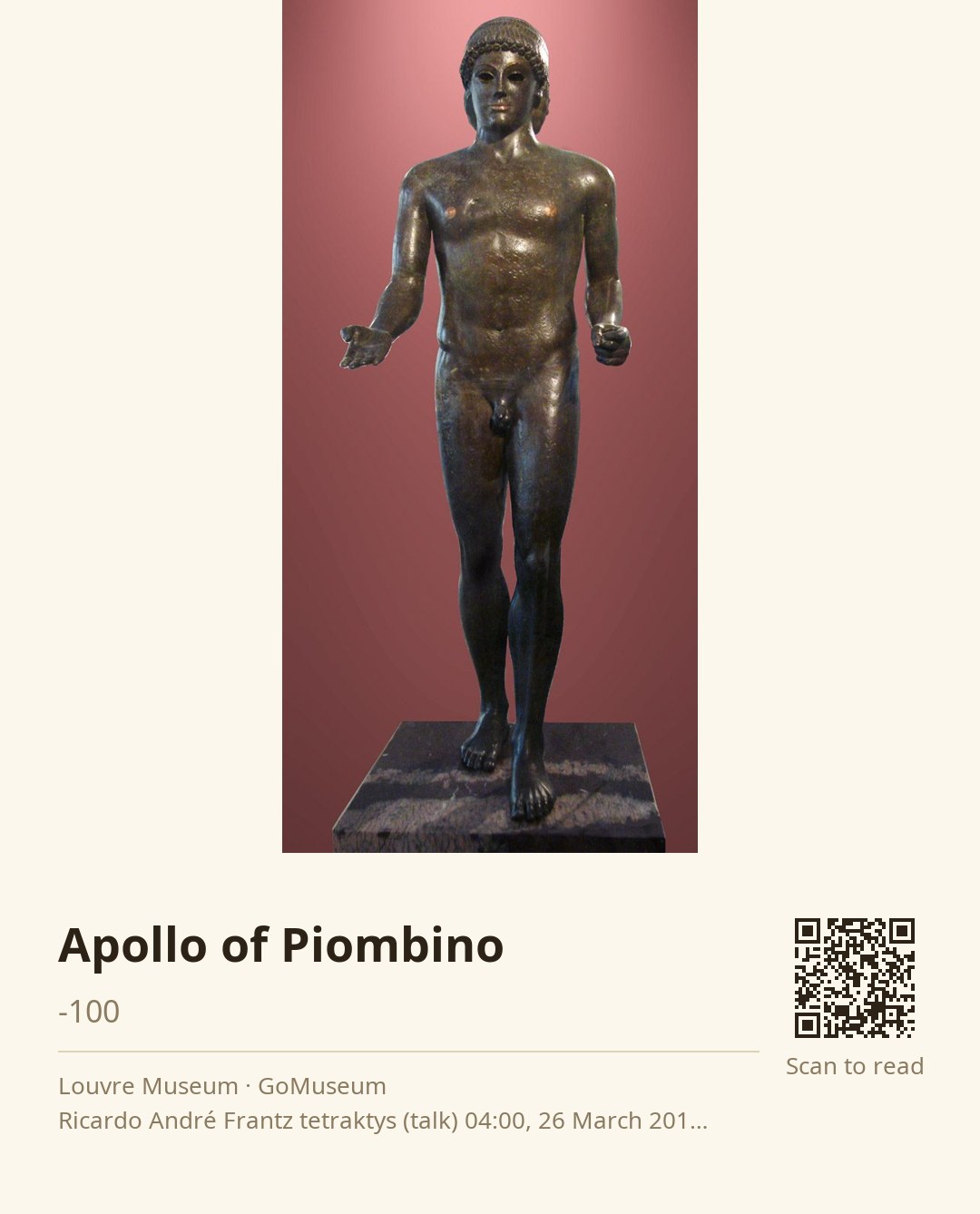
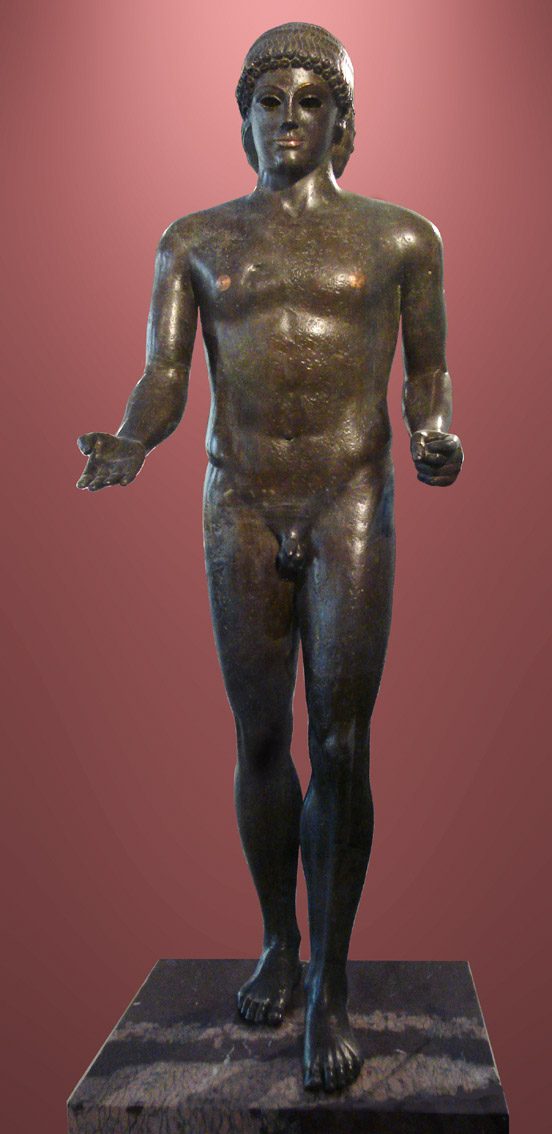
🎧 This work has audio narration — listen in the appTake a moment to really look at the Apollo of Piombino. Notice how he stands, with his left foot forward and arms poised as if he’s about to offer something sacred. Now, focus on the details—the copper inlays on his lips and eyebrows. These touches aren’t just decorative; they breathe life into the bronze, giving him a warmth that contrasts with the cold metal.
Why does this matter? Well, this statue is more than a mere representation of Apollo; it’s a fascinating blend of artistry and intention. The inlays suggest an effort to create a connection between the divine and the viewer, making Apollo seem almost alive. But here’s the twist: this statue, while appearing archaic, was actually crafted in the 1st century BCE, designed to appeal to Roman tastes. It’s a clever pastiche, a nod to the past that reveals the complexities of cultural identity.
Discovered in 1832 off the coast of Piombino, this piece has a rich history, including a hidden inscription that tells us about its creators, Rhodian sculptors who were influenced by earlier styles.
As you stand here, think about what it means to create art that pays homage to the past while existing in the present. What stories do you think this statue could tell if it could speak?
As you examine the Apollo of Piombino, take a closer look at the craftsmanship. This sculpture is a marvel of lost-wax casting, a technique that allows for intricate details. Notice how the statue is composed of nine to ten distinct parts, each meticulously joined together. The arms, head, and legs were cast separately, yet the seamless joins are nearly invisible. The bronze itself is a blend, with around 6% tin and 19.5% lead, giving it a unique sheen. The copper inlays on the lips and eyebrows? They’re not just for show; they add a warmth that contrasts beautifully with the cold bronze.
The Apollo of Piombino has a captivating history that began with its discovery in 1832, off the coast of Piombino, Italy. Initially thought to be a genuine relic from the 5th century BCE, it was purchased by the Musée du Louvre just two years later. Italian archaeologist Brunilde Sismondo Ridgway revealed that this statue was not an authentic archaic piece but rather a clever pastiche made in the 1st century BCE, designed to appeal to Roman tastes. A false inscription dedicated to Athena, along with a hidden lead tablet bearing the names of its Rhodian creators, was uncovered during conservation efforts in 1842.
One intriguing detail about the Apollo of Piombino is the peculiar inscription found on the bottom of its left foot. While it appears to be an archaic dedication to Athena, it’s actually a clever ruse, crafted to mimic ancient styles. Imagine the conversations they must have had about how to blend authenticity with innovation!
The eyes of the statue are missing, but it is believed they were originally made from a different material, possibly bone or ivory, which would have added a striking contrast to the bronze.
The statue was cast in 9-10 distinct parts using lost-wax casting, showcasing advanced techniques for its era, such as flow-fusion welding that made the joins nearly invisible, highlighting the skill of the Rhodian sculptors.
The hidden lead tablet, discovered during conservation, bears the names of its Rhodian creators, indicating that they were part of a family of sculptors who had been working in the city of Rhodes for generations, blending their heritage with Roman tastes.