 Image: Shonagon · Unknown artistUnknown artist · Unknown artistUnknown artist · Geffroy, Gustave, 1855-1926
Hera of Samos
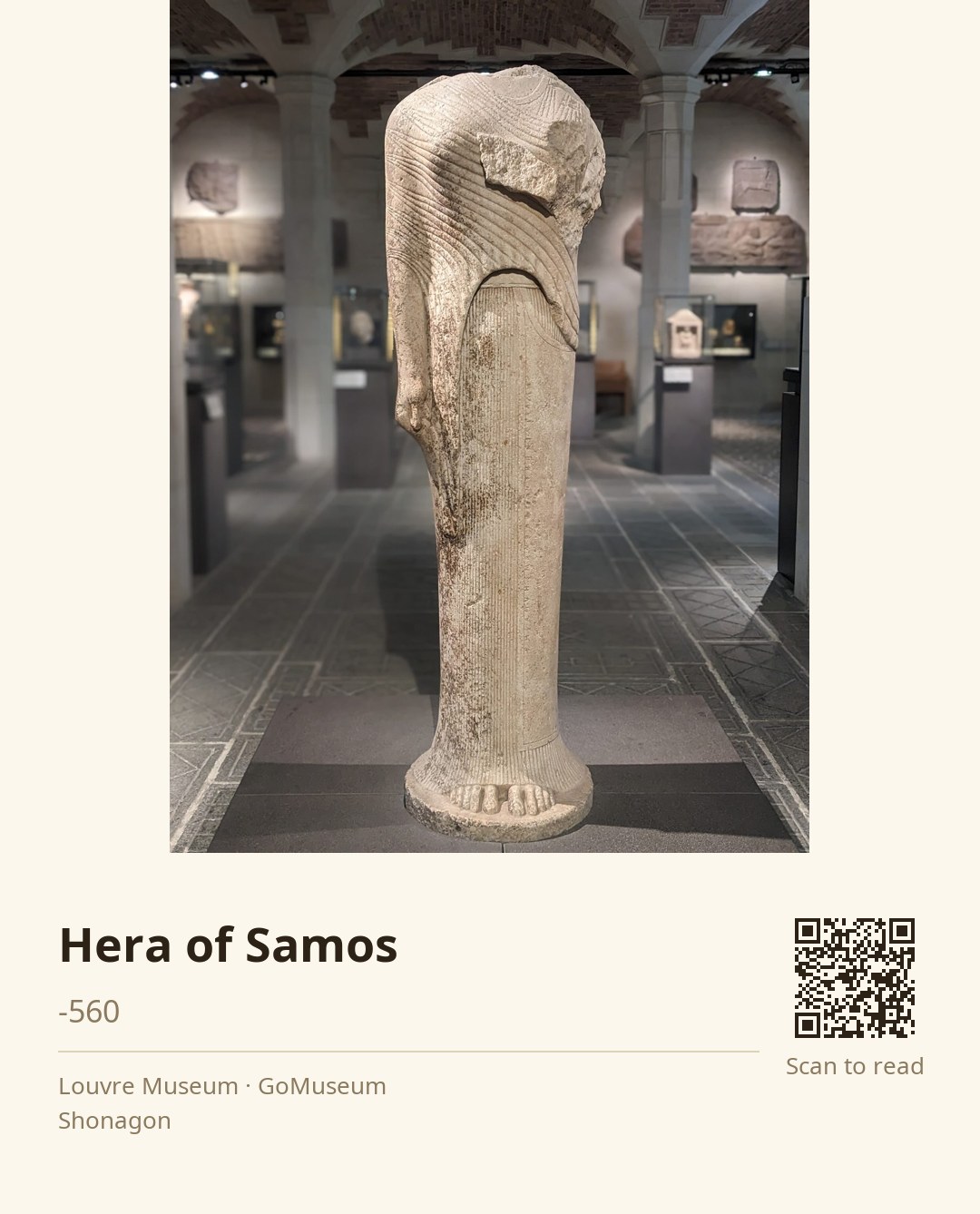
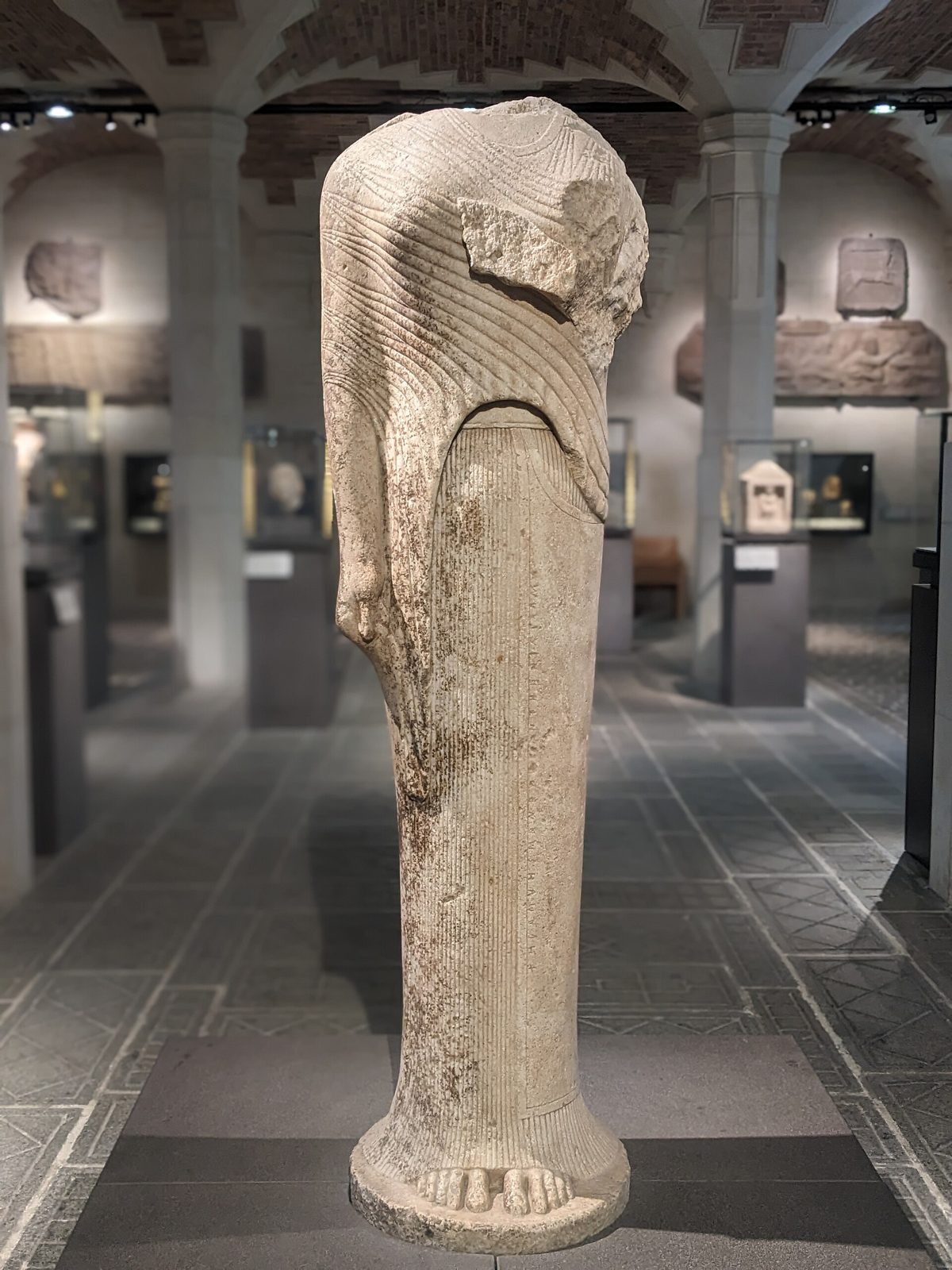
🎧 This work has audio narration — listen in the appTake a moment to really look at the Hera of Samos. Notice how she stands tall and proud, even without her head. Her body is draped in intricate layers of fabric that seem to flow like water, don’t you think? The way her himation wraps around her shoulder creates a striking asymmetry that draws your eye.
Discovered in the 19th century at the Heraion of Samos, this statue dates back to around 560 BC, a time when the Greeks were beginning to explore more naturalistic forms in their art. It’s believed she was dedicated to the goddess Hera, perhaps as an offering by someone named Chéramyès, as inscribed on her base.
As you stand here, consider what it must have been like to see this statue in its original setting, possibly in a temple, surrounded by worshippers. What stories do you think she could tell if she could speak?
Take a closer look at the marble itself. This sculpture is carved from a grayish stone with large crystals, giving it a unique texture that catches the light in different ways. The intricate drapery of her garments showcases the sculptor's skill in creating fine, vertical folds that almost seem to ripple. Notice how the himation, draped over her shoulder, is not just a simple covering but a complex layering that adds depth and movement to the figure. The craftsmanship here is a testament to the ancient Greek sculptors' ability to breathe life into stone, capturing not just form but also a sense of grace and fluidity.
The Hera of Samos, also known as the Koré de Chéramyès, was unearthed in the 19th century during excavations at the Heraion of Samos, led by Paul Girard from the French School at Athens. Discovered in the northeast corner of the Temple of Polycrate, this statue was initially thought to represent the goddess Hera. Girard negotiated its purchase in 1879, and by 1881, it found its home in the Louvre. The dedication inscribed along the edge of her veil reveals the name of her patron, Chéramyès, who offered her to the goddess as a token of devotion.
Interestingly, the Hera of Samos is part of a larger group of similar statues found at the Heraion, suggesting that these figures may have lined a sacred path leading to the temple. In 1984, archaeologists discovered another statue closely resembling this one, also dedicated by Chéramyès, hinting at a possible workshop or artistic tradition that produced these remarkable figures. This connection between the two statues raises questions about their original placement and purpose within the sacred landscape.
The intricate drapery and detailed folds of the Hera of Samos set it apart from many other archaic statues, showcasing a higher level of skill and a transition towards more naturalistic forms that were emerging in Greek sculpture.