 Image: Shonagon · Gary Todd from Xinzheng, China · Alexander Baranov from Montpellier, France · Shonagon · Loïc Evanno
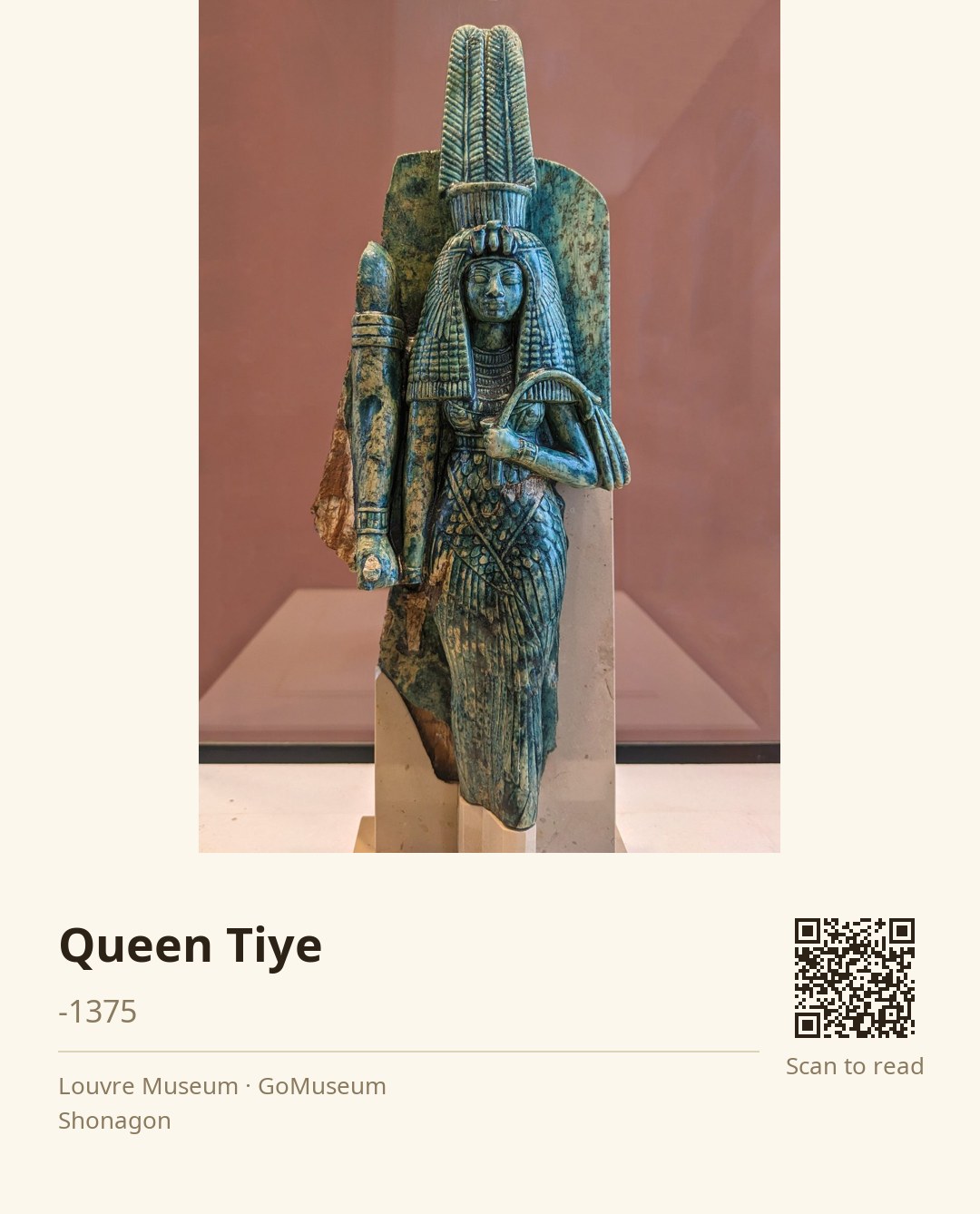
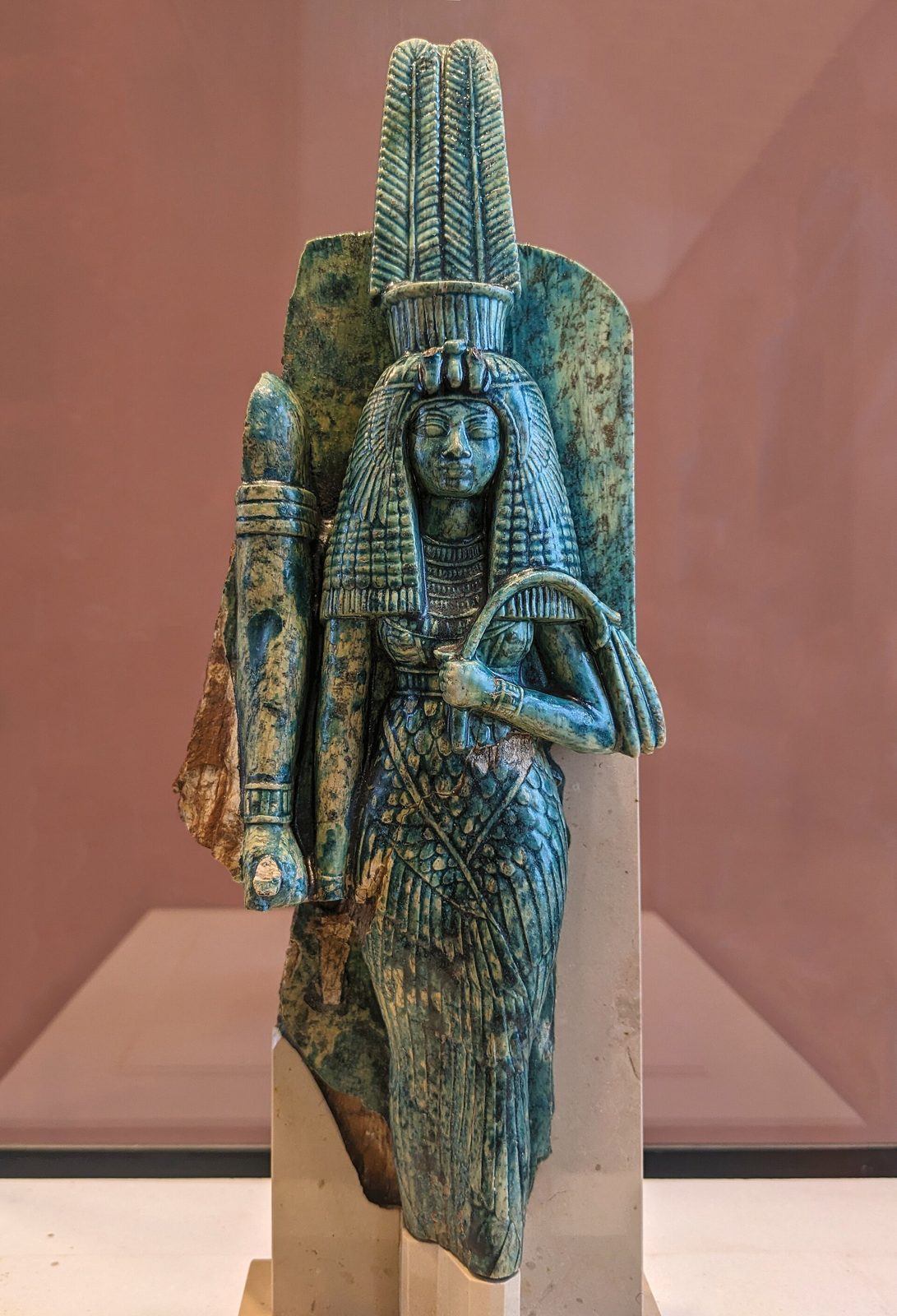
The figure of Queen Tiye stands with an air of regal authority, carved from a striking blue-green soapstone that draws your eye. Her elaborate headdress, adorned with tall, vertical elements, complements the intricate geometric patterns of her fitted dress, showcasing the artistry of ancient Egyptian craftsmanship. In one hand, she holds a curved object, while the other clutches a tall, cylindrical item, hinting at her significant status and the ceremonial roles she may have played.
These details reflect not just her royal lineage but also the cultural importance of Queen Tiye, who was the wife of Pharaoh Amenhotep III and a powerful figure in her own right. The wear on the sculpture's surface suggests it has been cherished through the ages, a testament to its historical significance.
The artist skillfully carved her features, emphasizing her regal expression and the elaborate headdress that signifies her status. The geometric patterns on her fitted dress showcase a high level of craftsmanship, reflecting the advanced techniques of ancient Egyptian sculptors who mastered the art of stone carving. The wear on the surface tells a story of its journey through time, hinting at the reverence with which it has been treated.
It was part of the Henry Salt collection, acquired in 1826, and later donated to the Louvre in 1962. The piece has been displayed in various exhibitions, including a notable one at the Louvre-Lens starting in 2014, where it replaced another significant statuette. The journey of this artwork through collections and exhibitions highlights its enduring significance in the study of ancient Egyptian art and culture.
The sculpture was initially part of the Henry Salt collection, acquired in 1826, and was later donated to the Louvre in 1962.