 Image: Shonagon
Banishment Stela
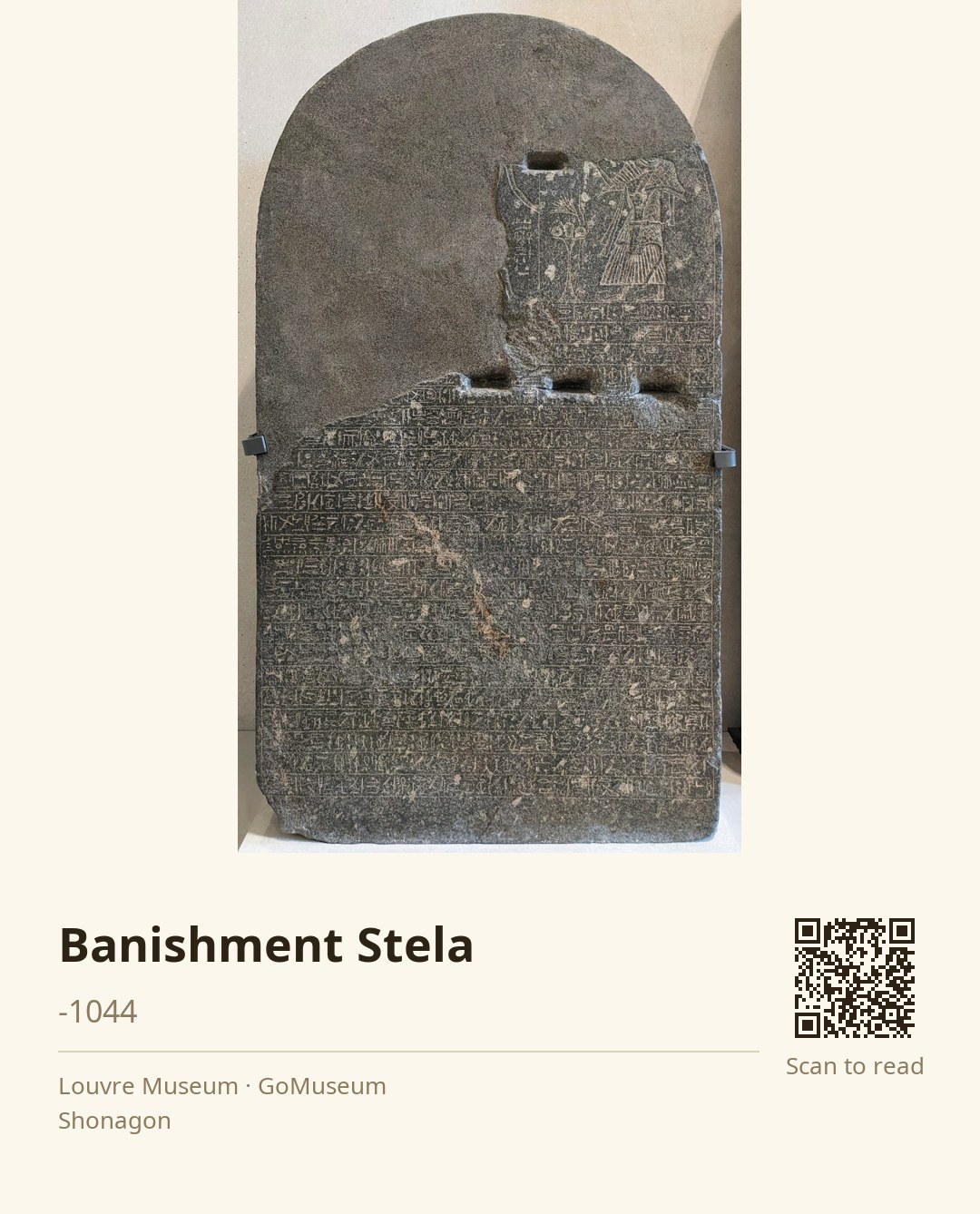
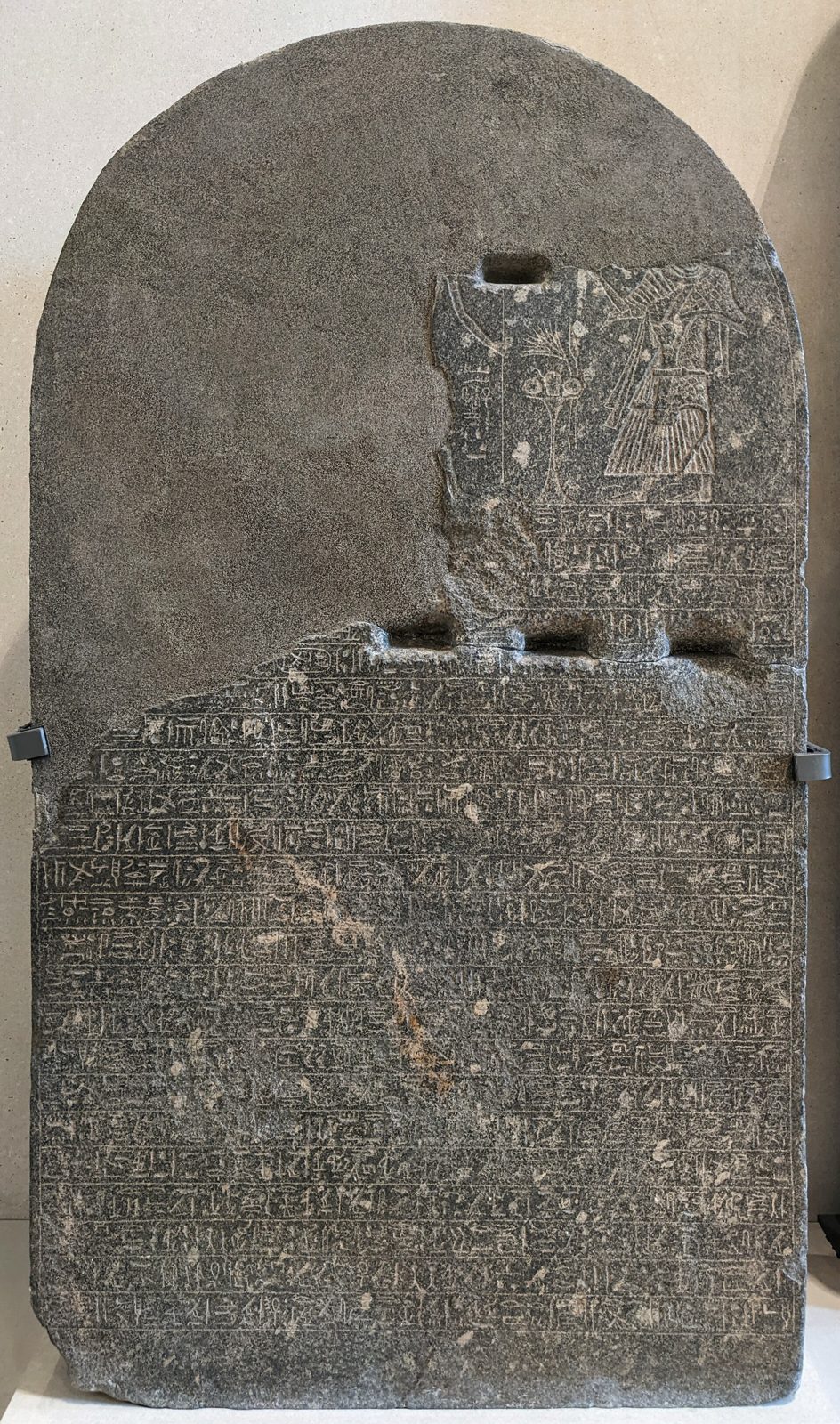
🎧 This work has audio narration — listen in the appTake a moment to really look at the Banishment Stela. Notice how the figure of Menkheperre, the High Priest of Amun, is depicted praying fervently at the top. His posture, arms raised, suggests a deep connection to the divine, as if he’s seeking guidance in a time of turmoil. Now, shift your gaze to the lower part of the stela, where the hieroglyphs tell a story of rebellion and redemption, with 23 lines of text chronicling a significant moment in ancient Egyptian history.
These details matter because they reveal the complex relationship between power, religion, and the people of Thebes during the 21st Dynasty. The stela commemorates a decree that not only banished rebels but also later pardoned them, showcasing the authority of the oracle of Amun and the priesthood's influence over political matters. It’s a vivid reminder of how intertwined faith and governance were in ancient Egypt.
Discovered in Luxor in the 1860s and brought to Paris, this diorite artifact has traveled through time and space, carrying with it the weight of its historical significance. As you stand here, think about the lives affected by the events inscribed on this stone. What do you think it meant for the people of Thebes to have their fate decided by a stela like this?
The Banishment Stela, also known as the Maunier Stela, was unearthed in Luxor in the 1860s by Henri Maunier, who was serving as the French Vice-Consul at the time. It made its way to Paris in 1884, where it has been on display at the Louvre ever since. This diorite artifact stands 127 cm tall and 82 cm wide, though its upper section is notably damaged, leaving only the image of Menkheperre, the High Priest of Amun, praying to the god Amun visible. The stela is inscribed with 23 lines of hieroglyphs, chronicling a revolt in Thebes against the priesthood of Amun during the reign of an unnamed pharaoh. The text reveals that the rebels were banished to the Kharga Oasis, but later, under Menkheperre's influence, they were pardoned and allowed to return. This decree reflects the political and religious dynamics of the time, highlighting the power of the oracle of Amun and the priesthood's role in governance during the 21st Dynasty.
One intriguing detail about the Banishment Stela is that it mentions three distinct dates, yet the events associated with them remain somewhat of a mystery. The first two dates correspond to significant moments in the revolt and subsequent pardon, but the third date is incomplete, leaving historians to speculate about its significance. This ambiguity adds a layer of intrigue, inviting scholars to piece together the historical context surrounding the stela and its inscriptions.
Henri Maunier, serving as the French Vice-Consul in Egypt, discovered the Banishment Stela in Luxor around the 1860s, which marked a significant moment in the artifact's history as it was later transported to Paris.
The stela provides insight into the political dynamics of the 21st Dynasty, illustrating how religious authority intertwined with governance, particularly through the actions of the High Priest of Amun, Menkheperre, in managing civil unrest.
The stela is partially damaged, with the upper section mostly eroded, leaving only the image of Menkheperre visible, while the lower part retains better-preserved hieroglyphs that chronicle the historical events it commemorates.