 Image: Unknown artistUnknown artist
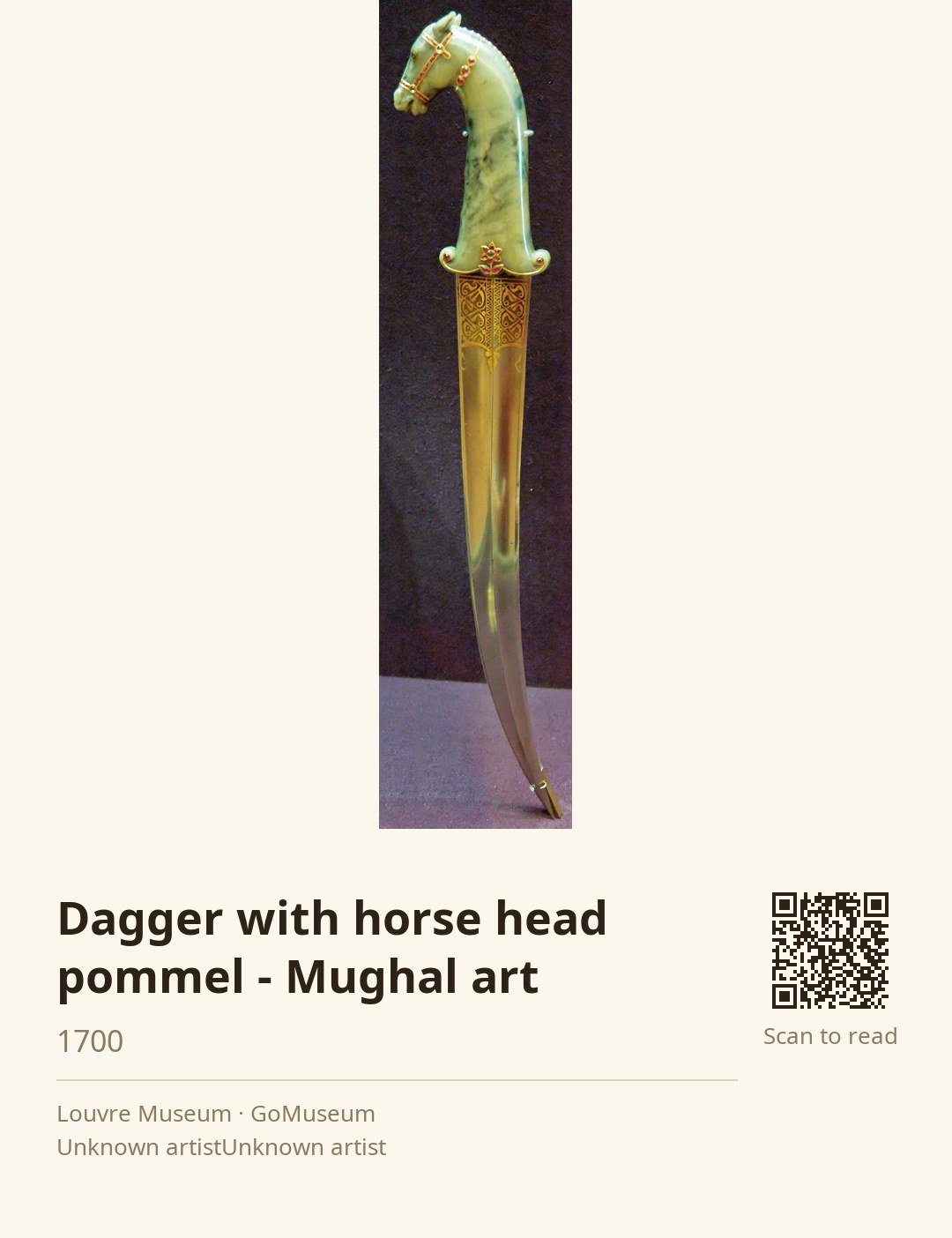
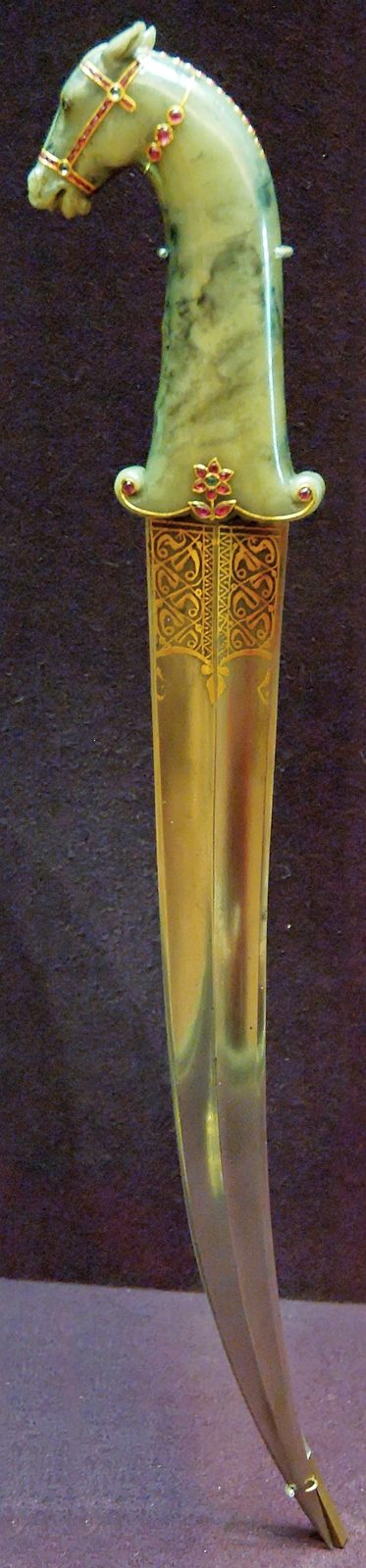
Dagger with horse head pommel - Mughal art
🎧 This work has audio narration — listen in the appThe horse's head pommel of this dagger captures a moment of Mughal artistry from 1700, showcasing the intricate craftsmanship that defines this period. The hilt, carved from a greenish stone, likely jade, features a strikingly detailed horse's head, complete with a decorative bridle inlaid with vibrant red accents. The floral motifs on the guard, embellished with red and gold, add a touch of opulence, while the slender, slightly curved blade is adorned with ornate gold patterns, enhancing its elegance.
This dagger is not merely a weapon; it embodies the Mughal fascination with nature and symbolism, merging functionality with artistry. The choice of materials reflects the wealth and sophistication of the Mughal court, where such items were often commissioned as expressions of power and prestige. The meticulous detailing in both the hilt and the blade illustrates a high level of skill and attention to aesthetic beauty, characteristic of the period's artisans.
Crafted in 1700, this dagger stands as a testament to the rich cultural heritage of Mughal India, where artistry flourished alongside the complexities of court life.
This dagger, crafted in 1700, is a remarkable example of Mughal artistry, showcasing the intricate craftsmanship that flourished during this period. It was likely commissioned by a member of the Mughal court, where such exquisite items were symbols of power and prestige. The dagger is housed in the Louvre, with accession numbers R 890 and OA 7891, indicating its importance within the museum's collection.
This dagger reflects the Mughal interest in nature through its intricate design, which merges functional weaponry with artistic elements inspired by the natural world.
The craftsmanship of the dagger reveals that Mughal artisans possessed a high level of skill and a strong focus on aesthetic beauty, which was characteristic of the artistic standards of the period.