Portrait of Dr. Gachet
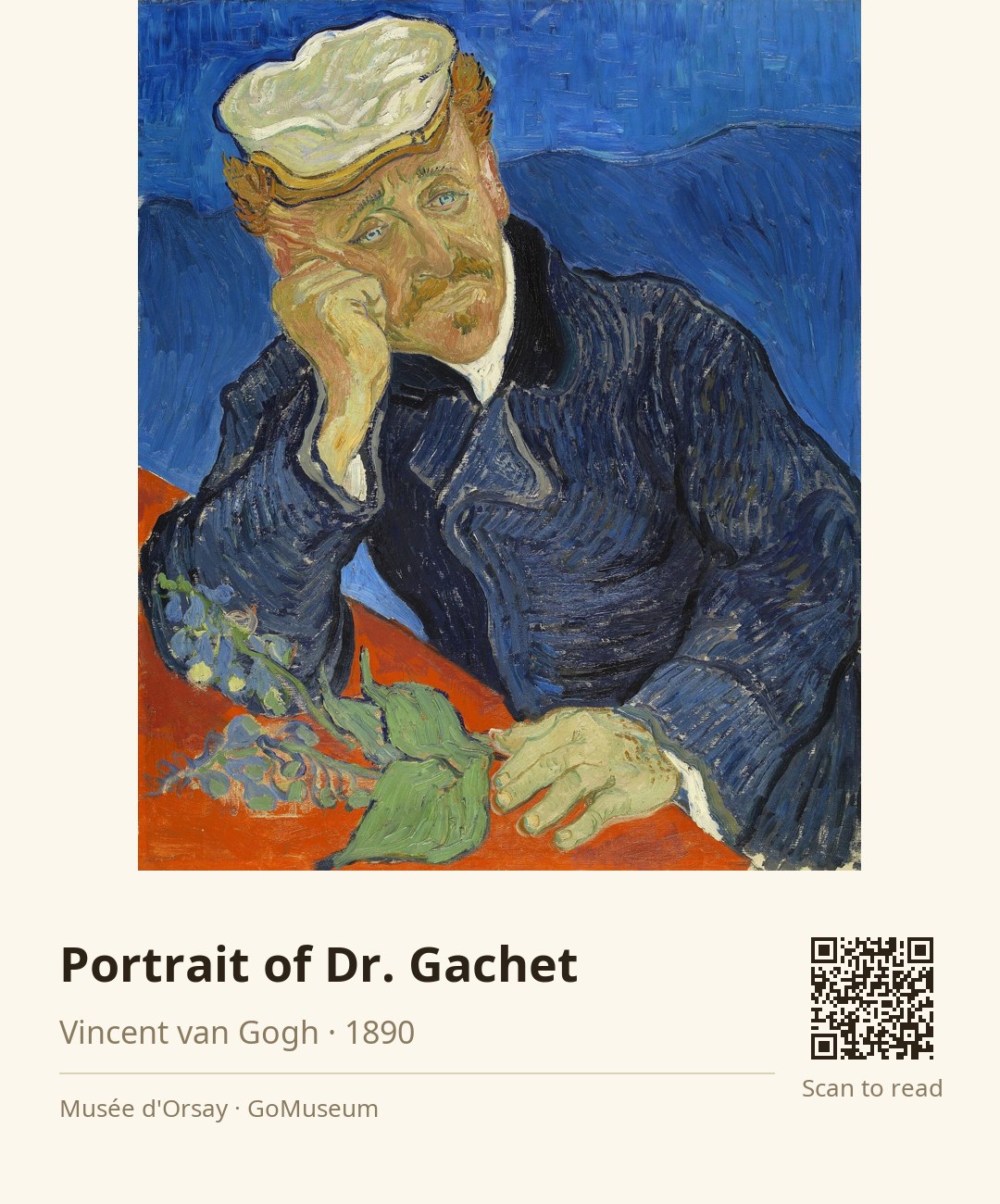
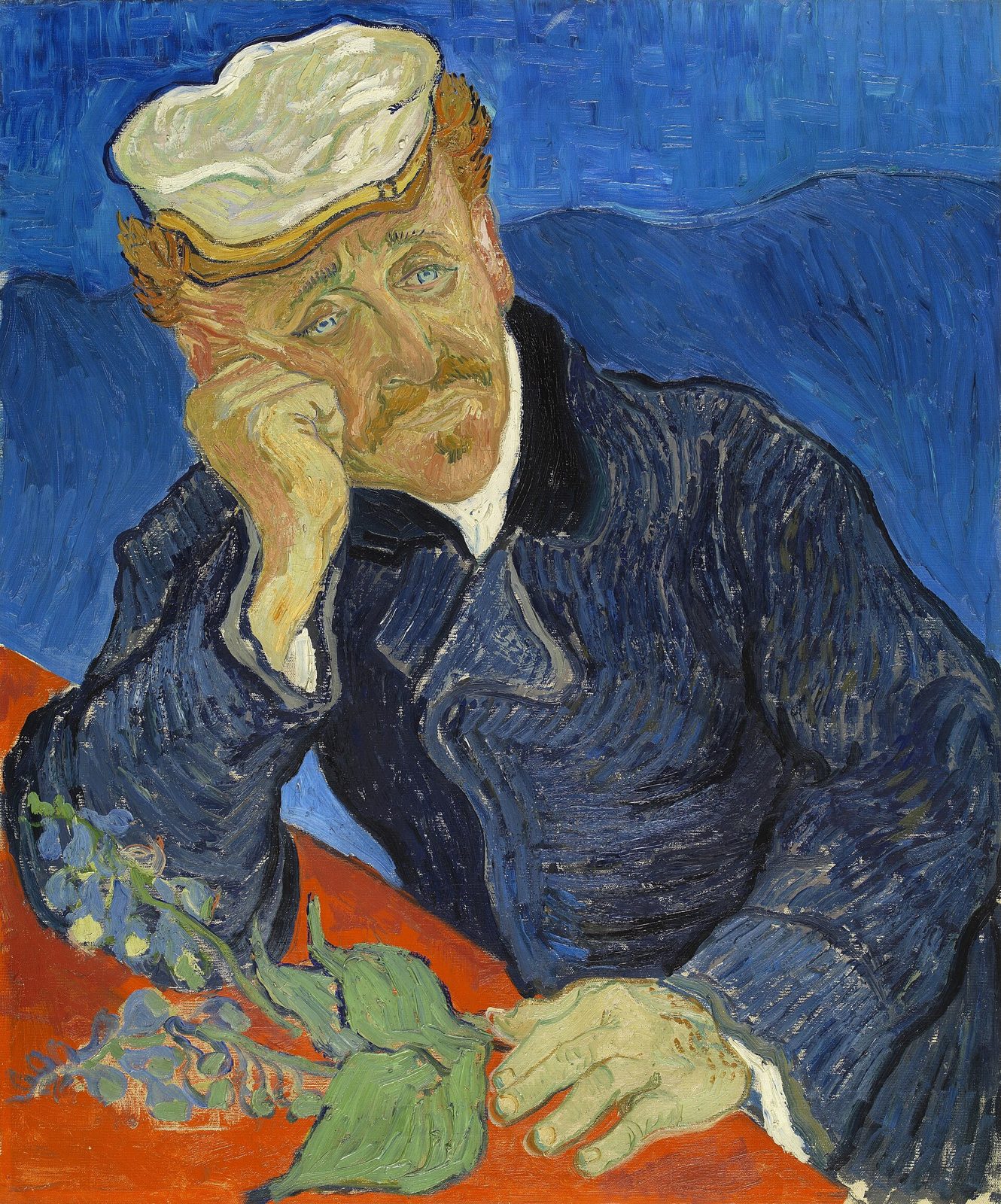
🎧 This work has audio narration — listen in the appTake a moment to really look at Vincent van Gogh's "Portrait of Dr. Gachet." Notice how the doctor’s gaze seems to pierce through the canvas, filled with a mix of melancholy and compassion. His vibrant blue coat and the lush green background create a striking contrast, drawing your eye to his thoughtful expression. Painted in 1890, just weeks before van Gogh's tragic death, this portrait captures a moment of vulnerability and connection. The doctor was not only a physician but also a supporter of van Gogh, embodying the empathy that the artist desperately sought in his life. Van Gogh painted this piece during his time in Auvers-sur-Oise, where he was under Gachet's care. It’s a poignant reminder of the bond between artist and subject, and how art can serve as a window into the soul. As you stand here, think about the emotions that this portrait evokes. What do you see in Dr. Gachet's eyes?
Vincent van Gogh was a Dutch Post-Impressionist painter born on March 30, 1853, in Zundert. He is renowned for his vibrant use of color and expressive brushwork, which laid the groundwork for modern art. Despite creating around 2,100 artworks in just over a decade, including 860 oil paintings, he struggled with mental illness and poverty throughout his life. His early career as an art dealer was marked by disillusionment, leading him to pursue painting in 1881.
Van Gogh's intense passion for art was evident in his correspondence with his brother Theo, who provided emotional and financial support. His works evolved significantly after moving to Paris in 1886, where he mingled with avant-garde artists. His time in Arles in 1888 marked a peak in his creativity, producing iconic series like sunflowers and wheat fields.
Tragically, van Gogh's life ended in suicide at 37, after years of battling his demons. Initially unrecognized, he gained fame posthumously, becoming a symbol of the tortured artist. His legacy influenced movements like Fauvism and Expressionism, securing his place as one of the most significant figures in art history.
Vincent van Gogh's "Portrait of Dr. Gachet" was painted in 1890, during a turbulent period in his life. This work was commissioned by Dr. Paul Gachet, who was not only van Gogh's physician but also a supporter of his art. The painting made its public debut at the Salon des indépendants in Paris in 1905, where it was part of a retrospective of van Gogh's work. The reception was mixed, as many viewers were still grappling with van Gogh's unconventional style. Over the years, the portrait changed hands among the Gachet family before eventually being sold to various collectors. Its provenance is a testament to its significance, as it remained closely tied to the doctor who cared for van Gogh in his final days.
As you gaze at this portrait, pay attention to van Gogh's bold brushwork. The strokes are thick and expressive, almost as if they’re alive, conveying a sense of urgency and emotional depth. Notice how the vibrant colors—especially the blues and greens—create a striking contrast that draws your eye to Dr. Gachet's face. The way van Gogh layered the paint gives the surface a textured quality, inviting you to feel the weight of the moment captured on canvas. The composition is intimate; the doctor is positioned slightly off-center, which enhances the feeling of connection between him and the viewer. This choice reflects van Gogh's desire to convey not just a likeness, but the essence of Gachet's character and the emotional landscape they both inhabited.
Vincent van Gogh's 'Portrait of Dr. Painted in the last months of Van Gogh's life, this work captures the deep emotional turmoil of its subject, Dr. Gachet, who was both a physician and a friend to Van Gogh. The expressive brushwork and bold colors convey a sense of intimacy and psychological depth that influenced later movements like Expressionism. Artists such as Edvard Munch and German Expressionists drew inspiration from Van Gogh's ability to merge emotion with form, making this portrait a cornerstone of modern art. Remember, this painting isn't merely about a doctor; it's about the human condition, a reflection of Van Gogh's own struggles and a testament to the power of art to convey profound feelings.
Gachet" is that it was once sold for a staggering sum of 82.5 million dollars in 1990, making it one of the most expensive paintings ever sold at auction. This sale underscored not just the painting's artistic value, but also the growing recognition of van Gogh as a pivotal figure in art history, transforming him from a misunderstood genius during his lifetime to a celebrated icon.