 Image: Phyrexian · Chatsam · Chatsam · ketrin1407 · Unknown authorUnknown author
Arion sitting on the dolphin
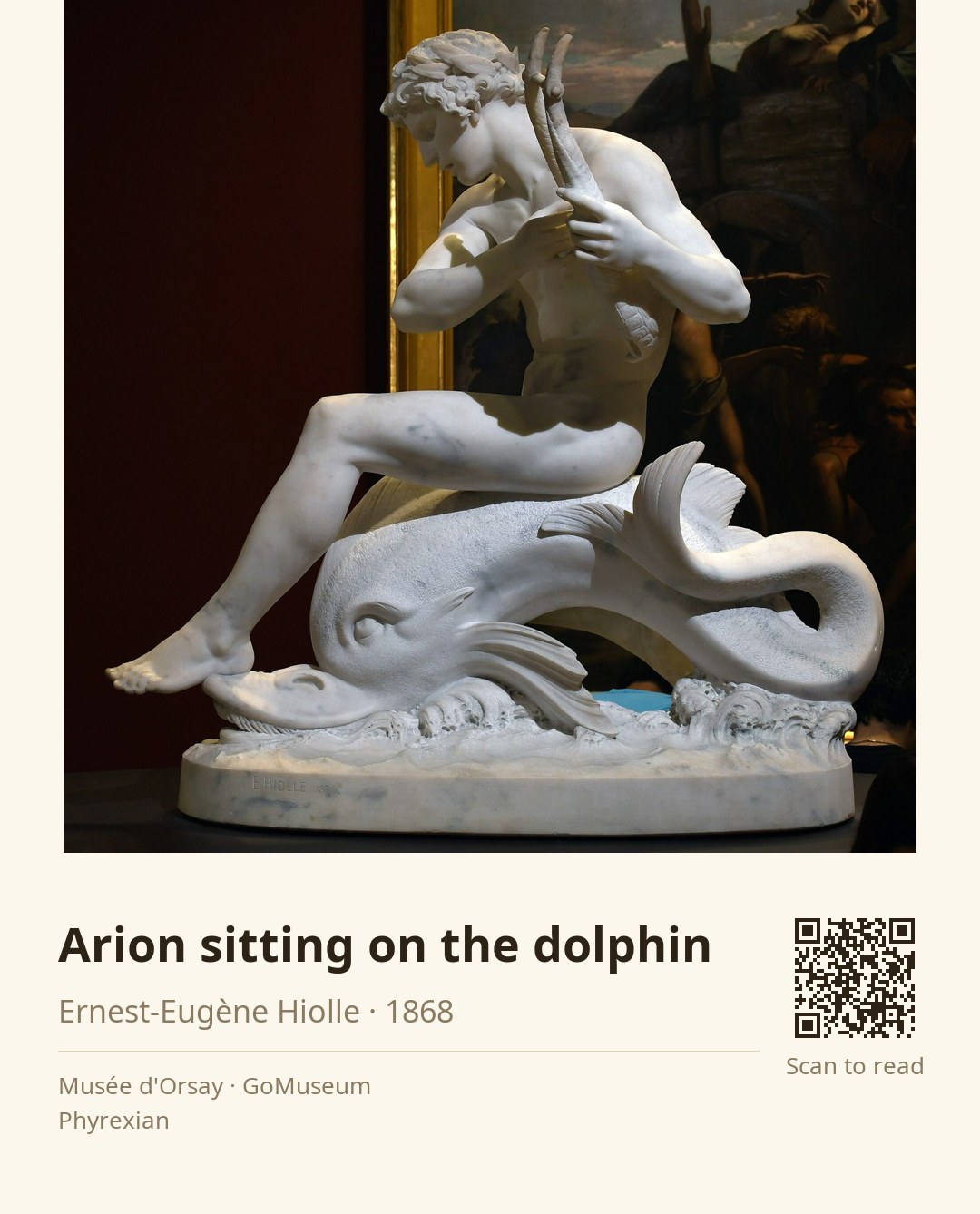
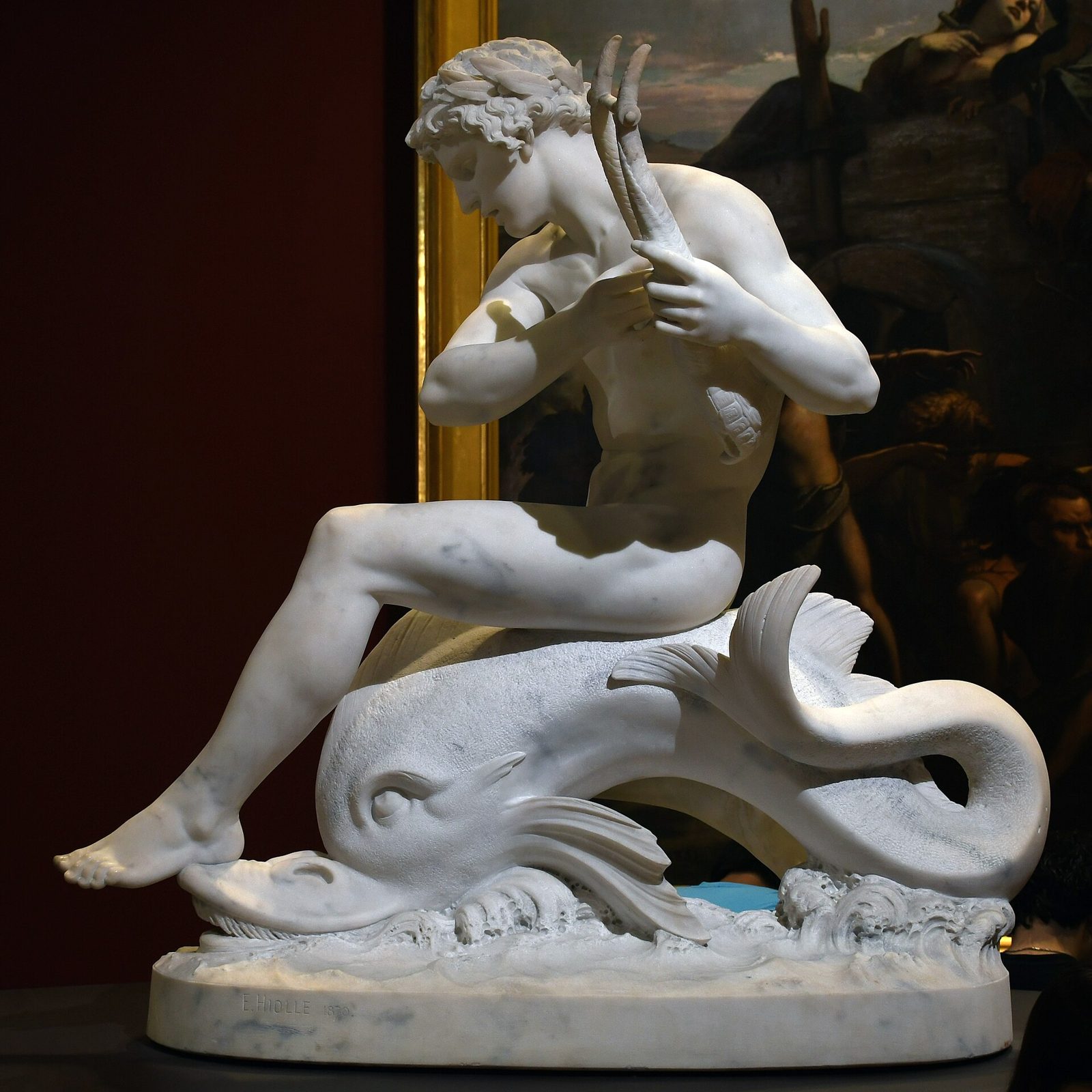
🎧 This work has audio narration — listen in the appThe figure, nude and adorned with curly hair, holds a lyre, his gaze directed downward, as if lost in the music he creates. The dolphin beneath him is intricately carved, its flowing fins and curved tail suggesting a sense of movement, as though it is rising from the waves.
This dynamic composition reflects the harmony between man and nature, emphasizing the mythological narrative of Arion's escape from danger, aided by the dolphin. The smooth marble surface enhances the delicate details of both the figure and the dolphin, showcasing Hiolle's skill in capturing the essence of his subjects. The positioning of Arion, with one leg bent and resting on the dolphin's head, creates a sense of balance and unity, inviting viewers to appreciate the interplay of form and emotion.
Ernest-Eugène Hiolle, a French sculptor born in 1834, created this work in 1868, marking a significant moment in his career as he began to gain recognition for his classical and allegorical figures.
Ernest-Eugène Hiolle was a prominent French sculptor born on May 5, 1834, in Valenciennes. He trained at the École Académique and later at the École des Beaux-Arts in Paris under notable mentors. Hiolle gained recognition early in his career, becoming a runner-up for the Prix de Rome in 1856 and winning it in 1863. His work, characterized by classical and allegorical themes, was showcased at the Salon from 1866, where he received multiple medals.
Throughout his career, Hiolle contributed to significant public projects during the French Third Republic, including sculptures for the Palais Garnier and the Hôtel de Ville in Paris. His notable works include the bronze busts of François Jouffroy and Jean-Baptiste Carpeaux, as well as the statue of General Foy. In 1873, he was honored as a Chevalier of the Légion d'honneur, and he received a medal of honor at the 1878 Exposition Universelle.
Hiolle's legacy includes mentoring future artists like Antonin Carlès. He passed away on October 5, 1886, leaving behind a rich body of work that reflects the artistic spirit of his time. His contributions to sculpture remain significant in the context of 19th-century French art.
Crafted from smooth marble, this sculpture showcases Hiolle's exceptional skill in carving. The delicate details of Arion's curly hair and the intricate features of the dolphin reveal a mastery of texture and form. You can almost feel the fluidity of the dolphin's fins and the gentle curves of its body, suggesting movement as if it’s about to leap from the waves. The polished surface enhances the lifelike quality of both figures, inviting you to appreciate the artistry involved in transforming a solid block of stone into such a dynamic scene.
After 1870, he contributed to major public building projects in France, including sculptures for the Palais Garnier and the Hôtel de Ville in Paris.
One of Hiolle's notable students was Antonin Carlès.