Whistler's Mother
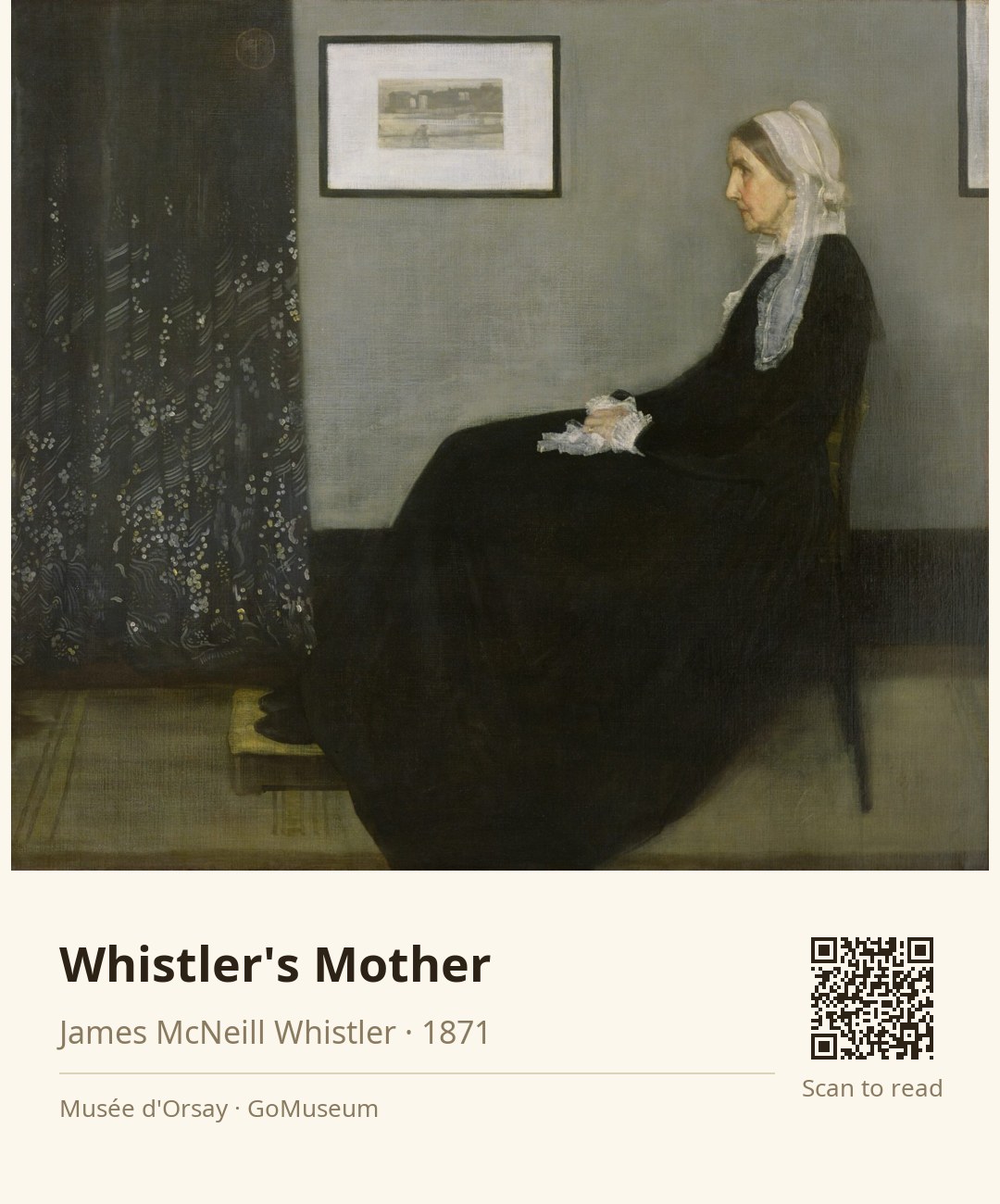
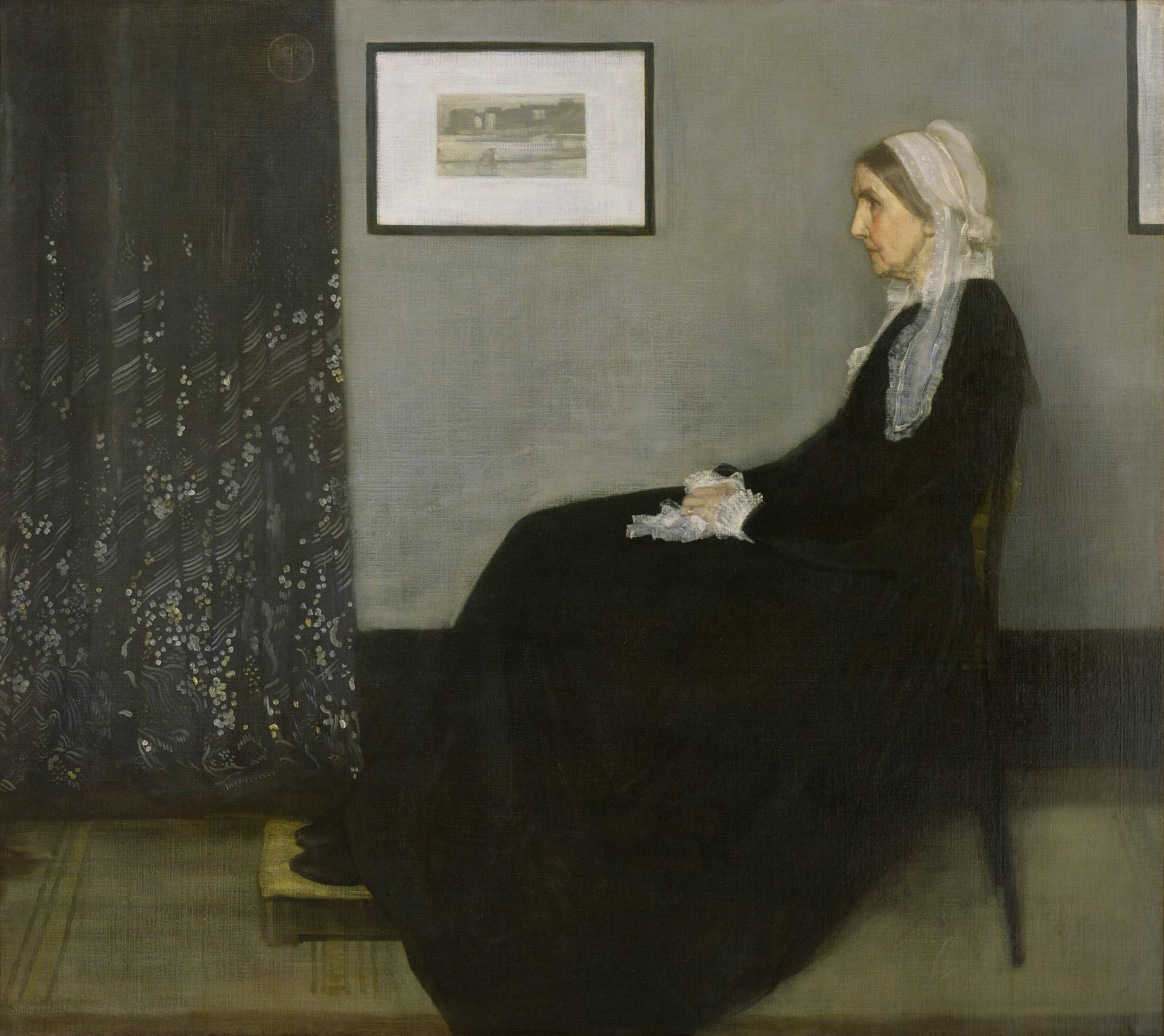
🎧 This work has audio narration — listen in the appTake a moment to really look at this painting, often called Whistler's Mother. Notice the serene expression on her face and the way her dark dress contrasts with the soft, muted tones of the background. The simplicity of her profile, sitting calmly in a chair, draws you in, doesn’t it? These details matter because they reflect Whistler's intention to create an "arrangement" rather than just a portrait. By focusing on the harmony of colors and forms, he elevates the subject—his own mother—into something more universal, almost musical. This approach was quite radical for its time, as Victorian audiences expected more traditional representations. Whistler painted this in 1871 while living in London, and it was initially met with skepticism. The title, "Arrangement in Grey and Black No. 1," was meant to emphasize the aesthetic composition over the identity of the sitter. However, it quickly became known as Whistler's Mother, a name that has stuck and transformed the painting into an icon of motherhood. As you stand here, think about how this image has transcended its time, becoming a symbol of resilience and familial love. What emotions does it evoke for you?
James Abbott McNeill Whistler was an American painter and printmaker born on July 10, 1834, in Lowell, Massachusetts. He spent much of his life in the United Kingdom, where he became a pivotal figure in the art world, advocating for "art for art's sake." Whistler's work is characterized by a focus on tonal harmony, often drawing parallels between painting and music, as seen in his use of titles like "arrangements" and "nocturnes." His most famous piece, "Arrangement in Grey and Black No. 1," commonly known as "Whistler's Mother," is a celebrated portrayal of motherhood.
Whistler's early life was marked by a tumultuous childhood, with a father who was a railroad engineer and a mother who encouraged his artistic pursuits. He studied at the Imperial Academy of Arts in St. Petersburg before moving to London, where he became involved with the avant-garde art scene. His personality was a blend of delicate artistry and combative public persona, symbolized by his signature butterfly motif.
Throughout his career, Whistler's aesthetic theories and friendships with other artists and writers significantly influenced both the art community and broader cultural movements of his time. His legacy endures as a champion of artistic integrity and innovation, positioning him as a key figure in the transition from traditional to modern art.
This painting, known as Whistler's Mother, was created by James McNeill Whistler in 1871 while he was living in London. The work was initially met with skepticism when it was first exhibited at the Royal Academy of Art in 1872, where it came perilously close to rejection. 1' was a bold statement, emphasizing the aesthetic composition over the identity of the sitter—his own mother, Anna McNeill Whistler. This unconventional approach did not sit well with the Victorian audience, leading to the addition of the explanatory title 'Portrait of the Painter's Mother.' The painting was eventually acquired by the French state in 1891 and has since found its home at the Musée d'Orsay in Paris. Interestingly, after its initial exhibition, the painting became a significant point of contention between Whistler and the British art establishment, marking a rift that would influence his future works and exhibitions. Over the years, it has been displayed in various prestigious venues, including the Royal Academy and the Musée du Luxembourg, and has become an enduring symbol of motherhood and resilience.
As you gaze at this painting, take a moment to appreciate Whistler's masterful technique. The brushwork is deliberate yet fluid, creating a sense of tranquility that envelops the viewer. Notice how the muted color palette of greys and blacks harmonizes with the soft, diffused light, casting a gentle glow on Anna's profile. The composition is strikingly simple, yet it draws you in with its depth. Whistler’s choice to depict his mother seated in profile, with her feet resting on a footstool, adds a sense of intimacy and comfort. The background, painted in soft tones, recedes, allowing Anna to emerge as the focal point. The subtle interplay of light and shadow enhances the three-dimensionality of her figure, making her presence almost palpable. Whistler’s design of the frame itself, which he crafted, further complements the work, creating a cohesive visual experience that elevates the subject beyond mere portraiture.
Whistler's Mother, or Arrangement in Grey and Black No. Whistler's choice to title the work as an 'Arrangement' rather than a straightforward portrait challenged the conventions of his time, emphasizing composition and color harmony over mere likeness. This approach laid the groundwork for movements like Tonalism, influencing artists who sought to convey mood and atmosphere rather than just physical representation. The painting's iconic status, especially in America, speaks to its universal themes of motherhood and resilience, making it a cultural touchstone. Its legacy continues to resonate, inspiring countless artists and appearing in popular culture, from stamps to films, cementing its place as a symbol of familial love and endurance.
One intriguing anecdote about Whistler's Mother is that Anna McNeill Whistler was initially a last-minute substitute for another model who couldn't make it to the studio. Whistler had originally envisioned painting a standing figure, but due to his mother's discomfort, she posed seated instead.
Whistler originally titled the painting 'Arrangement in Grey and Black' to emphasize its aesthetic composition, akin to a musical arrangement, rather than focusing on the identity of the sitter, his mother.
The initial skepticism and near rejection of the painting at the Royal Academy deepened Whistler's rift with the British art establishment, leading him to submit no further works for their approval.