Starry Night Over the Rhone
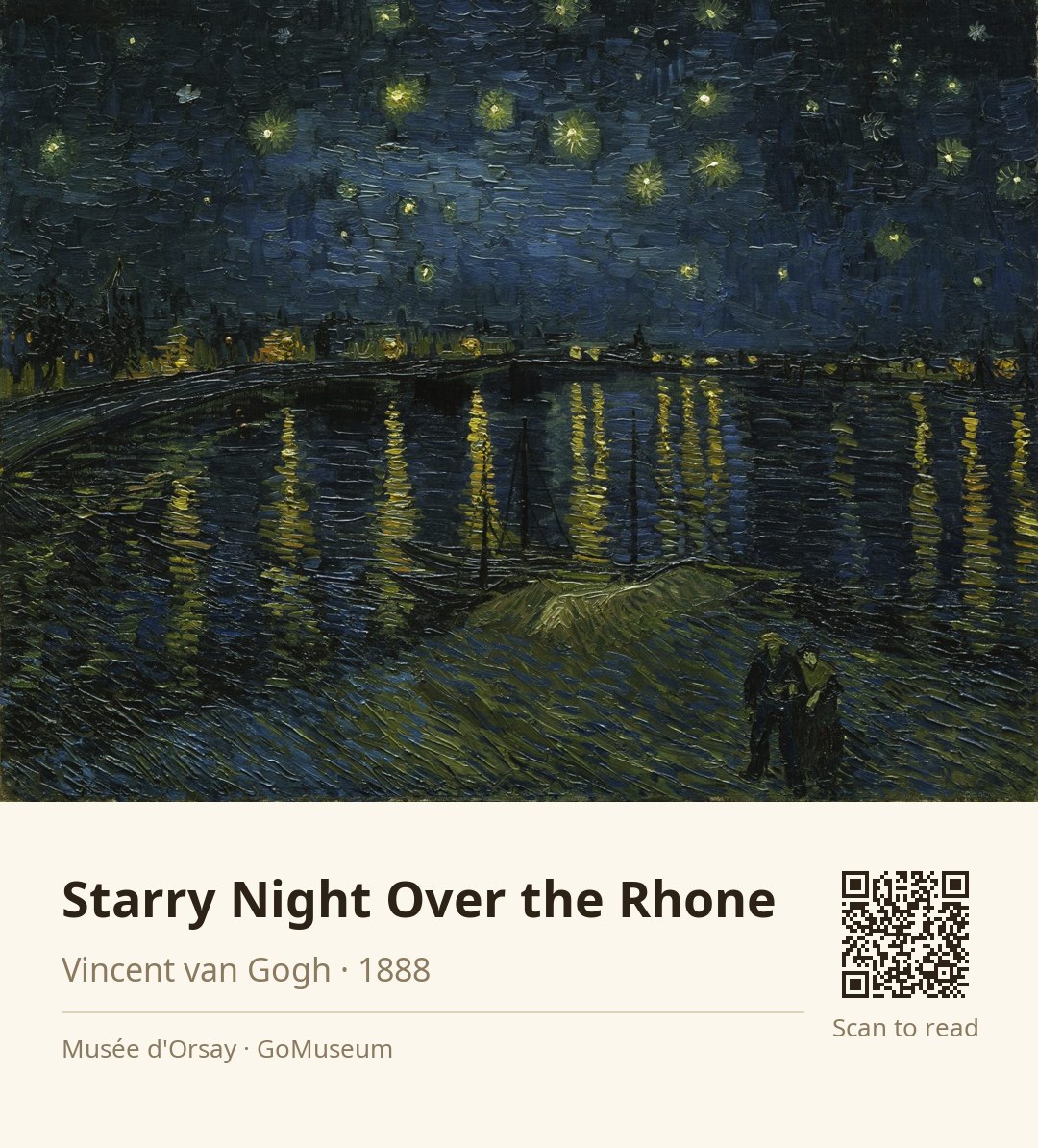
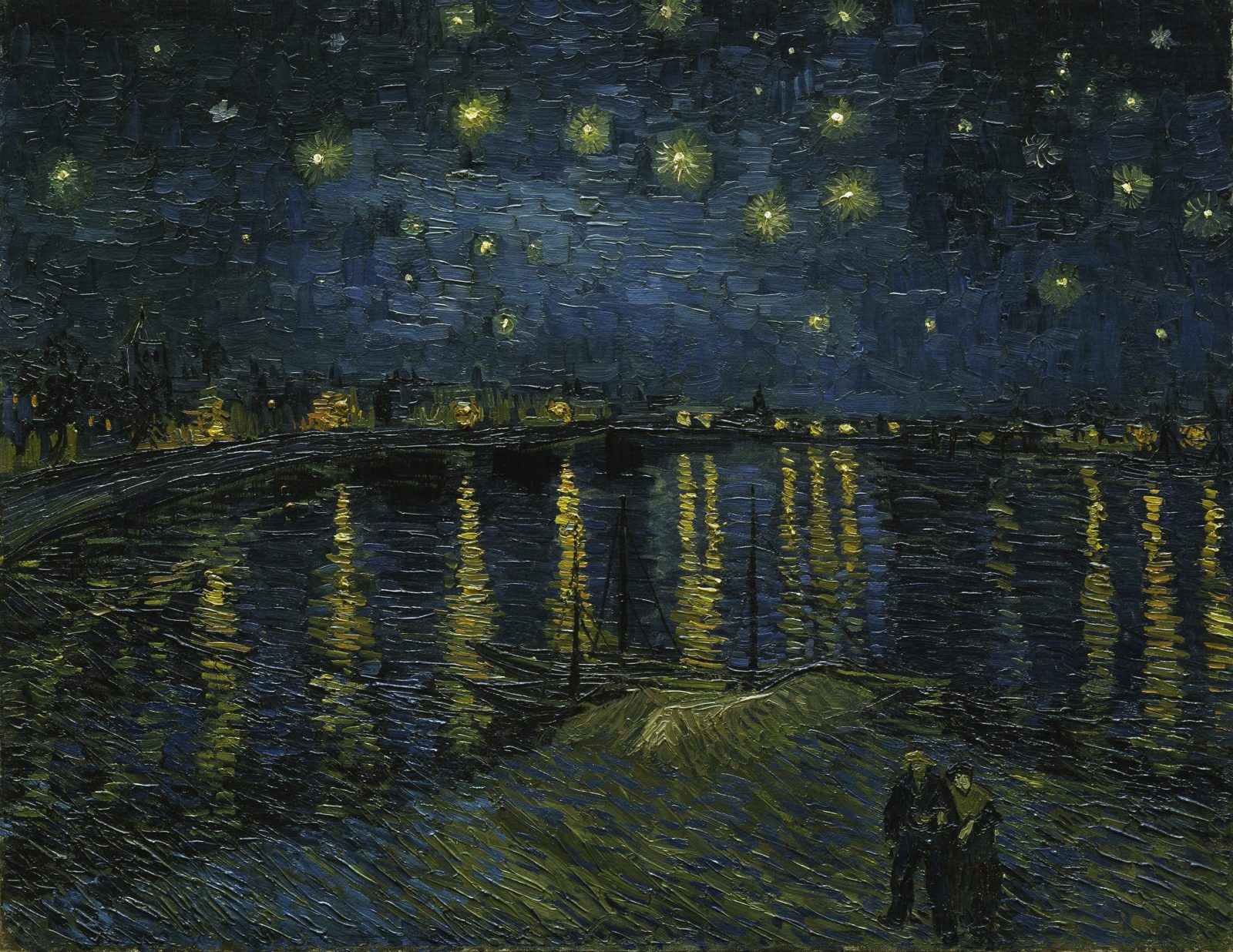
🎧 This work has audio narration — listen in the appLook closely at the shimmering water in Vincent van Gogh's "Starry Night Over the Rhône." Notice how the reflections of the gas lights dance across the surface, creating a magical interplay of color. The deep royal blue of the river contrasts beautifully with the vibrant yellows and russet tones of the lights, almost as if the stars themselves are spilling down into the water. These details matter because they reveal Van Gogh's fascination with light and color, especially at night. He believed that the night sky was even more richly colored than the day, filled with violets, blues, and greens. This painting is not just a depiction of a scene; it’s an exploration of how light transforms the world around us, inviting viewers to experience the beauty of the night in a way that feels almost otherworldly. Painted in 1888 while he was living in Arles, this work reflects a pivotal moment in Van Gogh's life. He was experimenting with new techniques and ideas, pushing the boundaries of traditional painting. The two lovers in the foreground, strolling along the riverbank, add a sense of intimacy and connection to this vibrant scene, grounding the celestial beauty in human experience. As you take in this masterpiece, think about how Van Gogh merged the earthly and the celestial. What emotions does this blend evoke for you? How does the night sky, with its stars and lights, resonate with your own experiences?
Vincent van Gogh was a Dutch Post-Impressionist painter born on March 30, 1853, in Zundert. He is renowned for his vibrant use of color and expressive brushwork, which laid the groundwork for modern art. Despite creating around 2,100 artworks in just over a decade, including 860 oil paintings, he struggled with mental illness and poverty throughout his life. His early career as an art dealer was marked by disillusionment, leading him to pursue painting in 1881.
Van Gogh's intense passion for art was evident in his correspondence with his brother Theo, who provided emotional and financial support. His works evolved significantly after moving to Paris in 1886, where he mingled with avant-garde artists. His time in Arles in 1888 marked a peak in his creativity, producing iconic series like sunflowers and wheat fields.
Tragically, van Gogh's life ended in suicide at 37, after years of battling his demons. Initially unrecognized, he gained fame posthumously, becoming a symbol of the tortured artist. His legacy influenced movements like Fauvism and Expressionism, securing his place as one of the most significant figures in art history.
Vincent van Gogh's "Starry Night Over the Rhône" was painted in September 1888, during a transformative period in his life while he was living in Arles, France. This painting was created just a short walk from the Yellow House, where he resided and worked. Van Gogh was deeply fascinated by the effects of light at night, which he believed to be richer and more vibrant than during the day. He shared his vision with his brother Theo in a letter, describing the colors he intended to use, from aquamarine skies to russet gold reflections in the water. The painting was first exhibited in 1889 at the Société des Artistes Indépendants in Paris, alongside another of his works, "Irises." Despite its current fame, it initially received little attention, reflecting the struggles Van Gogh faced in gaining recognition during his lifetime. Today, it resides in the Musée d'Orsay, a testament to his enduring legacy and the evolution of his artistic journey, which was often marked by personal turmoil and a relentless pursuit of beauty in the world around him.
As you gaze at "Starry Night Over the Rhône," let’s delve into the technique that brings this scene to life. Van Gogh's brushwork is both expressive and dynamic, with thick, swirling strokes that create a sense of movement in the sky. Notice how he employs a palette of deep blues and vibrant yellows, contrasting the royal blue of the river with the warm glow of gas lights. This interplay of color is not just for aesthetics; it captures the essence of night illuminated by artificial light, a novel experience at the time. The composition is structured with the horizon line placed low, allowing the expansive sky to dominate the canvas. The two lovers in the foreground are painted with a sense of intimacy, grounding the celestial beauty in human experience. Van Gogh's choice to merge the earthly and celestial planes gives the viewer a feeling of connection to both the natural and the man-made, inviting you to ponder the relationship between humanity and the universe.
Painted in 1888, it captures the enchanting reflections of gas lights on the Rhône River, merging earthly and celestial realms. This piece is not just a landscape; it's a vivid exploration of night, a theme that would resonate through modern art movements. Van Gogh's technique of depicting stars as floral forms was groundbreaking, inspiring the likes of the Fauves and German Expressionists. His emotional intensity and unique brushwork laid the groundwork for Expressionism, making this painting a cornerstone in the evolution of modern art. Remember, this is where Van Gogh began to transform the night into a vibrant tapestry of color, changing how artists perceive and portray the world around them.
One intriguing detail about "Starry Night Over the Rhône" is that Van Gogh painted it while standing on the banks of the Rhône, just a minute or two from his home. Interestingly, the stars depicted in the painting, particularly the Ursa Major constellation, would not have been visible from that specific vantage point. Instead, Van Gogh cleverly merged his view of the earthly landscape with a celestial sky, creating a dreamlike quality that transcends reality. This artistic choice highlights his imaginative approach to painting, where he prioritized emotional resonance over strict adherence to the observable world.
Van Gogh's approach to painting the stars in 'Starry Night Over the Rhône' was innovative; he depicted them as flowers in the night sky, using small discs surrounded by petal-like strokes to symbolize their brightness.
Van Gogh painted 'Starry Night Over the Rhône' just a short walk from his home, yet he creatively merged his earthly view with a celestial sky, depicting stars that would not have been visible from that specific vantage point.