 Image: Sailko
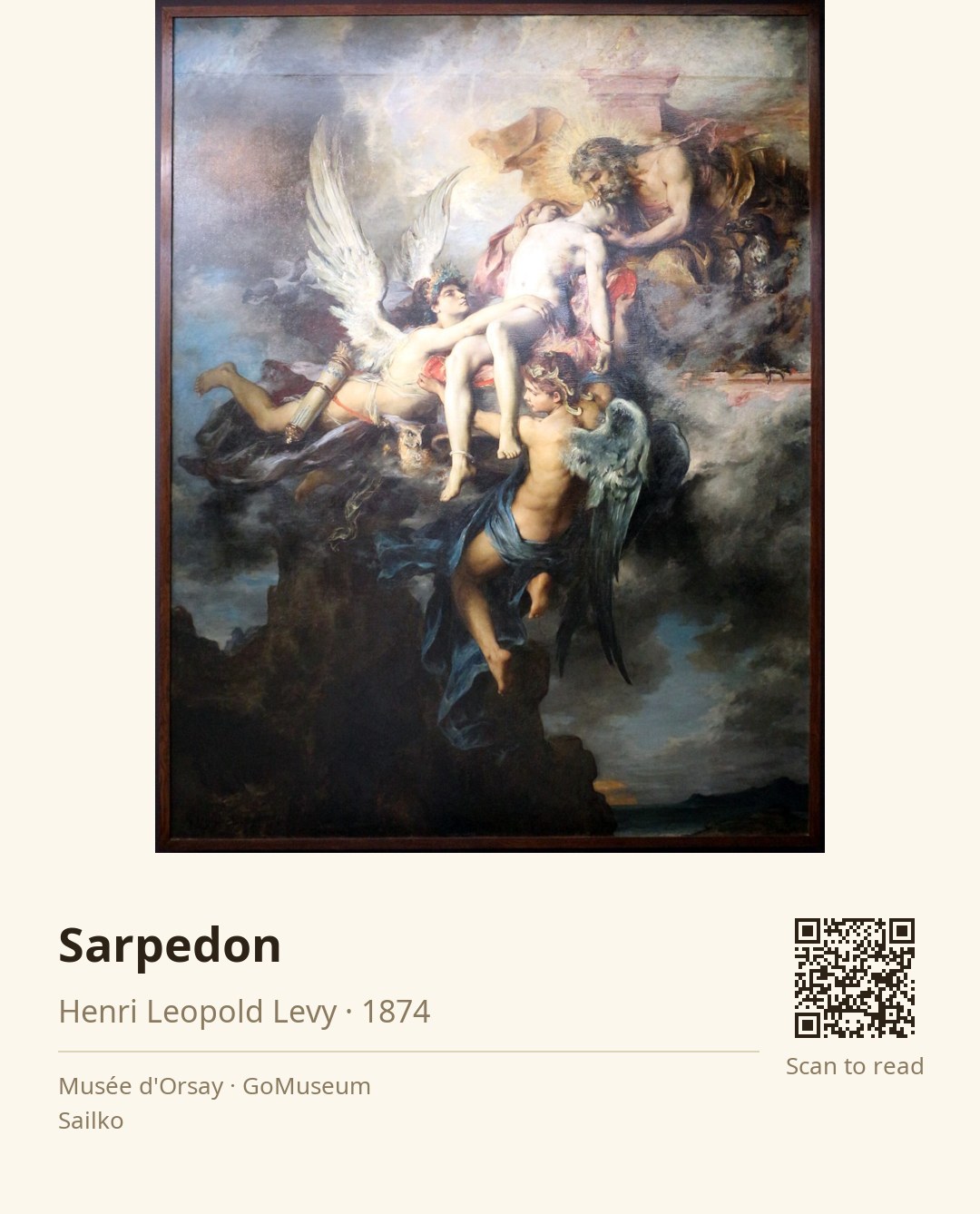
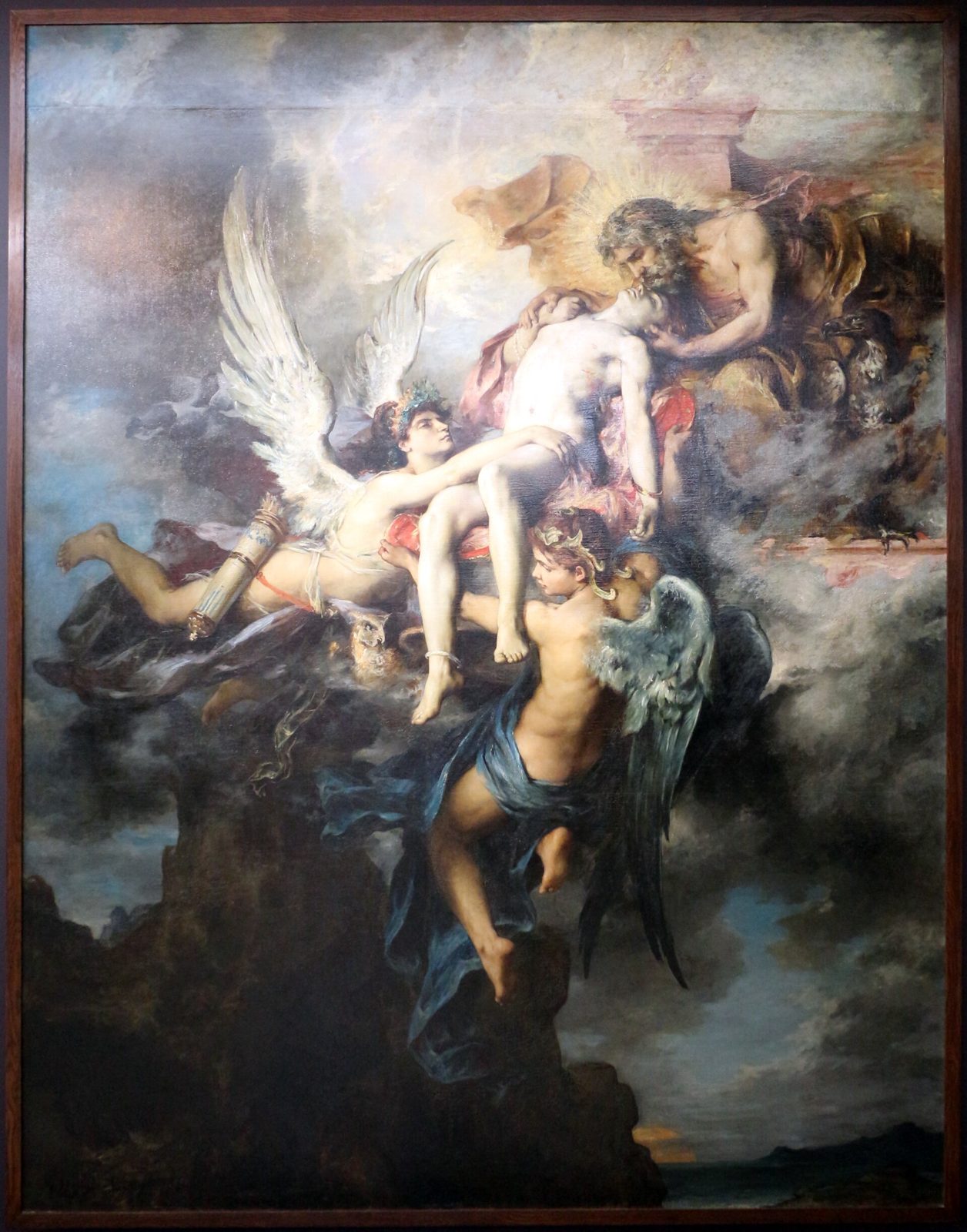
Take a moment to really absorb the scene in front of you. This is "Sarpedon," painted by Henri Léopold Lévy in 1874, and it’s a striking portrayal of a mythological moment that captures the essence of life and death. Notice the way Sarpedon’s lifeless body is cradled by the winged figures—those delicate, almost ethereal forms that seem to float in the air. Their wings are not just decorative; they symbolize the transition between the mortal realm and the divine. These details matter because they evoke a deep emotional response, inviting you to reflect on the fragility of life. Lévy’s choice to depict Sarpedon in such a tender manner speaks to the universal themes of loss and mourning, making this painting resonate with anyone who has experienced grief. Lévy was known for his mythological subjects, and he created this work during a time when artists were exploring the emotional depths of their characters, influenced by Romanticism and Symbolism. This piece was showcased at the Salon des artistes français in Paris, where it garnered significant attention. As you stand here, think about the stories that linger in this artwork. What emotions does it stir in you? How does it change your perception of myth and mortality?
Henri-Léopold Lévy was a French painter born on September 23, 1840, in Nancy, and he passed away on December 29, 1904, in Paris. Coming from a family of artisans, he began his artistic journey at the École des beaux-arts de Paris, where he trained under notable artists such as François-Édouard Picot and Alexandre Cabanel. Lévy gained recognition for his mythological and biblical themes, earning his first-class medal at the Salon in 1865 with his poignant depiction of Hecuba finding her son’s body.
His works often reflected a blend of classical nobility and modern color richness, influenced by romanticism and symbolism. Despite facing anti-Semitism, especially after the Dreyfus Affair, he remained committed to his identity, refusing to alter his name for commercial gain. Lévy's contributions extended beyond painting; he created significant murals for public buildings and taught several notable students, fostering a legacy in art education.
His career was marked by accolades, including the Chevalier of the Legion of Honor in 1872. Lévy's character was described as modest and wise, earning him respect and affection from peers and students alike. His final work, left unfinished, is preserved in the Musée de Nancy. Today, he is remembered as a significant figure in 19th-century French art, bridging classical themes with modern expression.
Henri Léopold Lévy's 'Sarpedon' was completed in 1874 and first exhibited at the Salon des artistes français in Paris, where it was assigned the number 1206. This event was a significant moment for Lévy, as the Salon was a prestigious platform for artists to showcase their work. The painting later appeared at the 1878 Exposition Universelle in Paris, further solidifying its reputation. The reception of 'Sarpedon' was notably positive, drawing attention for its emotional depth and technical skill.
As you gaze at 'Sarpedon,' take a moment to appreciate Lévy's masterful brushwork. The way he layers oil paint creates a sense of depth and texture, particularly in the ethereal wings of the figures. Notice how the light plays across the canvas, illuminating Sarpedon's lifeless body while casting shadows that evoke a somber mood. The color palette is carefully chosen; soft blues and whites contrast with deeper hues, enhancing the emotional weight of the scene. The composition draws your eye toward the central figures, creating a dynamic flow that guides your gaze through the narrative. Lévy's technique reflects a blend of Romanticism and Symbolism, allowing the viewer to feel the tension between life and death.
Did you know that Henri Léopold Lévy's painting 'Sarpedon' was first shown at the Salon des artistes français in 1874? What’s fascinating is that this piece not only earned him critical acclaim but also went on to be featured at the 1878 Exposition Universelle in Paris. Imagine the buzz in the air as art lovers flocked to see this mythological scene, where Sarpedon, the son of Zeus, is depicted in a moment that captures both death and the ethereal beauty of sleep. It’s a testament to Lévy’s ability to weave complex themes into his work, making it resonate with audiences then and now.
His early accolades, including a first-class medal for his portrayal of Hecuba, established him as a prominent artist, but despite his success, he faced challenges due to rising anti-Semitism in France after the Dreyfus Affair.
In addition to his canvases, Lévy created several significant murals, including scenes from the life of Saint Denis at the Church of Saint-Merri and a 'Coronation of Charlemagne' at the Panthéon, showcasing his versatility as an artist.