Dance at the Moulin Rouge
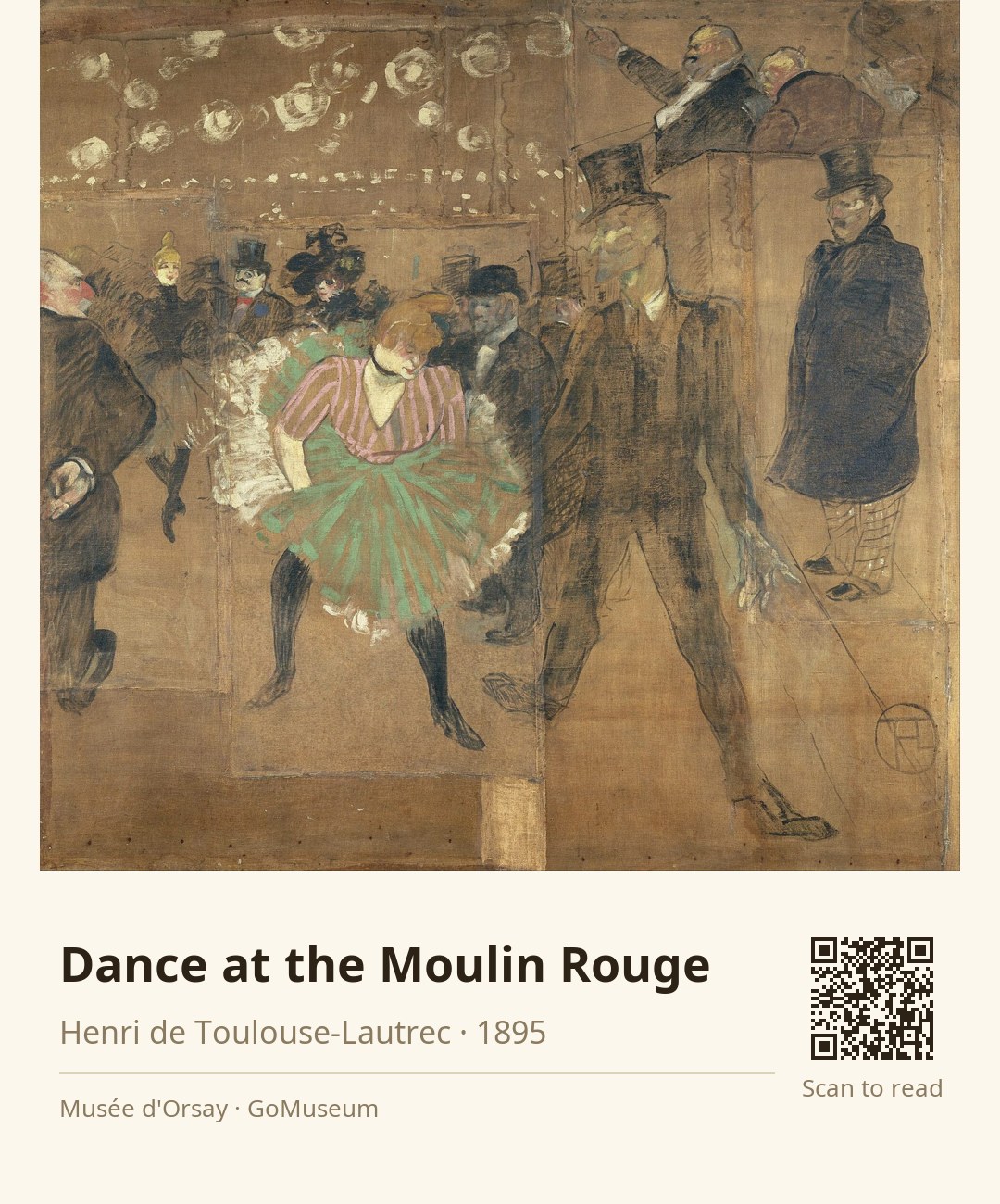
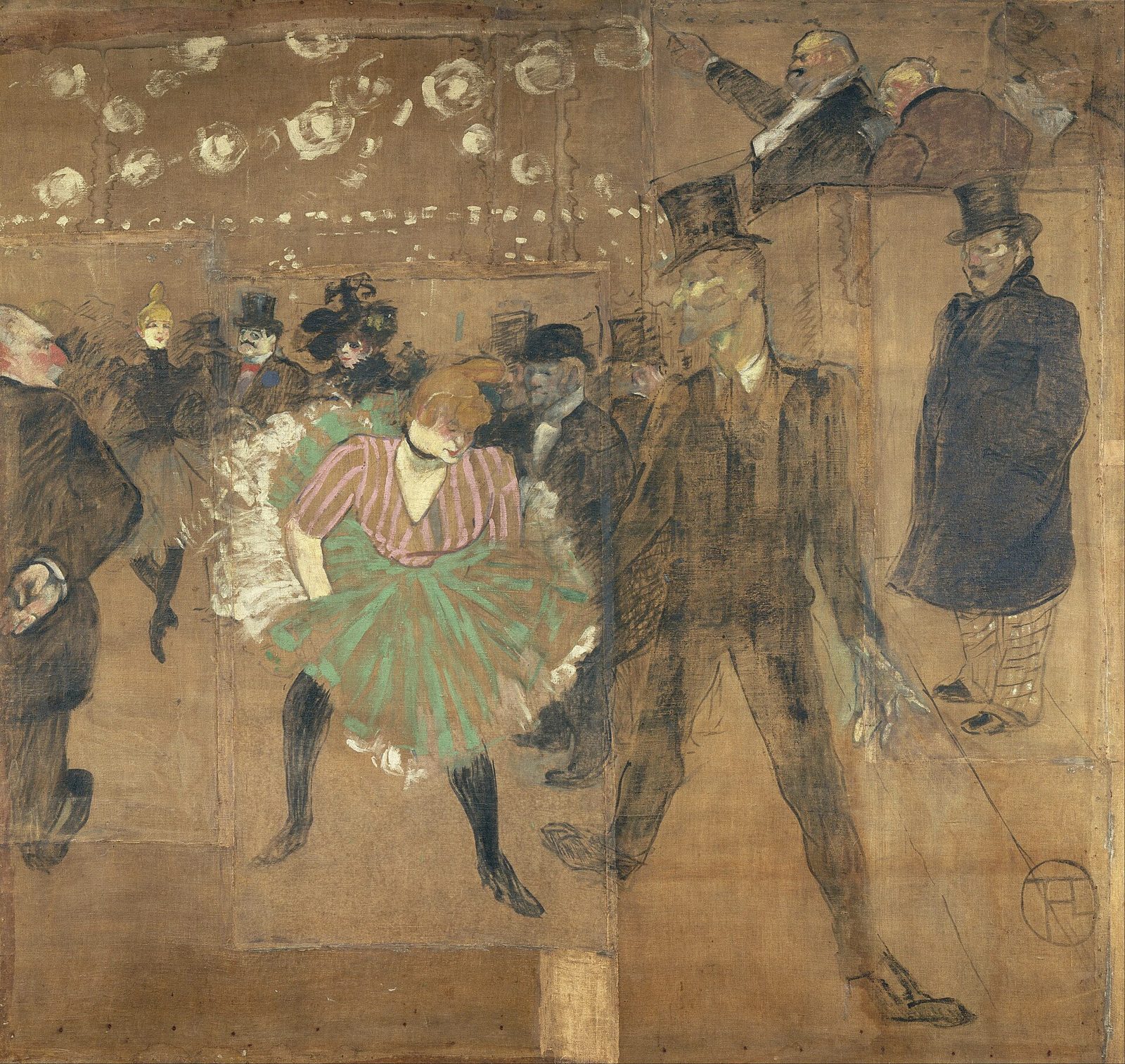
🎧 This work has audio narration — listen in the appTake a moment to soak in the vibrant energy of "Dance at the Moulin Rouge." Look closely at the figures in the foreground—can you see La Goulue, her flamboyant dress swirling as she dances? And just behind her, there’s Valentin le Désossé, striking a pose that captures the essence of the lively Parisian nightlife. These details matter because they encapsulate the spirit of the Belle Époque, a time when Paris was the epicenter of art, dance, and revelry. Toulouse-Lautrec didn’t just paint a scene; he immortalized the electric atmosphere of the Moulin Rouge, where the boundaries between performer and audience blurred, and everyone was swept up in the excitement. Created in 1895, this painting is part of a diptych intended for a fairground booth, showcasing Toulouse-Lautrec's unique ability to blend commercial art with fine art. His own experiences as a member of the bohemian elite in Montmartre deeply influenced his work, allowing him to capture the essence of nightlife with an authenticity that resonates even today. As you stand here, think about what it must have been like to dance in a place like this. What stories do you think these characters could tell if they could speak?
Henri de Toulouse-Lautrec, born on November 24, 1864, in Albi, France, was a pivotal figure in the Post-Impressionist movement. Despite his aristocratic background, his life was marked by physical challenges, including a genetic disorder that stunted his growth. This condition shaped his unique perspective and deep empathy for the marginalized, particularly the vibrant characters of Paris's Belle Époque, including prostitutes and performers.
Toulouse-Lautrec's artistic journey began in earnest when he moved to Paris, where he immersed himself in the bohemian lifestyle of Montmartre. His work, characterized by bold colors and dynamic compositions, captured the essence of nightlife, cabarets, and the human condition. He became known for his posters and illustrations, which brought the world of the Moulin Rouge to life. His relationships with fellow artists, such as Vincent van Gogh, and his romantic entanglements, notably with Suzanne Valadon, influenced his creative output.
His legacy endures as he is celebrated for his innovative approach to art and his ability to convey the spirit of an era. Toulouse-Lautrec's works continue to resonate, offering a glimpse into the exuberance and struggles of a society on the brink of modernity, solidifying his place in art history as a masterful chronicler of the human experience. He passed away on September 9, 1901, leaving behind a rich body of work that remains influential to this day.
Henri de Toulouse-Lautrec's 'Dance at the Moulin Rouge' was created in 1895 as part of a diptych intended for a fairground booth. The painting made its debut at the Salon d'automne in Paris in 1904, where it was met with intrigue and admiration. Over the years, it has been exhibited in various prestigious venues, including the Musée des Arts Décoratifs in 1910 and the Manzi-Joyant Gallery in 1914. Its journey continued until it found its home at the Musée d'Orsay in 1929, where it was reconstructed from fragments acquired separately. The painting reflects not just a moment in time but the very essence of the Belle Époque, a period marked by artistic and cultural flourishing in Paris.
As you gaze at 'Dance at the Moulin Rouge,' notice the dynamic brushwork that seems to pulse with life. Toulouse-Lautrec employed a technique that captures movement, using quick, energetic strokes to convey the excitement of the dance. The vibrant colors—especially the striking reds and yellows—draw your eye and evoke the lively atmosphere of the cabaret. The composition is cleverly structured, with La Goulue and Valentin le Désossé positioned centrally, creating a focal point that pulls you into the scene. The almost square format adds to the intimacy of the experience, making you feel as though you're part of the crowd. The way light interacts with the figures, casting shadows and highlighting their forms, enhances the sense of depth and realism, inviting you to step into this world of revelry.
One fascinating tidbit about 'Dance at the Moulin Rouge' is that it was originally created for a fairground booth, a setting that might seem at odds with its artistic merit. This context highlights Toulouse-Lautrec's ability to bridge the gap between popular culture and high art, showcasing his keen understanding of the entertainment world and the commercial aspects of art during his time.
Toulouse-Lautrec's aristocratic background and subsequent physical disabilities led him to embrace the bohemian lifestyle of Montmartre, where he found inspiration in the vibrant nightlife and the lives of performers, particularly those in cabarets and brothels.
Created for a fairground booth, the painting's lively and dynamic style reflects the need to attract attention in a bustling environment, showcasing Toulouse-Lautrec's ability to merge commercial art with fine art.