 Image: Sailko · Sukkoria · Sukkoria · Sukkoria · Sukkoria
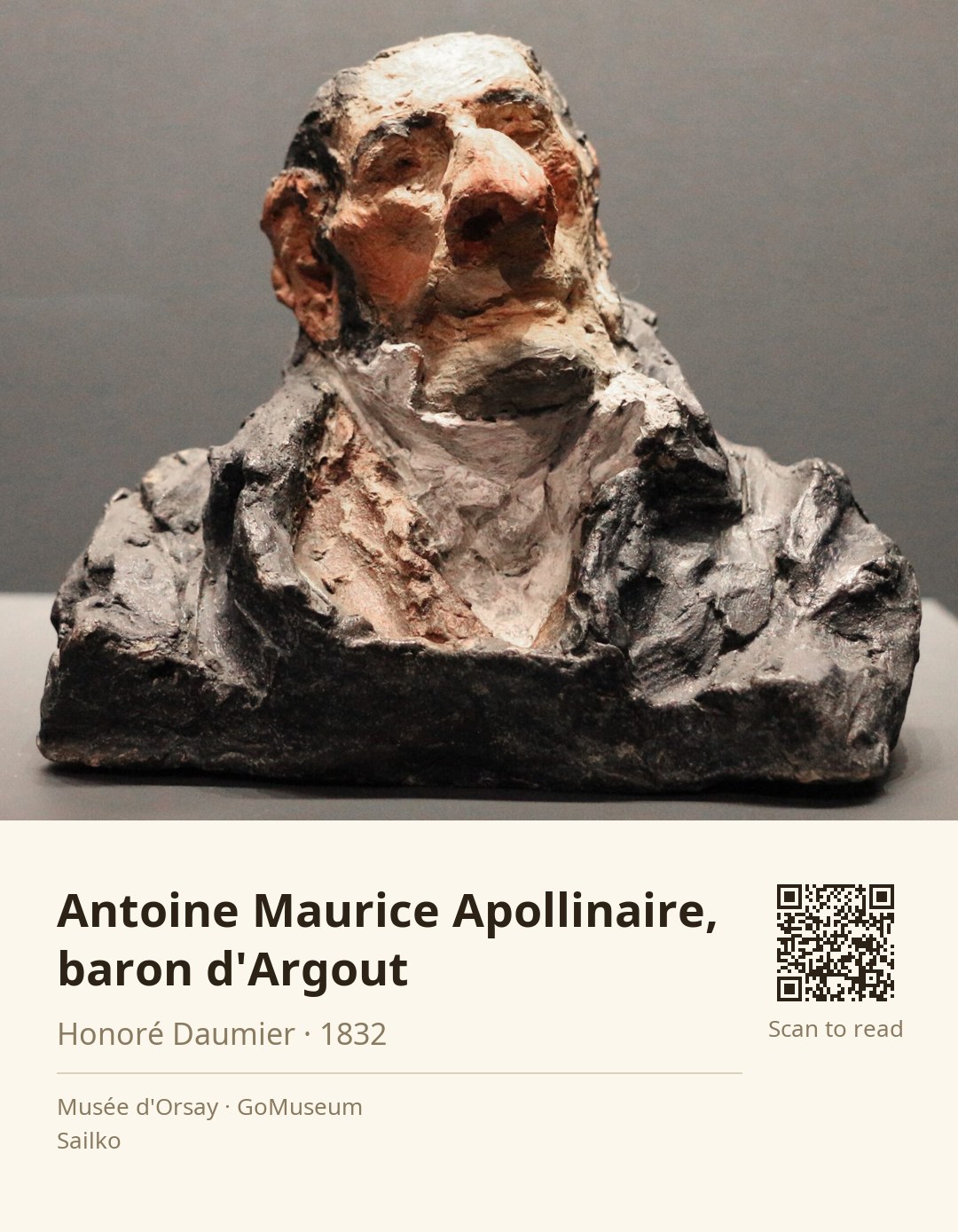
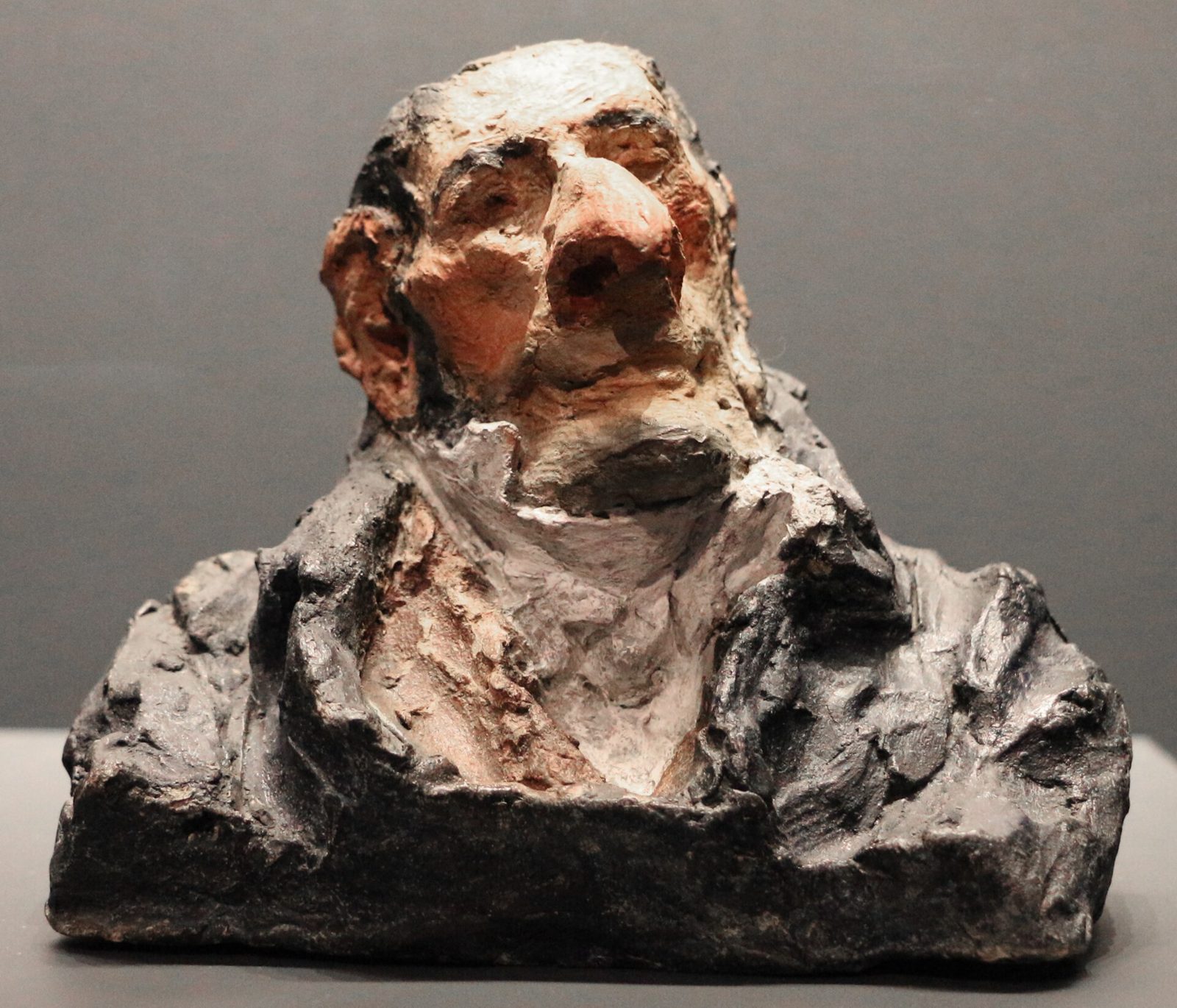
Antoine Maurice Apollinaire, baron d'Argout
🎧 This work has audio narration — listen in the appTake a moment to really look at this sculpture of Antoine Maurice Apollinaire, baron d'Argout by Honoré Daumier. Notice how the figure stands with a slight tilt, almost as if caught mid-conversation. The way Daumier captures the baron's expression—both serious and contemplative—gives you a glimpse into the character of a man who was deeply involved in the political landscape of 19th-century France. These details matter because they reflect Daumier's unique ability to blend realism with a touch of caricature, a hallmark of his work. He wasn’t just sculpting a likeness; he was commenting on the nature of power and the individuals who wield it. In 1832, when this piece was created, France was in a state of political upheaval, and figures like d'Argout were at the center of it all, navigating the complexities of governance and public opinion. Daumier himself was no stranger to controversy, often facing imprisonment for his satirical takes on the monarchy. This sculpture, while a tribute to a prominent figure, also serves as a reminder of the tensions in society at the time—a tension that Daumier masterfully encapsulated in his art. As you stand here, think about how this piece connects to the broader narrative of political power and social critique. What do you think Daumier would say about today's leaders if he were sculpting them?
Honoré-Victorin Daumier, born on February 26, 1808, in Marseille, was a pivotal French artist known for his incisive commentary on the social and political landscape of 19th-century France. A prolific lithographer, caricaturist, painter, and sculptor, Daumier's work often satirized the monarchy, the bourgeoisie, and human nature itself. He began his artistic journey at a young age, influenced by his family's struggles and his early exposure to the vibrant Parisian art scene.
Daumier's career took off after the July Revolution of 1830, when he became a prominent figure in political caricature, contributing to satirical publications like La Caricature and Le Charivari. His bold depictions of figures like King Louis-Philippe earned him both fame and imprisonment, reflecting his commitment to social critique. Despite facing financial hardships and a lack of recognition during his lifetime, he was admired by contemporaries such as Charles Baudelaire.
While Daumier produced thousands of lithographs, his paintings, though largely overlooked in his lifetime, would later be celebrated for their realism and emotional depth. His influence extended to later movements, including Impressionism, marking him as a significant figure in art history. Daumier passed away in February 1879, leaving behind a legacy that would reshape the understanding of political art.
Take a closer look at the texture of this sculpture. Notice how the surface has a slightly rough finish, which adds a tactile quality. The way the light plays off the figure's surface creates a dynamic interplay, inviting you to explore the depth of the baron's expression and posture.
This sculpture, titled 'Antoine Maurice Apollinaire, baron d'Argout,' was created by the renowned French artist Honoré Daumier in 1832. Daumier, known for his biting social and political commentary, was commissioned to create this piece during a tumultuous time in France, just after the July Revolution of 1830. However, Daumier's work often faced mixed receptions; while he was celebrated among fellow artists and intellectuals, the broader public and critics frequently overlooked his contributions. This piece is part of a larger narrative of Daumier's life, marked by his struggles with censorship and financial hardship, yet it stands as a testament to his enduring legacy as one of the great artists of the 19th century.
This piece not only showcases Daumier's skill in capturing the essence of his subjects but also reflects the turbulent political climate of 19th-century France. Daumier's work influenced a generation of artists, particularly the Impressionists and Post-Impressionists, who admired his ability to blend caricature with fine art. His fearless critique of authority and the bourgeoisie paved the way for future artists to explore social themes in their work, making him a pivotal figure in the evolution of modern art. Remember, Daumier didn’t just create art; he sparked conversations that challenged the status quo.
Did you know that Daumier produced over 100 sculptures throughout his career? Despite his prolific output, many of his sculptures, including this one, were often overshadowed by his lithographs.
Daumier's technique often involved a rough finish that enhances the tactile quality of his sculptures, allowing viewers to engage with the piece in a more intimate way. This approach contrasts with the smoother finishes typical of many contemporary sculptures, highlighting his distinctive style.
Growing up in poverty, Daumier began working at a young age, which exposed him to the struggles of the working class and shaped his perspective as an artist. His experiences in a bookstore and later as a caricaturist provided him with a unique insight into the social and political issues of his time, which he reflected in his art.